

Quitting smoking benefits your blood vessels faster than many people realize. Blood pressure and pulse rate decrease within 20 minutes, the risk of cardiovascular disease is reduced by about half in one year, and the risk of stroke is near that of non-smokers within 5 to 15 years. The sooner you quit, the better, and it's never too late.
How much do your blood vessels improve after quitting smoking?
When does the risk of heart disease and stroke decrease?
In summary, based on the evidence, what are the benefits of quitting, at what timeframe, is reducing smoking or switching to e-cigarettes sufficient, and when should you have your blood vessels evaluated by a doctor?
The body begins to respond immediately when smoking is stopped (WHO).
Compared to people who still smoke (WHO).
The longer you abstain, the lower the risk (WHO).
Free calls to all networks. Consult with experts.
I care for patients who smoke or have smoked regularly. Many have tried to quit multiple times without success. Quitting is truly difficult, and every day without smoking is a day for the blood vessels to rest. This article therefore focuses on the benefits of quitting and what resources are available to help.
This article does not recommend any specific medication. Medication use must be under the discretion of a doctor, and you should never stop taking medication for existing medical conditions.
The content in this article
1. What do cigarettes do to blood vessels?
Short answer:The substances in cigarette smoke cause inflammation of the blood vessel walls, vasoconstriction, increased blood clotting, and carbon monoxide reducing oxygen in the blood. The combined effect is faster plaque buildup and increased risk of cardiovascular disease, stroke, and peripheral artery disease.
Each time you smoke, blood vessels constrict, your pulse and blood pressure rise, and your heart works harder. The inner lining of the blood vessels is damaged, making it easier for plaque to accumulate and blood to clot. Therefore, the chance of a blood clot forming and blocking already narrowed blood vessels increases.
Blood vessels throughout the body deteriorate from the same set of factors. Read more at...The heart and brain are connected by blood vessels.
Secondhand smoke also damages blood vessels.The World Health Organization states that secondhand smoke causes cardiovascular diseases, including coronary heart disease, and leads to more than 1.6 million premature deaths annually.
2. What gets better after quitting? And when?
Short answer:The benefits begin within the first 20 minutes. The risk of cardiovascular disease is reduced by about half after quitting for one year, but it takes many years to reach a risk level close to that of someone who has never smoked. The sooner you quit and the longer you stay abstaining, the greater the benefits.
| Time since quitting | Something better | Source |
|---|---|---|
| 20 minutes | Pulse and blood pressure decrease. | WHO |
| 12 hours | Carbon monoxide in the blood decreases to normal levels. | WHO |
| 2 to 12 weeks | Improved blood circulation and better lung function. | WHO |
| 1 year | The risk of cardiovascular disease is roughly half that of people who still smoke. | WHO |
| Within 5 years | Among former heavy smokers, the overall risk of cardiovascular disease is about 39% lower than in those who still smoke. | JAMA 2562 |
| 5 to 15 years | The risk of stroke is reduced to the same level as in non-smokers. | WHO |
| 10 to 15 years after quitting | In the aggregate data from the same study, no clear excess risk was found compared to people who had never smoked (this doesn't mean it's the same for everyone). | JAMA 2562 |
| 15 years | The risk of cardiovascular disease is the same as for non-smokers. | WHO |
The numbers are averages for the population; each individual is different depending on their smoking history, age, and underlying health conditions.
The Framingham study, which followed 8,770 adults, found a significant decrease in risk within the first five years after quitting, but the risk remained higher for a period compared to those who had never smoked. The duration varied among groups, depending on the cumulative amount smoked. The sooner one quits, the shorter it takes to return to a level close to that of a non-smoker. Maintaining good control of blood pressure, cholesterol, and blood sugar is also crucial.
It's never too late.A 2020 report by the U.S. Surgeon General concluded that quitting smoking offers benefits at all ages, reducing the risk of heart disease, stroke, and may increase life expectancy by about 10 years.
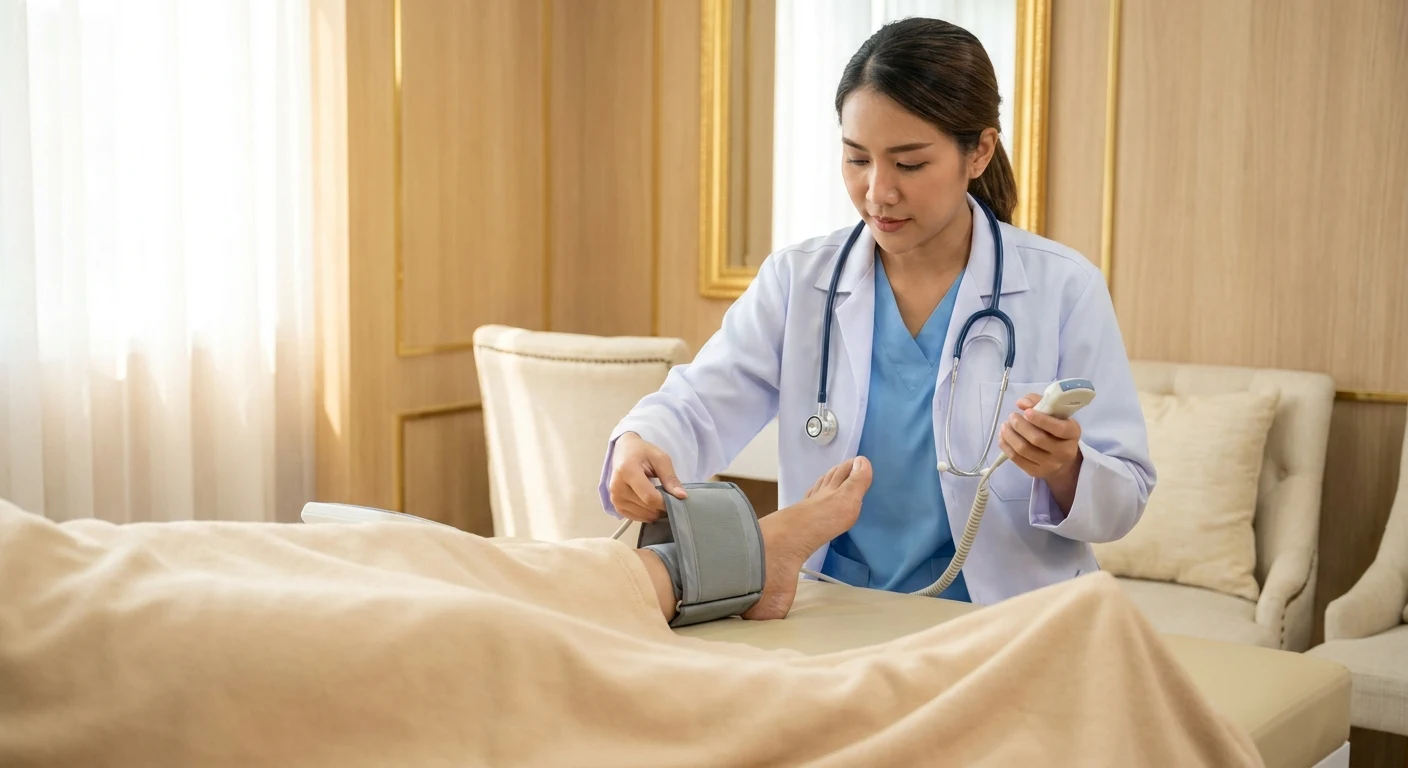
An ankle-index (ABI) test helps assess the arteries in the legs, which are directly affected by smoking.
If I already have narrowed blood vessels in my legs, will quitting smoking help?A study in 739 patients with symptomatic peripheral artery disease found that those who quit smoking had a lower mortality rate than those who continued to smoke (14% vs. 31% at 5-year follow-up) and a higher survival rate without amputation (81% vs. 60%). Read more about leg arterial examination here.What is the difference between carotid artery ultrasound and ABI (Ankle-Brachial Index)?
3. Is smoking less or switching to e-cigarettes enough?
Short answer:Furthermore, for cardiovascular health, smoking just one cigarette a day carries a higher risk of heart disease and stroke than most people realize. E-cigarettes are illegal in Thailand, their long-term effects are unknown, and they are not the recommended method for quitting in Thailand. The real goal for quitting is to quit entirely.
An analysis of 141 longitudinal studies (Hackshaw et al., BMJ 2018) found that men who smoked one cigarette a day had about a 46% excess risk of cardiovascular disease compared to those who smoked 20 cigarettes a day, and about 31% for women. For stroke, the risk was about 41% for men and 34% for women.
Smoking occasionally or even just a few cigarettes still carries a risk. No type of cigarette is safe for your blood vessels. Reducing the number of cigarettes you smoke is a good first step; the next goal should be to quit altogether.
E-cigarettes in ThailandE-cigarettes are prohibited imports and sales, and possession of smuggled goods is a violation of customs laws. A 2026 Cochrane review found that in trials using quality-controlled products, e-cigarettes containing nicotine were more effective at quitting than nicotine replacement therapy (approximately 10 out of 100 compared to 6 out of 100 (a difference of about 4 out of 100; confidence interval 2 to 7)). However, long-term safety data is needed. The World Health Organization states that e-cigarettes are unsafe, and smuggled products sold in Thailand do not undergo quality control. The recommended approach in Thailand is counseling combined with medication prescribed by a doctor to aid cessation.
4. Quitting will make you gain weight. Is it worth it?
Short answer:It's worth it. Weight gain after quitting smoking doesn't negate the cardiovascular benefits, but you should manage your diet and exercise to prevent excessive weight gain.
A study of 3,251 Framingham Offspring individuals (Clair et al., JAMA 2013) found that among non-diabetic individuals, those who had quit smoking within the past four years had about half the risk of cardiovascular disease compared to those who continued to smoke, even with weight gain, and this effect was virtually unchanged when weight gain was factored in. Individuals with diabetes should plan their blood sugar and weight management in collaboration with their doctor.
5. Do I need to have a blood vessel check after quitting?
Short answer:Not everyone needs to be tested. A history of smoking is one risk factor. Doctors will consider overall risk factors such as age, blood pressure, cholesterol, diabetes, family history, and symptoms, and then recommend what tests are needed or if any tests are currently unnecessary.
Groups that should consult a doctor about vascular evaluation.
USPSTF guidelines do not recommend screening for carotid artery stenosis in asymptomatic adults. If you are unsure which group you fall into, start with...Assess the risk of cardiovascular disease.Let your doctor give you an overview first. For information on how to examine your carotid arteries and what the results can tell you, please read here.Carotid artery ultrasound: Screening for stroke risk.And the services ofKin Charnn Vascular Center, Sukhumvit 107
Symptoms that require calling 1669 are not for scheduling an appointment.If you experience facial drooping, weakness in your arms and legs, slurred speech, unsteady gait, sudden blurred vision, or chest pain, tightness, or discomfort lasting more than a few minutes, recurring symptoms, or if you sweat or have difficulty breathing, even if not severe, call 1669. Read the warning signs here.BE FAST: Stroke warning signal.
6. Smoking cessation aids: Smoking cessation hotline 1600.
Short answer:Quitting smoking with assistance has a higher chance of success than quitting cold turkey alone. Call the smoking cessation hotline at 1600 for free, available on all networks, or visit a doctor at a smoking cessation clinic in a hospital near you.
The World Health Organization states that combining counseling with medication increases the chances of successfully quitting smoking by more than twofold. There are many types of smoking cessation medications, each with different precautions, so they should be used under the guidance of a doctor or pharmacist. Individuals who have recently experienced an acute myocardial infarction or severe cardiac arrhythmias should not self-medicate; they must be evaluated by a doctor first.
Smoking cessation hotline 1600There are consultants to help with planning and follow up with calls.Smoking cessation clinics in public hospitals.(Some clinics use the name "Fah Sai Clinic") They will assess and consider medication to help with quitting, or provide information.Doctors who are managing my medical conditions.It means you're determined to quit. If you relapse and start smoking again, you can begin immediately. Most people succeed in quitting after several attempts.
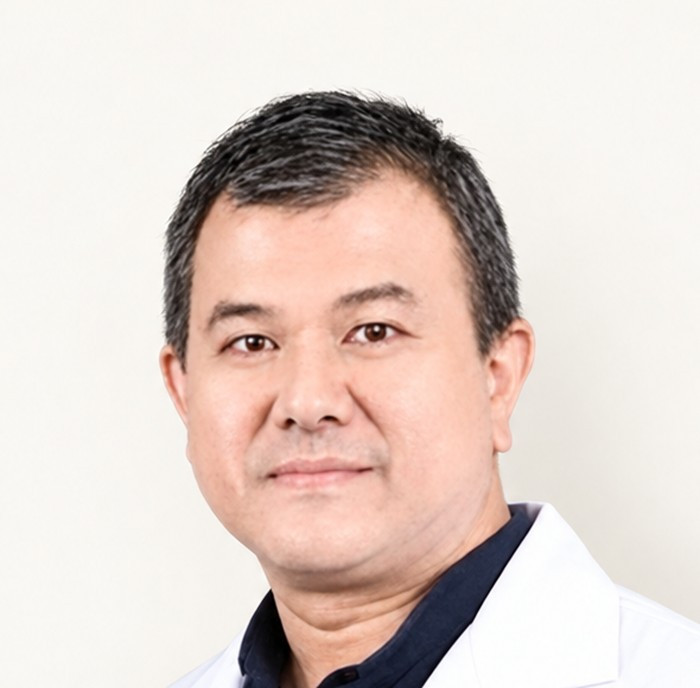
"I never blame patients who haven't been able to quit, because nicotine is truly addictive. What I ask is for them to try again with some assistance. Some patients who successfully quit find it easier to control their blood pressure, walk further, or report easier breathing. This varies depending on their underlying condition and other treatments. Damaged blood vessels don't completely recover, but quitting smoking is crucial for truly improving blood vessels, and we can start today."
Contact us | Schedule an appointment
Kin Charnn Vascular Center offers vascular checkups at KIN Sukhumvit 107. Call 084-003-6655 or 065-909-2599. LINE @000flhdi. Appointments must be made in advance. Staff will inform you of available dates and times.
KIN Medical Hub Ladprao 71


KIN Physical Therapy Hospital Sukhumvit 107
KIN Rehabilitation Center Pattaya
KIN Rehabilitation Center, Ratchaphruek
KIN Ramkhamhaeng 24: Reserve your spot before the grand opening on November 15, 2026.
KIN Salaya: Reserve your spot before the grand opening on December 15, 2026.
Central hotline:02-096-4996| Home-based physiotherapy 095-767-6307 | Care, nursing, and equipment rental 061-881-9399 | Emergency call 1669
Frequently Asked Questions answered by the KIN medical and multidisciplinary team.
Is there still benefit in quitting smoking at an older age?
Yes, a 2020 report by the U.S. Surgeon General concluded that quitting smoking offers benefits at all ages and reduces the risk of heart disease, stroke, and vascular disease, even in those who have previously had vascular disease.
Is smoking one or two cigarettes a day dangerous to the heart?
The danger: A 2018 BMJ analysis found that smoking one cigarette a day carries an excess risk of cardiovascular disease and stroke in about 3 to 5 out of 10 people who smoke 20 cigarettes a day. Reducing the number of cigarettes isn't enough; the goal is to quit altogether.
Is it possible to switch to an e-cigarette instead?
E-cigarettes are not recommended in Thailand. Importation and sale are prohibited. Illegally sold products lack quality control, and their long-term effects are unknown. Although international research suggests that regulated products can help some people quit, the recommended approach in Thailand is counseling combined with medication prescribed by a doctor.
Do all smokers need to have their blood vessels checked?
Not everyone needs this. Doctors will assess the overall risk. Those with multiple risk factors, leg pain when walking, or a history of warning signs from the brain should consult their doctor about what tests they should undergo.
I want to quit smoking, but I've failed to quit on my own. What should I do?
Call the smoking cessation hotline 1600 for free on all networks, or see a doctor at a smoking cessation clinic in a hospital. The World Health Organization states that counseling combined with medication increases the chances of successful quitting by more than twofold.
- Tobacco: Health benefits of smoking cessation. World Health Organization (WHO)
- Tobacco and nicotine fact sheet, World Health Organization (WHO)
- Association of Smoking Cessation With Subsequent Risk of Cardiovascular Disease, JAMA Journal, 2019.
- Low cigarette consumption and risk of coronary heart disease and stroke: meta-analysis of 141 cohort studies. BMJ Journal, 2018.
- Association of Smoking Session and Weight Change With Cardiovascular Disease Among Adults With and Without Diabetes, JAMA Journal, 2013
- Smoking cessation is associated with decreased mortality and improved amputation-free survival among patients with symptomatic peripheral artery disease, Journal of Vascular Surgery, 2014
- Smoking Cessation: A Report of the Surgeon General, United States, 2020
- National Telephone Quit Smoking Service, Quit Smoking Hotline 1600
- Electronic cigarettes for smoking cessation. Cochrane database, 2026.
- Screening for Asymptomatic Carotid Artery Stenosis: USPSTF Recommendation Statement, JAMA Journal, 2021.
- E-cigarettes and hookahs are prohibited imports, according to the Customs Department.
- A list of laws regarding e-cigarettes (iLaw).
Written and medically verified by Lt. Col. Dr. Thalingkiat Jamulittarat, MD, License No. 28431, Interventional Radiology Specialist, RENEW™ NCP-5 Operator Training Certified | Edited by KIN Editorial Team | Supervised by Dr. Thongchai Chokthanomsap, Chairman of the Board | Last updated: October 2026 |This article provides preliminary information based on medical practice guidelines and is not a diagnosis or specific advice for each individual. Individual examinations and treatments must be determined by a physician. In case of an emergency, call 1669.