
Stroke Rehabilitation Program by the Professional Team at KIN Stroke Center
KIN provides structured stroke rehabilitation from assessment and individualized planning through physical therapy, occupational therapy, systematic registered nursing care, Aquatic Treadmill, Hydrotherapy, TMS and HBOT, with HomeCare follow-up at home when needed. The KIN Stroke Clinic serves patients at Lat Phrao 71 and Bearing (Sukhumvit 107), with coordinated standards of care across all six KIN rehabilitation branches in Bangkok, Pattaya and Salaya. Patients at every stage are accepted, including those with paralysis or paresis and patients recently discharged from hospital who require continuing rehabilitation.
6,000+
Families who trust KIN
6
branches across Bangkok, Pattaya and Salaya
9 Years
Experience since 2018
5 Physicians
Four medical specialties + anti-aging medicine
Aquatic + Hydro
+ TMS + HBOT + EECP + robotic gait training (KIN × PYONG partners)
Four comprehensive rehabilitation technology approaches
Gold Award
2568
Universal Design Standards — ThaiHealth + Chulalongkorn University
Real patients, real recovery — unedited and unembellished
Watch the recovery records from the first day through the return home.


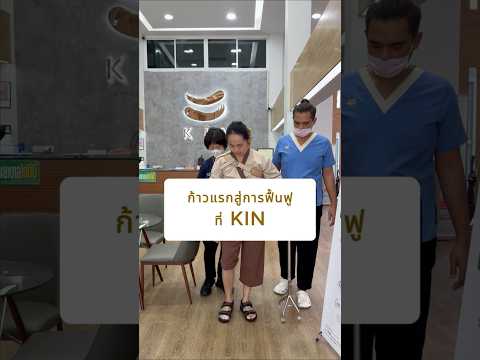
KIN is the first stroke rehabilitation center in Thailand to introduce the Aquatic Treadmill (underwater treadmill) for patient rehabilitation, and the only center in Thailand to offer both a warm-water hydrotherapy pool and an aquatic treadmill within one integrated system. More than 6,000 patients and families have trusted KIN since 2018.

Former lecturer, Department of Rehabilitation Medicine, Faculty of Medicine, Chulalongkorn University, and a Doctor of Medicine graduate with First-Class Honors from Chulalongkorn University — Dr. Aim sets KIN’s policy and standards for stroke rehabilitation at every branch. Physical therapists, occupational therapists and speech therapists at every branch work within this same system.
The 5-step stroke rehabilitation system used at every KIN branch
The physician and multidisciplinary team assess function in all six areas before training begins
Measurable goals agreed together with the family
Physical therapy every day, with occupational therapy and speech/swallowing training per the individual plan
Progress reassessed regularly against the first-day baseline
Intensity adjusted to how the body actually responds, with a plan for continued care at home
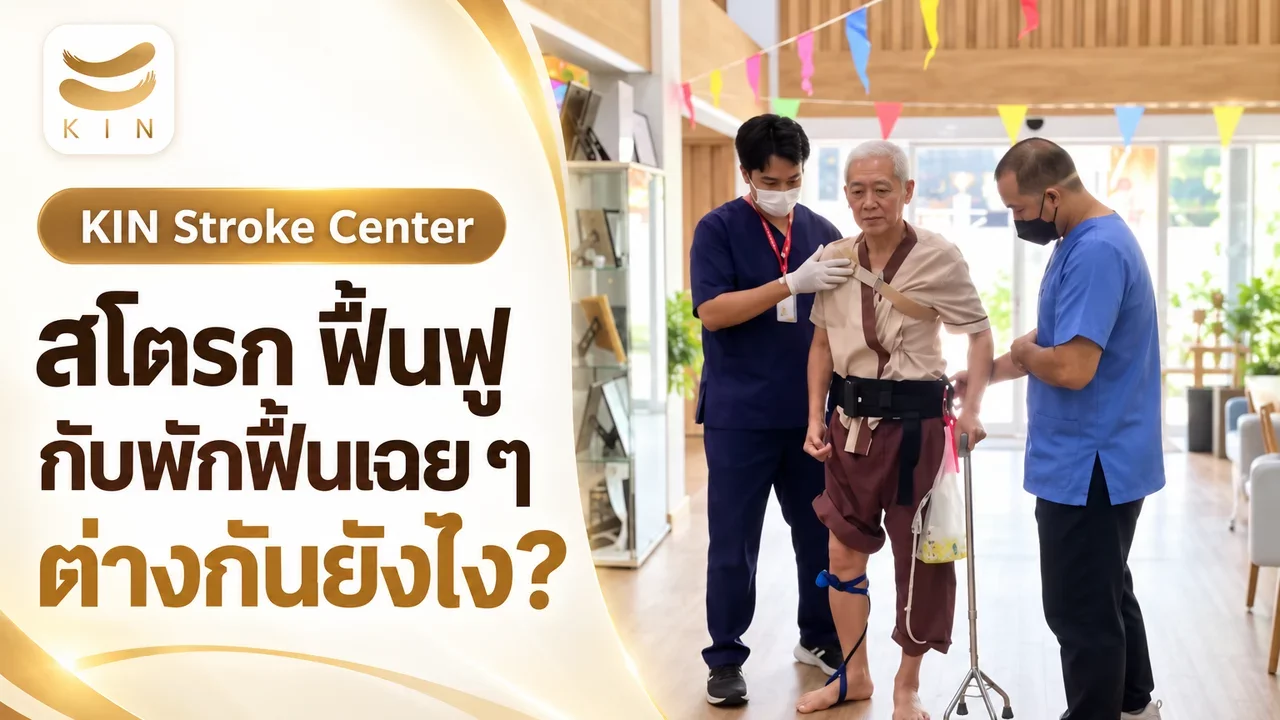
Call for a consultation or send CT/MRI results
for assessment by the KIN medical team — with a prompt response
Rehabilitation outcomes depend on each patient’s condition, time since the stroke, comorbidities and consistency of training.
1. KIN Is Not a Nursing Home — It Is a Medical Rehabilitation System for Stroke Patients
Stroke patients with paralysis, paresis or hemiparesis require more than everyday assistance. Recovery of walking, balance, swallowing, communication and activities of daily living depends on an individualized rehabilitation plan designed by a professional team, especially during the first 3–6 months after the stroke — the Golden Period, when the brain has its greatest capacity for adaptation. Every week during this period matters, and starting early with consistent rehabilitation may make a meaningful difference in functional recovery.
| Type of Care | General care | KIN Stroke Rehabilitation |
|---|---|---|
| Primary goal | Assistance with activities of daily living | Restore functional ability and support a return to daily life |
| Care team | Caregivers and nurses | Physicians across five specialties + multidisciplinary team across 8 allied health disciplines |
| Outcome measurement | General observation | Measured with Five International Standards |
| Continuity of care | Stops when the patient returns home | Connect to HomeCare for continuing care at home when ready |
| Water-Based Technology | Not Available | Aquatic Treadmill + Hydrotherapy |
2. Five Essential Standards for Choosing a Stroke Rehabilitation Center
When choosing a rehabilitation facility for a stroke patient, families should consider the care team, rehabilitation plan, continuity, safety and outcome measurement. KIN therefore designed its Stroke Rehabilitation system around the following five standards.
Multidisciplinary Team
Physicians from five specialties work as one team with physical therapists, occupational therapists, speech-language therapists, registered nurses, traditional Chinese medicine practitioners and dietitians.
Individualized Care Plan
Each patient is assessed for individual problems such as hemiparesis, inability to walk, swallowing difficulty or unclear speech, and receives a personalized program rather than a template.
Clear Outcome Tracking
Progress is tracked using five international measures: Barthel Index, FIM Score, 10-Meter Walk Test, Berg Balance Scale and Modified Rankin Scale.
Patient Safety
The Bearing branch operates in collaboration with a licensed physical therapy hospital under the Ministry of Public Health. Registered nurses provide systematic care with monitoring for complications.
Continuity of Care
Connects the rehabilitation center → six branches → HomeCare at home when needed. Physical therapists and nurses provide continuing care across Bangkok and the surrounding metropolitan area.
3. Specialist Medical Team Across Five Specialties
Dr. Thanchanok Chuthamsathit, M.D. (“Dr. Aim”)
Medical Director, Rehabilitation Medicine — License No. 62998
Sets KIN’s stroke rehabilitation system and standards for every branch. Outpatient clinic (OPD) every Wednesday at KIN Hospital, Sukhumvit 107.
Capt. Dr. Talerngkiat Jamulitrat
Vascular and Interventional Radiology — License No. 28431
Vascular assessment and carotid ultrasound at KIN × CHARNN Vascular Center, Sukhumvit 107.
Dr. Chatraporn Wittayadamrongchai
Rehabilitation Medicine — Board-Certified Specialist
“Stroke rehabilitation is not simply about time; it is about an individualized rehabilitation plan.”
Dr. Kritchatha Phuengcharoen
Neurology — TMS Specialist
“Damage in different areas of the brain produces different effects. An accurate diagnosis is the starting point for appropriate rehabilitation.”
Dr. Chanya Wuttikraikul
Geriatric Medicine
“Older adults after a stroke need comprehensive care that considers comorbidities and potential complications.”
Dr. Kamonchat Chokthanomsap
Anti-Aging Medicine — Resident Physician at KIN
“Rehabilitation is about restoring quality of life. It is not only physical training, but also the mind and the patient’s sense of hope.”
View the full multidisciplinary team on the KIN Medical Team page
4. KIN Stroke Recovery Promise
We Will Respond as Soon as Possible
For every case in which a medical history or CT/MRI results are submitted, the medical team responds as promptly as possible.
Personalized Rehabilitation Plan
Every patient has an individual plan designed around their actual condition and goals, not a generic template.
Regular Progress Reports
Families receive regular progress updates and continue to review rehabilitation goals together with the team.
Measured Using International Standards
Five outcome measures: Barthel Index, FIM, 10-Meter Walk Test, Berg Balance Scale, and Modified Rankin Scale
Continuing care at home when ready
When the patient is ready to return home, KIN HomeCare arranges physical therapists and nurses to continue the care pathway without leaving the patient unsupported.
5. Rehabilitation at KIN — Patient Journey Timeline
| Time Period | Care provided |
|---|---|
| Before entering the program | The family sends the medical history and CT/MRI results, and the KIN medical team responds as promptly as possible. |
| Day 1 | A comprehensive assessment by a rehabilitation medicine physician and the multidisciplinary team, with baseline recording of the Barthel Index, FIM, walking and swallowing, following the KIN stroke rehabilitation standard set by Dr. Aim. |
| Day 2–3 | The team holds a case conference to create an individualized rehabilitation plan, presents it to the family and confirms shared goals. |
| Weeks 1–2 | Daily rehabilitation (physical therapy once a day in every package; intensive 2–3 sessions a day when recommended by the physician), including physical therapy, occupational therapy, speech therapy, Aquatic Treadmill and Hydrotherapy according to each patient’s plan. |
| Month 1 | Reassessment against baseline, program adjustment according to progress and a report provided to the family. |
| Months 2–3 | Functional goals: walking, hand use, self-care and preparation for returning home |
| when the patient is ready to return home. | Integrated with KIN HomeCare Physical therapists and nurses visit the home as needed, monitor progress continuously and help prevent functional decline. |
6. Technology and Environment for Stroke Rehabilitation
A distinction offered by very few stroke rehabilitation centers: two forms of water-based rehabilitation.
Aquatic Treadmill — Lat Phrao 71
Water reduces joint loading by up to 80%, supporting safer gait training even while the muscles remain weak.
Hydrotherapy — Bearing
A therapy pool with a physical therapist in the water to reduce spasticity, improve range of motion and restore balance.
| Technology / Service | Role in Rehabilitation |
|---|---|
| TMS Therapy | Non-invasive magnetic brain stimulation to support neuroplasticity, used alongside the rehabilitation plan according to the medical team’s assessment. |
| Aquatic Treadmill | Reduces joint loading by up to 80%, supporting safe training even while muscles remain weak; suitable during the Golden Period — Lat Phrao 71 |
| Hydrotherapy | A therapy pool with a physical therapist in the water to reduce spasticity, improve range of motion and restore balance — Bearing |
| HBOT Hyperbaric Oxygen Therapy | Increases oxygen delivery to recovering brain tissue and may support neuroplasticity. |
| PMS + muscle-training equipment | Magnetic muscle stimulation to reduce spasticity and improve arm and leg strength, together with Shockwave and Laser therapies. |
| Rooms / Facility | The Bearing branch is an eight-storey, 58-bed Origin Wellness Complex designed for recovery stays and continuing rehabilitation. |
Every week during the first six months after a stroke matters.
Neuroplasticity is at its highest during the Golden Period. The earlier and more consistently rehabilitation begins, the greater the opportunity to regain walking, speech and daily function.
7. Stroke Rehabilitation at Every Stage — Whether the Stroke Was Recent or Long Ago
Not sure which stage the patient is in? The KIN team provides a complimentary assessment.
Send the medical history or CT/MRI results via LINE, and the medical team will respond as promptly as possible.
8. Meaningful Changes Families May See — The Goals KIN Works Toward
The KIN medical team uses international outcome measures, but the changes that families can notice in everyday life are the changes that matter most. These goals are not guarantees; they represent the direction in which the KIN team works together with every patient and family.
Independent sitting balance
From needing support every time to sitting steadily and independently without leaning.
Safer Standing Transfers
Reduced fall risk and greater independence when rising from bed or a chair.
Steadier Walking
From requiring support on both sides to walking with a cane or independently.
Improved Arm and Hand Function
Being able to grasp objects, feed oneself or write to some degree.
Safer swallowing
Reduced aspiration risk and eating more safely and normally.
Improved speech and communication
Communicating needs more clearly and engaging in more conversation with family.
Greater Independence
Bathing, dressing and using the bathroom with less constant assistance.
Reduced Family Burden
Caregivers have time to rest, reducing exhaustion and helping family relationships improve.
Outcomes depend on the location and size of the brain lesion, time since the stroke, comorbidities, age, continuity of rehabilitation and cooperation from the patient and family.
9. What May Be Expected During Each Month of Rehabilitation
10. Continuum of Care — KIN Connects Every Stage of Rehabilitation into One Coordinated Pathway
Intensive center-based rehabilitation — by KIN
Specialist physicians, registered nurses and physical therapists create an individualized rehabilitation plan integrating Aquatic Treadmill, Hydrotherapy and TMS at KIN Physical Therapy Hospital Bearing and the Lat Phrao 71 branch.
Advanced Neurological Technology — Integrated into the KIN System
When the KIN medical team determines that a patient may benefit from specialized technology, KIN coordinates access through its partner network under the existing KIN care plan, without requiring the assessment process to start again.
Continuing care at home when needed — by KIN HomeCare
When the patient is ready to return home, KIN HomeCare can arrange physical therapists, caregivers and nurses to provide home-based care nationwide as needed, with ongoing follow-up to help preserve progress.
11. Which Stroke Patients Is This Program Suitable For?
KIN accepts stroke patients at every stage, including patients with paralysis, paresis or bedridden status and patients who have been recently discharged from hospital and need continuing rehabilitation. The team always assesses suitability and develops an individualized plan before the program begins.
| Patient group | Details |
|---|---|
| Paralysis / Hemiparesis | Patients with arm or leg weakness after stroke — the Aquatic Treadmill supports safer gait training even while weakness remains. |
| Unable to Walk / Poor Balance | Practise standing and walking while reducing fall risk; water reduces joint loading by up to 80%. |
| Swallowing difficulty / unclear speech | Swallowing, communication and daily-living difficulties are addressed by speech-language and occupational therapy professionals. |
| After Hospital Discharge | Patients beyond the acute phase who need continuing rehabilitation during the Golden Period (the first 3–6 months) can transfer directly without restarting the process. |
| Patients bedridden after stroke | Reduce complications, gradually improve mobility and reassess on an individual basis. |
| Requires continuing care at home | KIN HomeCare can arrange physical therapists, caregivers or nurses for continuing support after discharge, according to the patient’s needs. |
12. Mental Health After Stroke — Often Overlooked, but Directly Linked to Recovery
Research has found that 30–40% of stroke patients experience post-stroke depression, which may reduce participation in rehabilitation, slow recovery and increase the risk of recurrent stroke. At the same time, family members providing around-the-clock care may be at risk of accumulated stress and caregiver burnout.
Warning Signs in Patients
Refusing training or food, sleeping excessively, frequent crying, repeatedly saying “I do not want to recover,” or showing unusually intense emotions.
Warning Signs in Caregivers
Exhaustion, irritability, insomnia, unexplained guilt or anger, no time for self-care, or feeling hopeless about the patient’s progress.
KIN has mental health professionals available for consultation.
Available daily from 16:00–19:30 through an online service, with no travel required.
13. Real Recovery Records — Unedited and Unembellished
Follow the progress of KIN patients from the first day of rehabilitation until they return to daily life. Each journey is documented as a series for transparency.


View more recovery records — Followed from the first day through the return home
View all stroke patient testimonials ›Rehabilitation outcomes depend on each patient’s condition, time since the stroke, comorbidities and consistency of training. Published with the consent of the patients and their families.
Contact Us | Book a Complimentary Assessment
We Will Respond as Soon as Possible
Lat Phrao 71 (Main Branch)


Bearing (Sukhumvit 107)
Physical Therapy Hospital
Ratchaphruek
Pattaya
Ramkhamhaeng 24
Salaya
Vascular Care from Our Team
The medical team also includes vascular and interventional radiology. Capt. Dr. Talerngkiat Jamulitrat (Thai medical licence 28431) provides vascular assessment at KIN × CHARNN Vascular Center, Sukhumvit 107. EECP is available following individual assessment and advance booking; it is not a treatment or prevention method for stroke.
Physician profile · KIN × CHARNN Vascular Center · EECP: indications and limitations · EECP and stroke: research evidence · Why a standard course has 35 sessions · Renew NCP-5 and the care team
14. Frequently Asked Questions — KIN Stroke Rehabilitation Program
When Should Stroke Rehabilitation Begin?
What Is the Golden Period for Stroke Rehabilitation?
Can Rehabilitation Still Help After Six Months or One Year?
Does KIN Accept Patients with Paralysis or Those Who Are Bedridden?
How Can an Aquatic Treadmill Support Stroke Rehabilitation?
Can Care Continue After the Patient Returns Home?
What Is the Starting Cost?
Can Stroke Patients Develop Depression, and Does KIN Provide Support?
Branches: Bearing (Physical Therapy Hospital) · Lat Phrao 71 · Ratchaphruek · Pattaya · Ramkhamhaeng 24 · Salaya
More information: Promotions · Patient Testimonials · Medical Team · Contact Us
About the Author
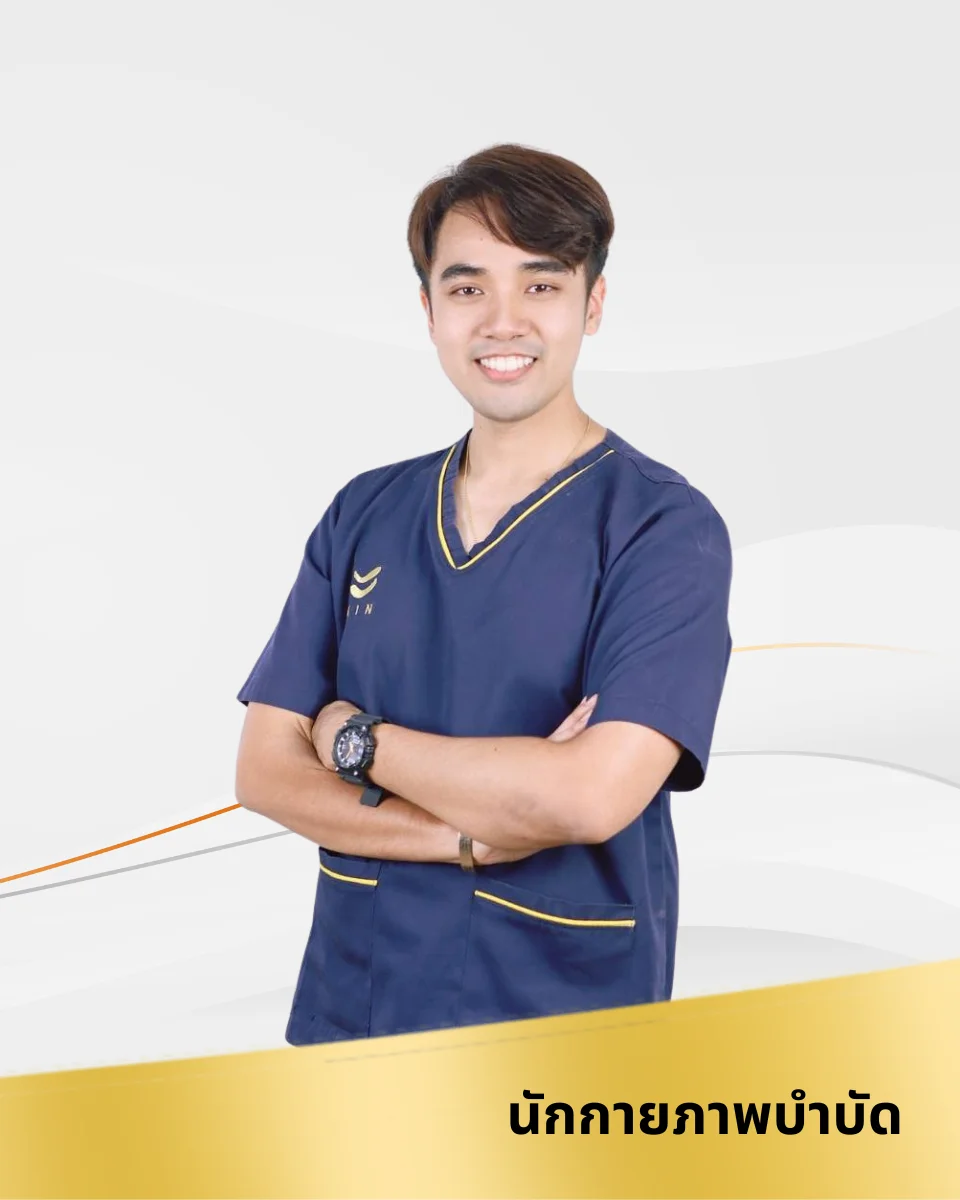
Written by PT. Anecha Horasat PT License No. 9685, Physical Therapist
Licensed Physical Therapist | Manager, KIN Rehabilitation & Homecare | Master’s Degree in Physical Therapy, Mahidol University
More than 10 years of experience in stroke and neurological rehabilitation, elderly care, gait training and balance rehabilitation.
Medically reviewed by Dr. Thanchanok Chuthamsathit, M.D. (“Dr. Aim”) Medical License No. 62998 — Medical Director, Rehabilitation Medicine
Last updated: October 2026
*This article is provided for educational purposes only and is not a medical diagnosis. Please consult a physician before making healthcare decisions.