

%20(1).png "Aquatic Treadmill and Hydrotherapy for Stroke Rehabilitation at KIN")
%20(1).webp "Real Patient Testimonial for Stroke Rehabilitation at KIN")


Frequently Asked Questions — KIN Brain Rehabilitation Innovations
What brain rehabilitation technologies are available at KIN?
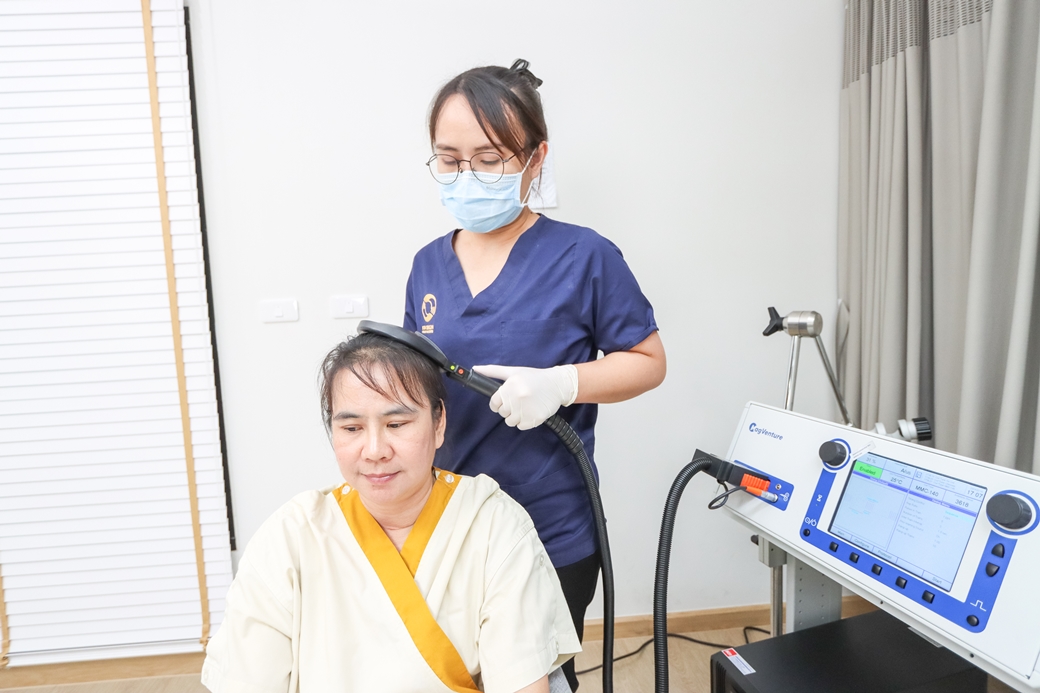
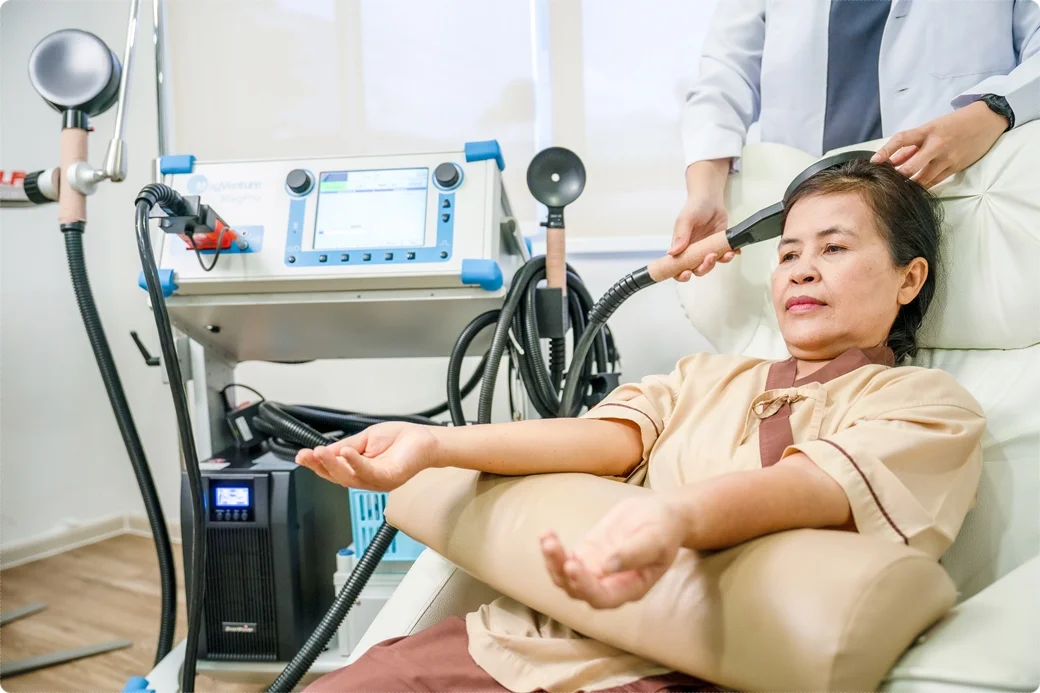
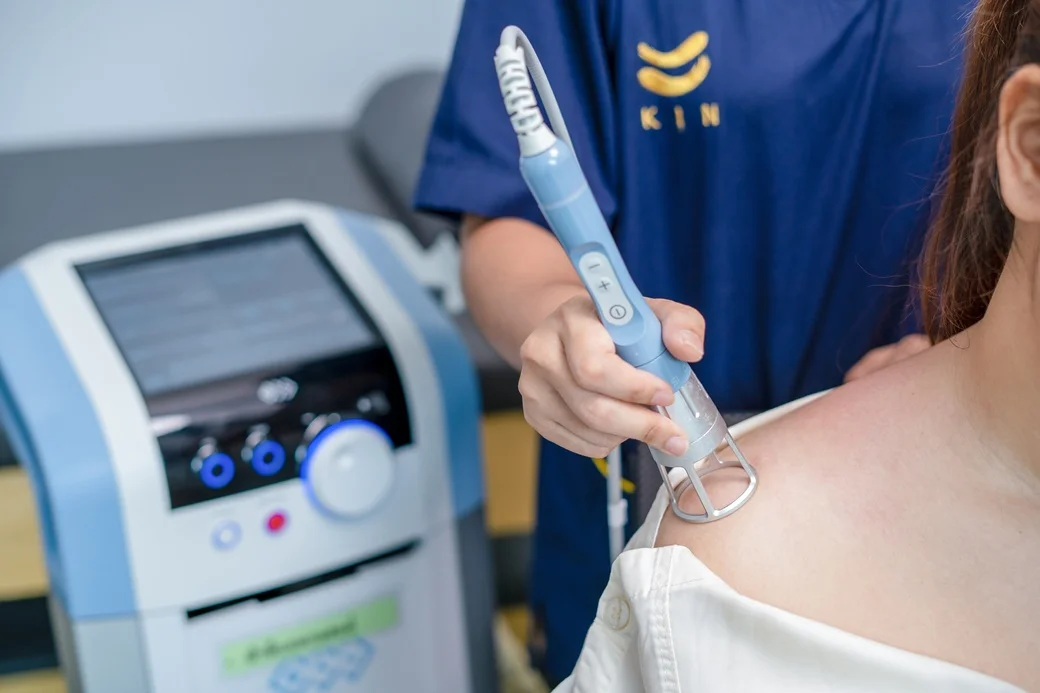
KIN offers 7 technologies in 3 groups: brain and neurological technologies (TMS, HBOT, Brain Booster/Cerebrolysin), movement technologies (Aquatic Treadmill, PMS), and targeted rehabilitation technologies (Laser & Ultrasound, VitalStim). All are supervised by specialists in 4 medical fields.
How many physicians are on the KIN medical team?
KIN has specialists in 4 medical fields: Dr. Chattaraporn Wittayadamrongchai (Board-Certified Physical Medicine and Rehabilitation), Dr. Kritchatha Phuengcharoen (Neurology), Dr. Chanya Wuttikraikul (Geriatrics), and Dr. Kamonchat Chokthanomsap (Anti-Aging Medicine). They collaborate through a Case Conference for every patient.
Is TMS brain stimulation suitable for every stroke patient?
No. A neurologist, Dr. Kritchatha Phuengcharoen, first evaluates the location of the brain injury, the time since the stroke, and each patient’s symptoms. Book a free assessment at KIN: 091-803-3071.
How is HBOT different from regular oxygen therapy?
HBOT uses a chamber pressurized to 1.5–3 times normal atmospheric pressure, allowing more oxygen to dissolve in the blood and tissues than regular oxygen breathing. This may help stimulate brain tissue in the penumbra that is still alive but not functioning normally.
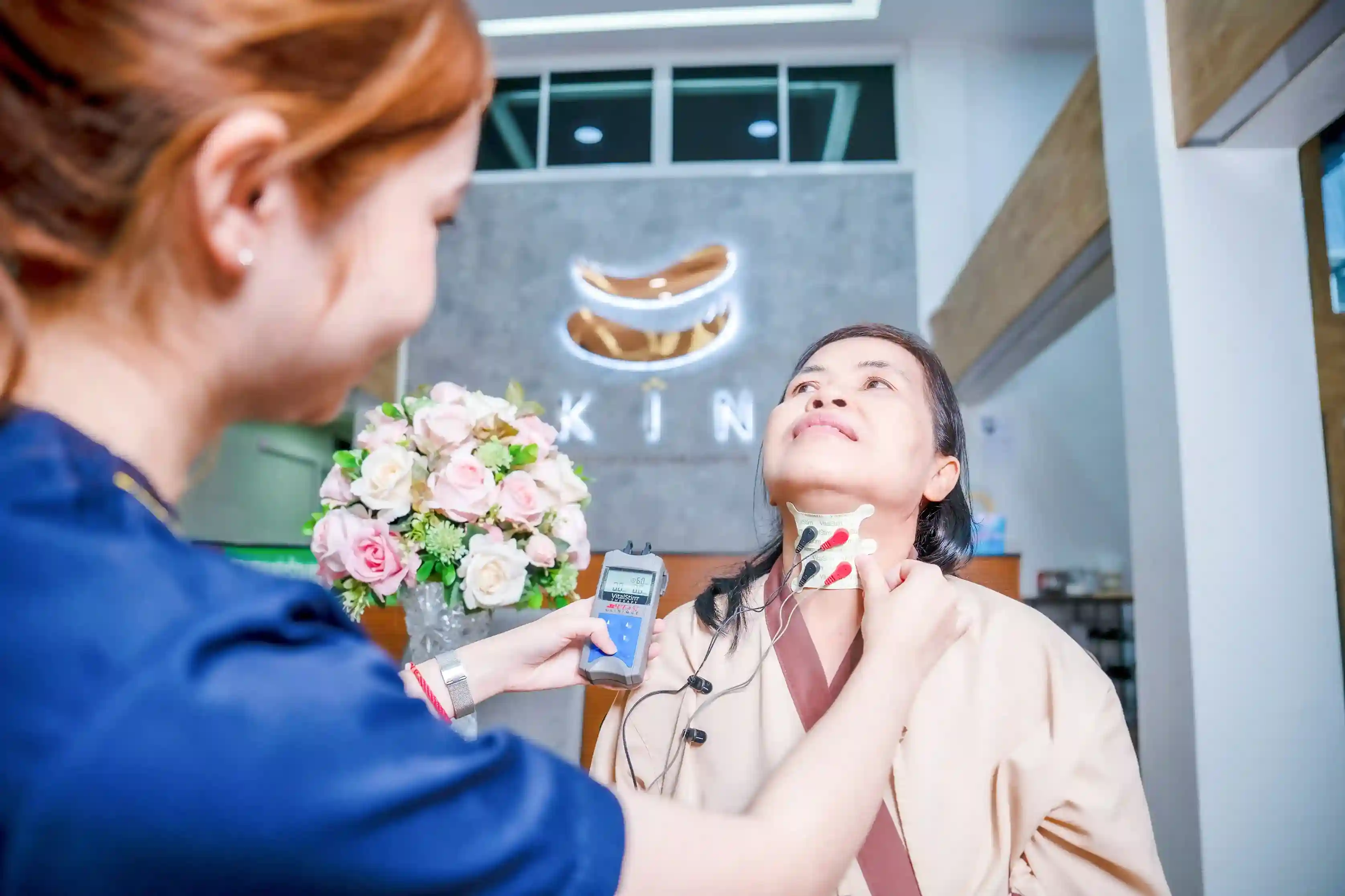
Can VitalStim be used for patients who have difficulty swallowing saliva?
Yes. VitalStim is designed for different levels of dysphagia, from partial swallowing ability to difficulty swallowing saliva. An occupational therapist evaluates each patient and determines the appropriate protocol.
How is an Aquatic Treadmill different from a swimming pool?
An Aquatic Treadmill is installed in a water tank where water level, speed, and current can be adjusted specifically for gait training. Unlike a swimming pool, patients do not need to swim or float independently. It is suitable for patients who cannot yet fully bear weight through their legs. The Aquatic Treadmill is available at Lat Phrao 71, while the hydrotherapy pool is at the Bearing Physical Therapy Hospital.
Do patients need to stay at KIN to use these technologies?
No. Patients may use the services as walk-ins or by appointment. However, for patients who need a continuous intensive program, staying at KIN may provide better continuity because the team can offer 24-hour care and conduct regular Case Conferences.
Can these technologies still be used after the 6-month Golden Period?
Yes. Neuroplasticity can continue for years after a stroke. Technologies such as TMS, HBOT, and the Aquatic Treadmill may still provide benefits after the Golden Period, although progress may be slower and require greater consistency.
How can I book an assessment for KIN brain rehabilitation technologies?
Call 091-803-3071 (Lat Phrao), 081-632-8188 (Ramkhamhaeng), 093-884-1888 (Salaya), 065-909-2599 (Bearing Physical Therapy Hospital), 082-213-9976 (Pattaya), or 065-384-5494 (Ratchaphruek), or contact LINE @Kinrehab. Send the patient’s medical history and CT/MRI results to the KIN medical team for a rehabilitation plan assessment within 24 hours.
Consult the Medical Team | Submit CT/MRI Results for Assessment
Call for a consultation or submit CT/MRI results
for assessment by the KIN medical team. We will respond as quickly as possible.
Free of charge