

How long will Gillang Barré (GBS)'s recovery take?
How many months until you can walk again? The rehabilitation process is phased in.
Recovery is slow, taking months. Train moderately, don't overexert yourself.
Leonhard 2562
The initial stage of the disease.
Mostly, no more than 4 weeks.
Even though they are coming back.
How much longer until I can walk?The answer is several months. Significant improvement is usually seen in the first year, and training too hard can lead to fatigue or weakness afterward.
The figures from international research are not the results of patients with KIN.
The content in this article
1. What is Guillain Barré (GBS)? How long does the recovery take?
Short answer:GBS is an autoimmune condition that attacks peripheral nerves; it's not a brain disease. It causes numbness and weakness in both sides of the body. Most patients recover gradually over several months, with significant improvement seen in the first year.
The World Health Organization (WHO) explains that GBS is uncommon, found more often in adults and men. The Lancet (Shahrizaila, 2021) notes that patients often have a preceding infection, most commonly the upper respiratory tract. It can be spelled in several ways, such as Guillain-Barré.The Faculty of Physical Therapy, Mahidol University, emphasizes that this disease does not damage the brain or spinal cord.
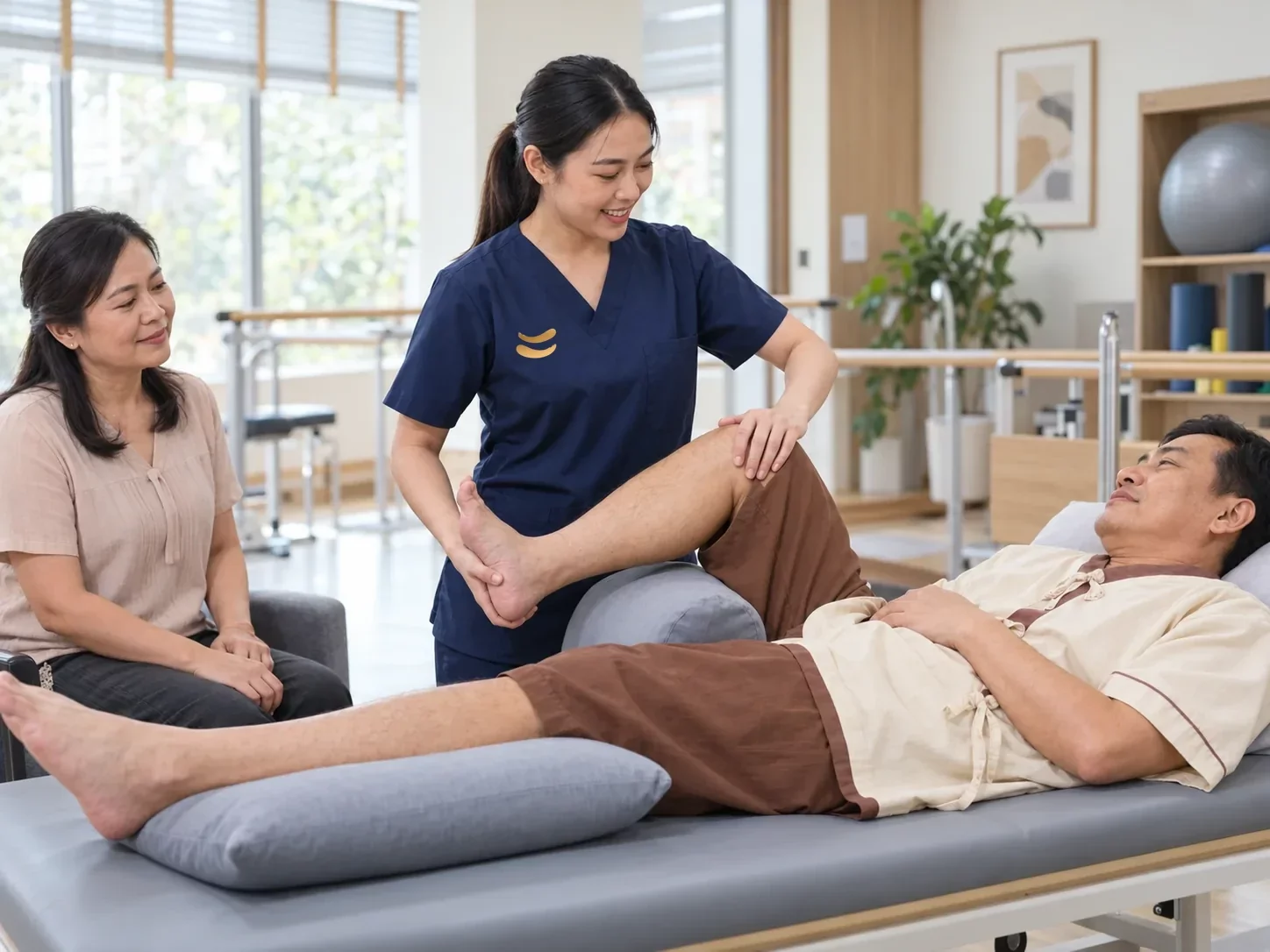
The initial phase focuses on joint movement and posture to prevent joint stiffness.
2. What were the initial symptoms of Gillian Barré's stroke? How did it differ from a typical stroke?
Short answer:It often starts with numbness in the hands and feet, then weakness in the legs spreads up the arms, and in some cases, to the face. Swallowing and breathing worsen continuously for up to 4 weeks. This is different from a stroke, which usually occurs suddenly and affects only one side of the body.
Leonhard et al. (Nature Reviews Neurology, 2019) noted that most cases reach their peak severity within two weeks. Strokes occur suddenly, usually affecting one side of the body, causing facial asymmetry and slurred speech. Emergency medical services (1669) are recommended.What should you do if your arms and legs feel weak after waking up?
3. Guillain Barré: In case of an emergency, call 1669.
Short answer:Difficulty breathing, shortness of breath, difficulty swallowing or choking, or rapid bilateral weakness, even if the person can still walk, can occur in about 20% of cases, requiring mechanical ventilation. Respiratory failure can also occur without the person feeling breathless.
Call 1669 immediately.
• Difficulty breathing, shortness of breath, speaking only one word at a time, weak cough.
• Difficulty swallowing; choking on water or food.
• Weakness on both sides spreads rapidly within hours to days, even though the person can still walk.
• Palpitations, dizziness, fainting
The WHO states that about 1 in 3 cases involve pectoral muscle involvement (Leonhard, 2019). Therefore, all patients in hospitals are advised to have their breathing monitored. Doctors may prescribe...Intravenous immunoglobulin (IVIG)orPlasma transferWhich yields similar results (Leonhard 2019). The choice of method and timing is a decision made by the physician.
4. How long will Gillan Barré's recovery take? How many months will it take before he can walk again?
Short answer:About 8 out of 10 people regain the ability to walk independently within 6 months, and slightly more often at 1 year. The speed varies depending on the severity and type of nerve damage.
| Patient group (unable to walk at their worst) | They can walk on their own at 6 months. | 1st year |
|---|---|---|
| Including all regions. | 77% | 81% |
| Europe and America | 79% | 83% |
| Asia (excluding Bangladesh, a small group) | 88% | 91% |
| Bangladesh | 62% | 69% |
Source: IGOS (Doets et al., Brain, 2018) First 1,000 cases; after excluding 75 cases, a cohort of 925 cases was analyzed. 143 cases (16%) lacked follow-up at 1 year. Thai data was not separated.
- The first year is the main recovery period.Leonhard (2019) noted that most of the recovery occurs in the first year.
- Residual symptomsWeakness, numbness, easy numbness, and severe pain are experienced by at least 1 in 3 within 1 year.
- LimitationsThis is a group average, not an individual prediction.
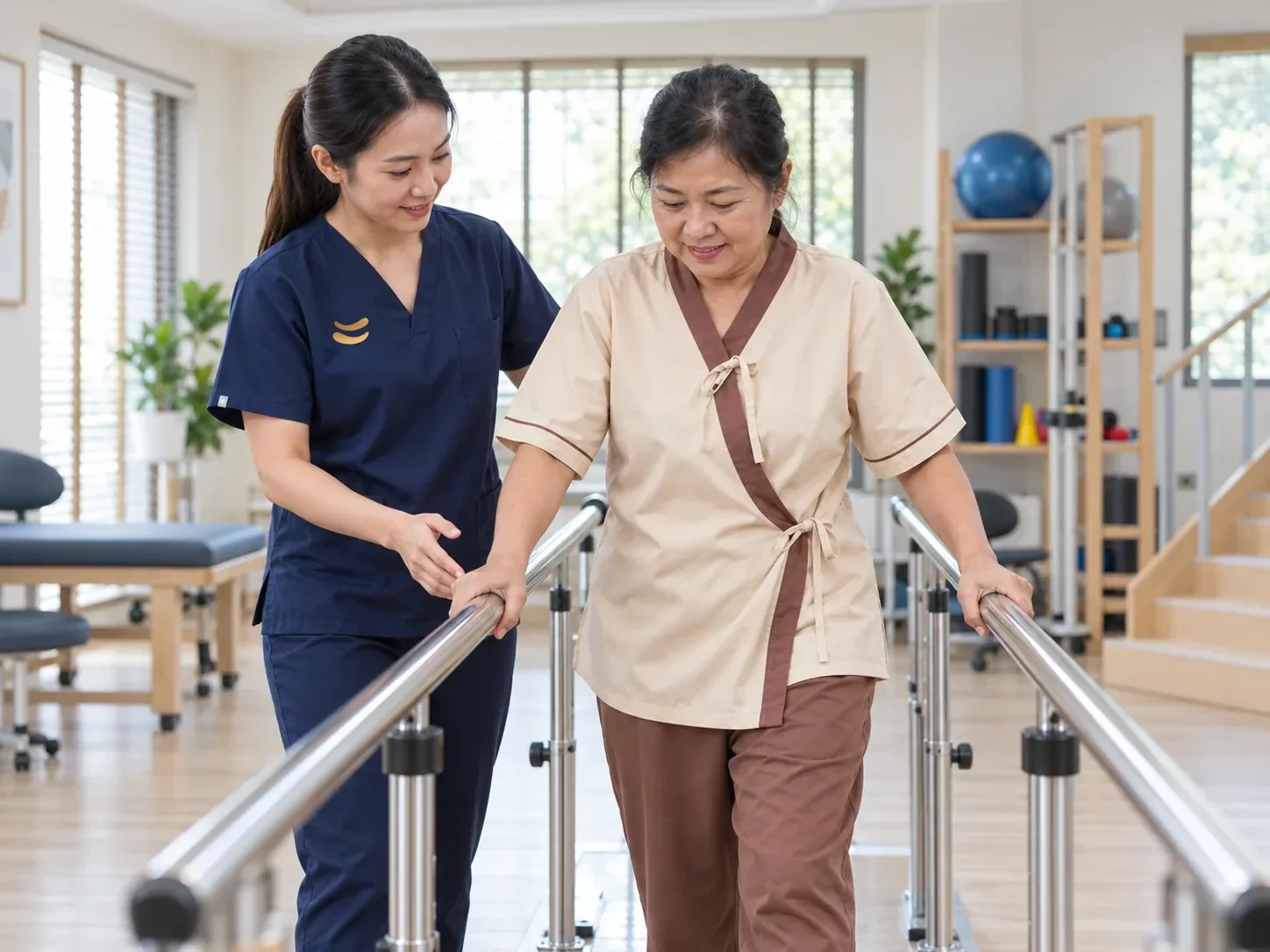
Rehabilitation phase includes practicing standing and walking with handrails.
5. The process of restoring Gillang Barre from a severely injured state to the point where he can walk again.
Short answer:During severe phases, the hospital team monitors breathing, positioning, and prevents joint stiffness and pressure sores. Once symptoms stabilize, strength training and sitting-ups are introduced, followed by gait and endurance training, gradually increasing the intensity as the patient's body can tolerate.
Recovery in stages.
A review by Kiper et al. (J Clin Med, 2025), comprising 16 studies, found that exercise improves strength, reduces fatigue, and increases self-reliance. Khan et al. (J Rehabil Med, 2011) conducted a study in patients.chronic phase79 people found that a more intensive program reduced disability more effectively (not during the period when the disease was still advanced).But most of the evidence is of low quality.Sulli (2021) found only 3 randomized controlled trials, so individual planning is necessary.Weakness resulting from a long-term illness.
6. Post-Guillain Barré fatigue and overwork weakness.
Short answer:Fatigue is experienced by 60–80% of individuals, even after recovery. Gradually increasing training intensity and supervision can help reduce fatigue, but training too hard can still lead to soreness, pain, or weakness afterward. Evidence that it slows recovery is inconclusive.
Garssen et al. (Neurology, 2004) had 20 patients with severe fatigue cycle for 12 weeks. Fatigue decreased by about 20% (small group, no control group). UW Medicine recommends training at a level of exertion.Levels 2–4 out of 10It means you can still talk to them, and increase the number of times before increasing the weight.
Stop training and tell your physiotherapist when...Increased weakness in 1–5 days after training; increased numbness or tingling; muscle soreness; prolonged fatigue (over 12–24 hours). Reduce the intensity and gradually increase it again next time. (Clinical advice, not clinical trial results)
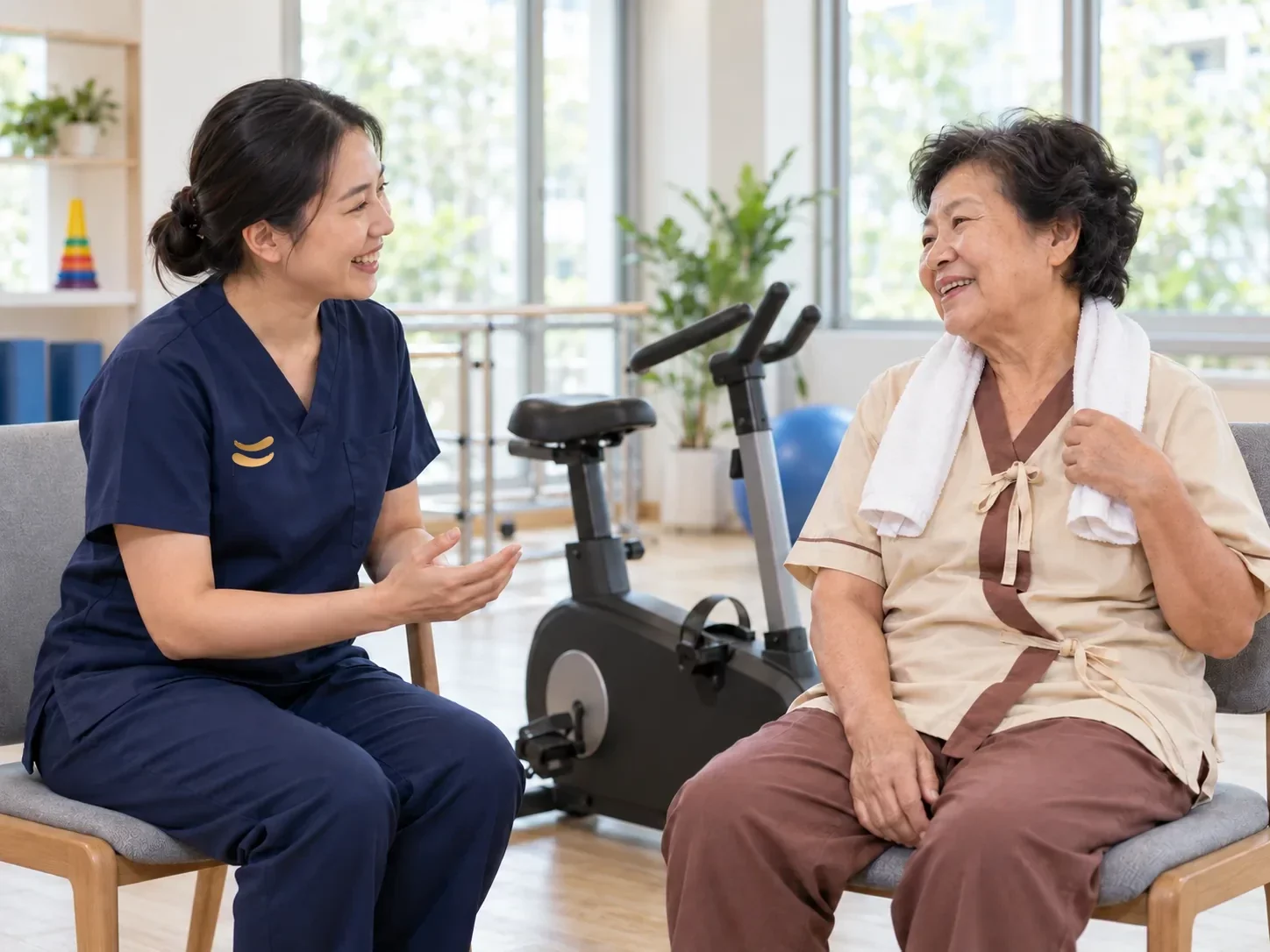
Train, then rest. Don't push yourself until you're completely exhausted.

"GBS isn't about training harder to recover faster. Train moderately and get enough rest."
How does KIN Ratchaphruek help Guillain-Barré patients and their families?
KIN Ratchaphruek (Nonthaburi) is a rehabilitation center for stroke patients and a senior care center.Overnight stayThis isn't the emergency room. They're here after the acute phase has passed and the doctor has discharged them, but they still can't walk on their own.
- 24-hour nursing care.Observe any changes in symptoms and inform your doctor.
- Choose a rehabilitation program that includes physical therapy as planned.Arrange the training sessions with alternating rest periods according to the patient's physical condition.
- The medical team comprises 5 specialties, along with 8 professional fields.watchTeam list
- Visit the site and inquire about our services.Free of charge. Daily, 09:00–18:00.
Contact KIN Ratchaphruek | Free consultation and visit.
Consult about rehabilitation at the Guillain Barré Center for patients who are unable to walk independently. Visits are welcome daily from 9:00 AM to 6:00 PM.
Other branches of KIN Rehabilitation
KIN Salaya
Buddhamonthon · Opening December 15, 2026 · Advance reservations are now available.


Central hotline:02-096-4996| Home-based physiotherapy 095-767-6307 | Care, nursing, and equipment rental 061-881-9399 | Emergency call 1669
Frequently Asked Questions answered by the KIN medical and multidisciplinary team.
How long will Gillan Barré's recovery take? Will he be able to walk again?
It usually takes several months. In the group who were unable to walk independently at their worst, 77% were able to walk independently after 6 months, and 81% after 1 year. Some may still experience weakness or numbness.
Can someone who has had GBS receive the vaccine?
A history of GBS (Gut Bran-Based Sclerosis) is not an absolute contraindication to vaccination, but many vaccines include a warning about this. You should consult your doctor before every vaccination.
Is GBS a brain disease?
No, GBS (Gut Syndrome) is caused by the immune system attacking peripheral nerves, not the brain or spinal cord, so it's different from a stroke.
What symptoms of GBS require calling 1669?
If you experience difficulty breathing, shortness of breath, difficulty swallowing or choking, or rapid weakness on both sides even if you can still walk, call 1669 immediately.
Will doing intensive physical therapy help me recover faster?
No, training until you're exhausted the next day may cause pain or weakness afterward. You should train at a level where you can still talk, and gradually increase the intensity as assessed by a physical therapist.
Can Gillang Barré be re-signed?
It's uncommon, occurring in about 2–5% of cases. If your condition improves and then worsens again, or continues to worsen after 8 weeks, see a doctor immediately, as it may be a chronic condition that requires different treatment.
- Leonhard SE et al. Diagnosis and management of GBS in ten steps. Nat Rev Neurol 2019.
- Doets AY et al. Regional variation of Guillain-Barré syndrome (IGOS). Brain 2018.
- WHO. Guillain–Barré syndrome (2568)
- Shahrizaila N et al. Guillain-Barré syndrome. Lancet 2021.
- Garssen MP et al. Physical training and fatigue in GBS and CIDP. Neurology 2004.
- Kiper P et al. Physical Exercise in GBS: A Scoping Review. J Clin Med 2568.
- Sulli S et al. The efficacy of rehabilitation in GBS. Expert Rev. Neurother 2021.
- Khan F et al. High- and low-intensity rehabilitation in chronic phase GBS. J Rehabil Med 2011.
- UW Medicine. Guillain-Barré Syndrome and Exercise (Patient Document 2569)
- Physical Therapy Center, Faculty of Physical Therapy, Mahidol University. Guillain-Barré (2023).
Medical accuracy verified by Dr. Kritchatha Phungcharoen, License No. 40781, Neurologist | Supervised by Dr. Thongchai Chokthanomsap, Chairman of the Executive Board | Last updated: October 2026 |This article provides preliminary information; it is not a specific diagnosis, nor does it recommend dosage or treatment. Research figures do not reflect the results of KIN patients. Rehabilitation plans must be assessed individually by a physician and physical therapist.