

Weak and unable to walk after an ICU stay
How are ICU-acquired weakness and PICS rehabilitated, and how many months does recovery take?
Post-ICU weakness must be distinguished from stroke and other potential causes; it does not resolve with rest alone.
Use a ventilator for 5–7 days
Date of hospital discharge → 2 years
Body, mind, spirit
The upper arms and thighs are larger than the extremities (forearms and lower legs).
Survived the ICU, but now unable to lift arms or sit up unassisted. Recovery from this condition happens in stages, and training must be balanced appropriately.
Figures from international research studies do not reflect the outcomes for KIN patients.
Content in this article
1. What causes weakness after a stay in the ICU?
Short answer: A condition involving muscle or nerve damage, often exacerbated by prolonged immobility, is known as ICU-acquired weakness (ICUAW); it is diagnosed when no other cause can account for the condition.
The review by Hermans and Van den Berghe (Critical Care, 2015) is divided intoCritical illness-related nerve damage andCritical illness-related muscle wasting These conditions can coexist. Muscle weakness upon awakening is observed in 26–65% of patients who have been on a ventilator for 5–7 days (defined by a total muscle strength score of less than 48 out of 60). This is distinct from the muscle atrophy that typically results from prolonged bed rest. Weakened by a long-term illness
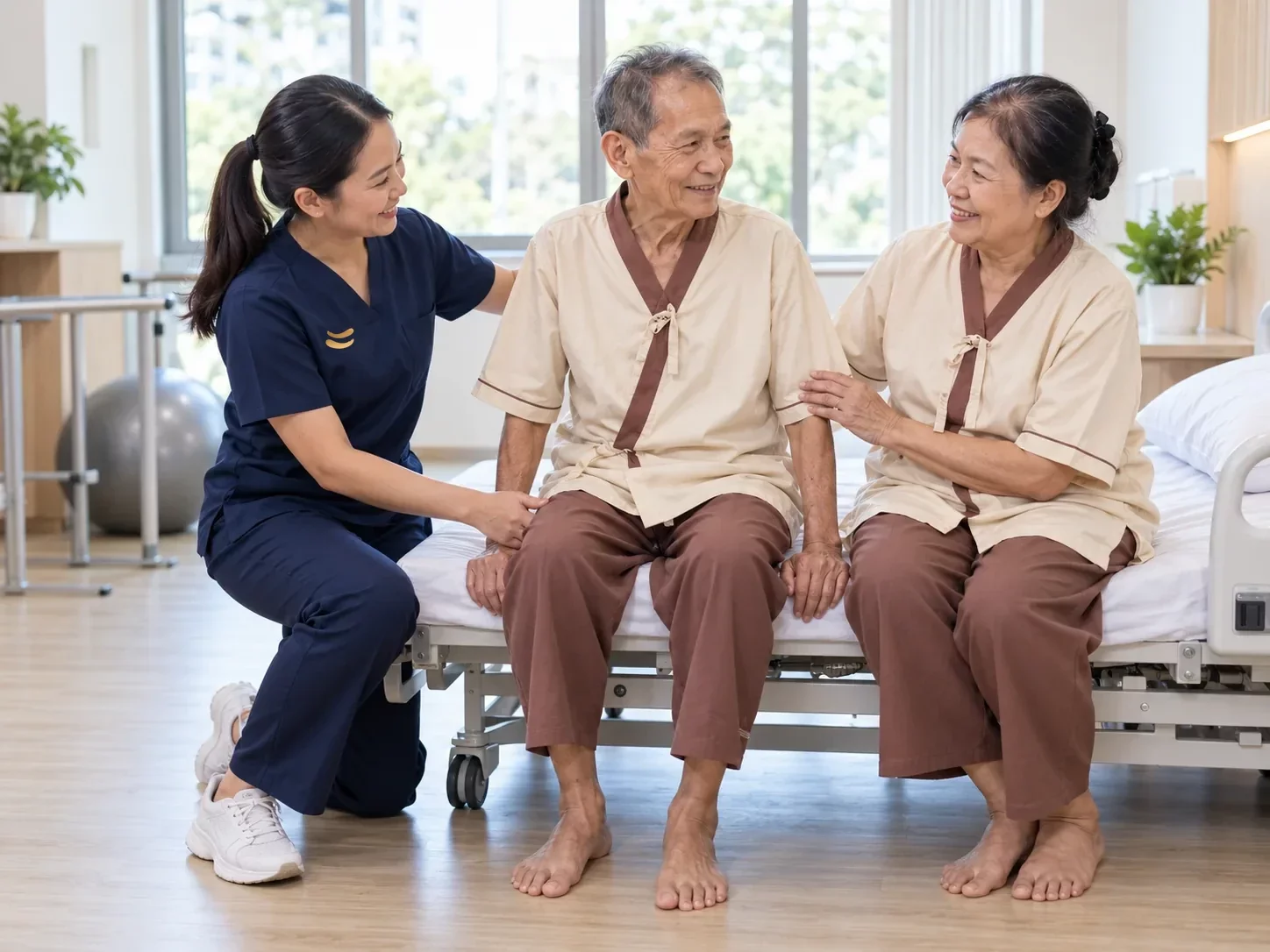
First, establish a stable, balanced position before standing up.
2. How do ICU-acquired weakness and PICS differ from each other, and how do they differ from a stroke?
Short answer: ICUAW refers specifically to muscle weakness, whereas PICS is a broader term encompassing new or worsening physical, cognitive, or mental health issues that persist after the acute phase of critical illness. Clinicians must always rule out a stroke or other potential causes first.
| Issue subject subject matter | Post-ICU weakness | Stroke |
|---|---|---|
| nature look manner style feature character aspect type description kind structure color qualities quality physiognomy group mold setting class mien category sort mould | ICUAW typically presents with bilateral, symmetrical weakness that is more pronounced in the proximal limbs (upper arms and thighs) and generally spares the face. | The sudden onset of one-sided weakness, facial drooping, or slurred speech must be distinguished from a stroke. |
| When does it start? | While in the ICU, it became clearly apparent whenever I was awake. | It may occur suddenly. |
| What to do | Graded physical training | For emergency assessment, do not use the format in this table to rule out stroke. |
Source: Vanhorebeek 2020 – Supports only the clinical features of ICUAW; the pattern of symptoms alone cannot distinguish it from a stroke or other neurological disorders.
Needham et al. (Crit Care Med 2012) distinguish PICS in survivors from...PICS-F, which refers to the psychological impact on family members or caregivers. Pandharipande et al. (NEJM 2013) found that 12 months after an ICU stay, 34% of patients—specifically those who had experienced respiratory failure or shock—exhibited cognitive scores comparable to those of individuals with moderate traumatic brain injury.
3. Who is at risk of muscle weakness after an ICU stay?
Short answer: Individuals who are critically ill, including those with bloodstream infections, multi-organ failure, high blood sugar, prolonged immobility, or advanced age.
- Lying still for a long time Fan et al. (Crit Care Med 2014) followed 222 individuals and found that the number of days spent bedridden was associated with muscle weakness over a 24-month period.
- Age, underlying medical conditions, and certain groups of medications ...necessary in critical situations (Vanhorebeek 2020). Do not adjust or discontinue the medication on your own.
4. After a stay in the ICU, how many months does it take to recover from weakness?
Short answer: Improvement typically occurs over a period of weeks to months, with the most noticeable progress seen within the first year; however, some individuals may continue to experience weakness or easy fatigability beyond 1–2 years, necessitating periodic reassessment.
Fan et al. (2014) followed up with 222 survivors of acute lung injury and found that some still experienced weakness. 36% at hospital discharge → 22% at 3 months → 15% at 6 months → 14% at 1 year → 9% at 2 years Used for identifying trends, not for making individual predictions.
- Strength often returns before physical fitness In the same study, physical performance and quality of life were found to remain suboptimal beyond 24 months.
- Long term In a study by Herridge (NEJM 2011) involving 109 ARDS survivors, the distance covered in a 6-minute walk test at the 5-year mark was approximately 76% of the predicted value.
- Type with an effect In cases involving only the muscle, recovery is typically near-complete within one year; in cases where there is also nerve damage, muscle strength remains at 50–75% after one year (small-scale study).
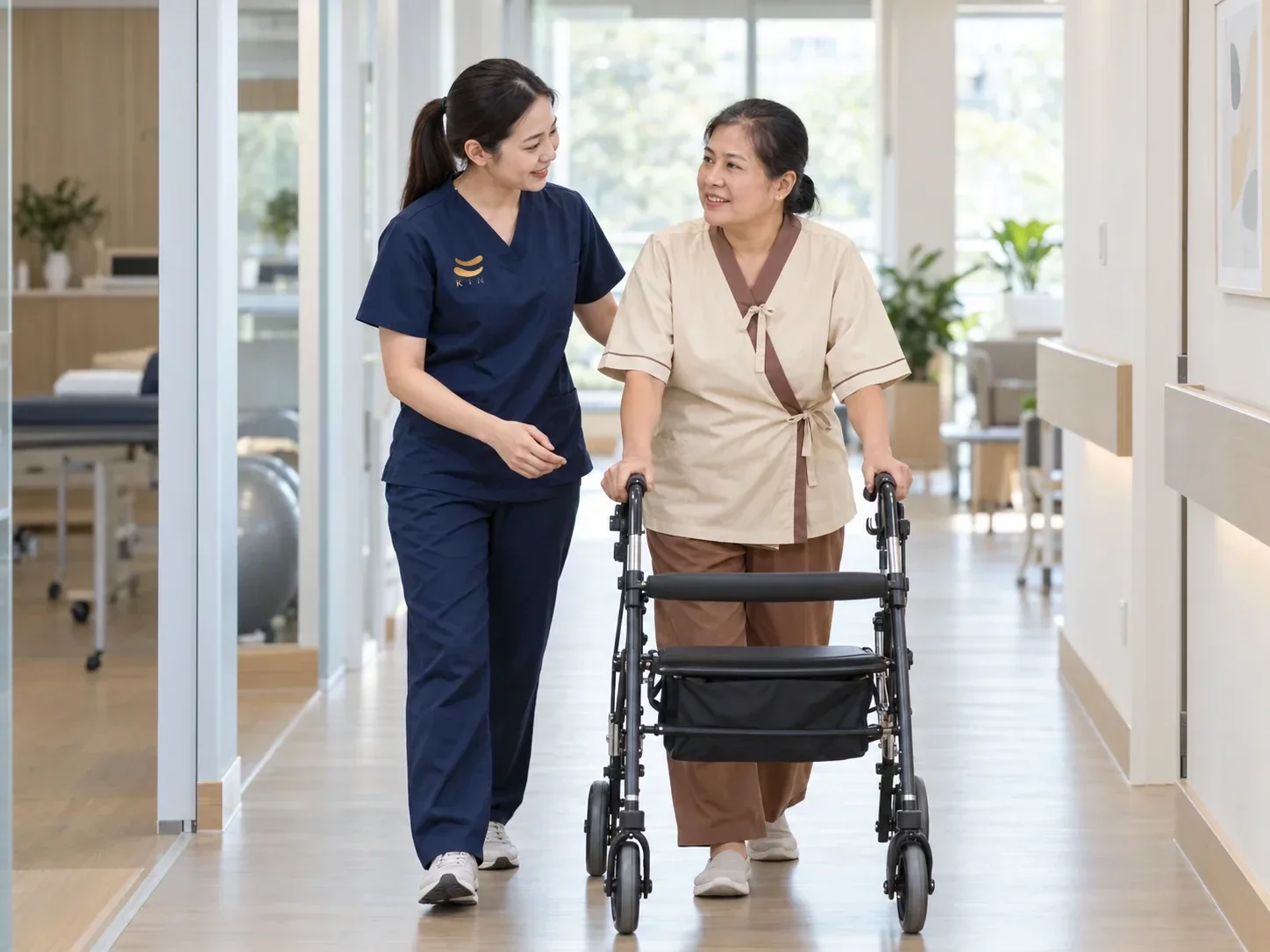
Practice with short walks, take frequent breaks, and then gradually increase the distance.
5. Rehabilitation after leaving the ICU: How to practice balancing, sitting up, walking, breathing, and swallowing.
Short answer: Training progresses in stages—from balancing while seated to standing and walking—integrated with breathing exercises, coughing practice, and swallowing assessments. The intensity is increased gradually, while the team monitors pulse, blood pressure, and oxygen levels both before and after each session.
The training steps that physical therapists usually plan.
On Swallowing Schefold et al. (Crit Care Med, 2017) screened 933 patients after extubation. Dysphagia screening was positive in 116 patients (12.4%). Specialist assessment confirmed dysphagia in 96 of 110 patients, and the abstract reports that 58 of 96 (60.4%) remained positive until hospital discharge (single-center study). The care team should therefore assess swallowing before a normal diet is resumed. Read Rehabilitation for patients with swallowing difficulties
The evidence is not yet compelling. A Cochrane review (Connolly, 2015) of 6 studies involving 483 participants found positive results in 3 of the studies, though the quality of evidence was very low. The BMJ (Hiser, 2025) notes that experimental results have been inconsistent, necessitating an assessment of outcomes on an individual basis.
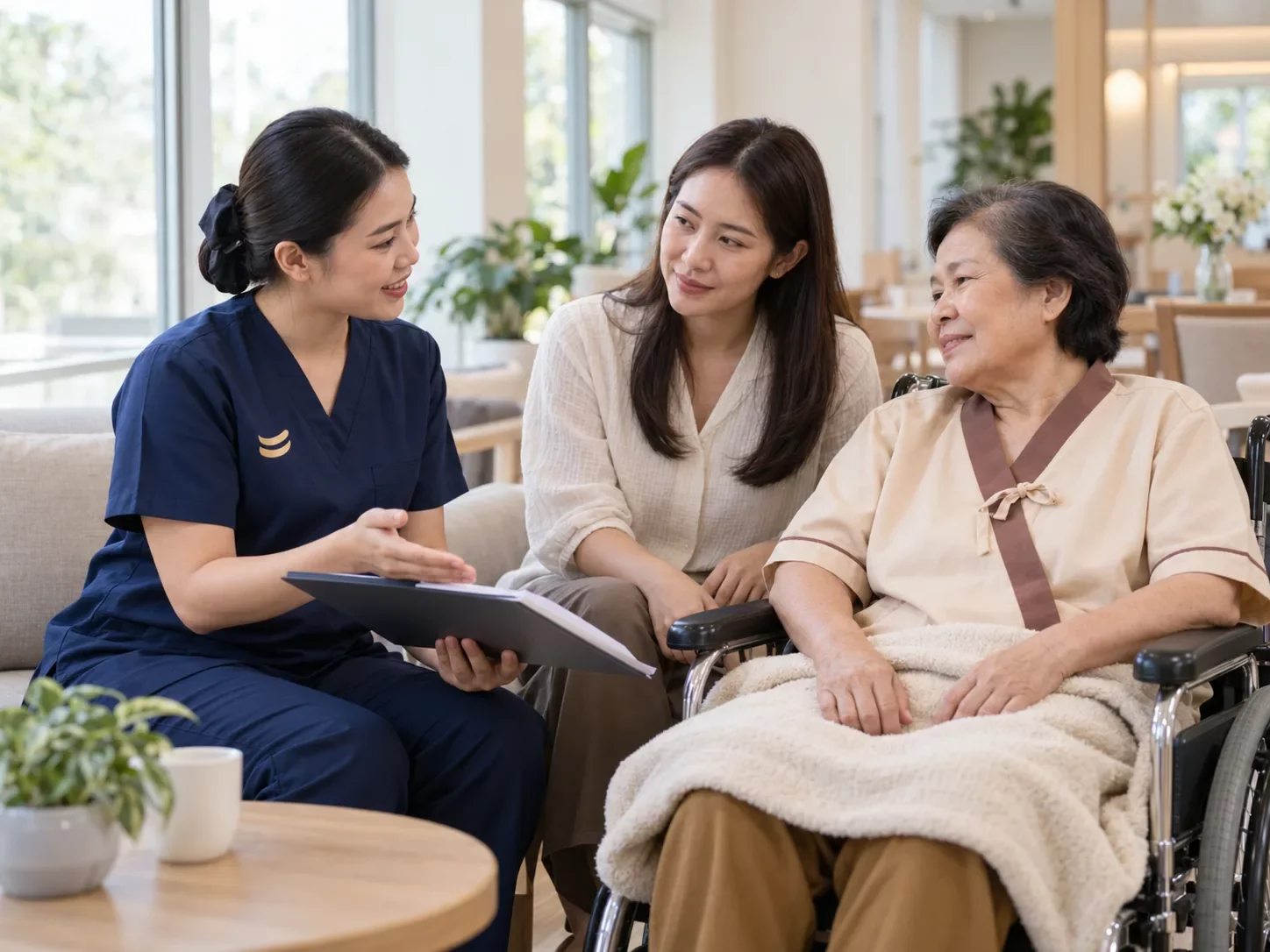
Relatives should be aware of warning signs from the very first day.
“A body that has been through the ICU requires consistent, appropriately paced training—progressing step by step, with results measured on a monthly basis.”
6. Warning signs after leaving the ICU that require medical attention
Short answer: If you experience difficulty breathing, chest pain, new-onset confusion, or sudden weakness on one side of the body, call 1669. If you notice worsening weakness, develop a fever, experience swelling in one leg, or frequently cough when swallowing, seek medical attention promptly.
Call 1669 immediately.
• Difficulty breathing, able to speak only one word at a time, or chest pain/tightness
• Sudden weakness or numbness on one side of the body, facial drooping, and slurred speech
• Becoming lethargic, difficult to rouse, experiencing sudden confusion, or choking to the point of being unable to breathe
If one-sided weakness suddenly develops, consider a stroke first. Read more. Waking up with weakness in the arms and legs
- See a doctor as soon as possible. Worsening rather than improving weakness; fever; productive cough; or one-sided leg swelling, redness, and pain
- The mind is also important. Recurring nightmares, insomnia, and depression (PICS) — consult a doctor.
How does KIN support patients' families after discharge from the ICU?
KIN Hospital, Sukhumvit 107 (Soi Bearing 10, near BTS Bearing), is registered as a physical rehabilitation hospital. Not an emergency room Suitable for the period following a critical phase, once the attending physician has authorized the commencement of rehabilitation; the team assists in planning a structured, progressive training regimen tailored to the patient’s readiness.
- Outpatient and day-care rehabilitation services with a focus on recovery. or recover at a center
- A medical team covering 5 specialties, in collaboration with 8 allied health professions. watch see view look read check try behold peepList of teams
- Warm-water hydrotherapy pool Supervised by a physical therapist at every session
- Receipts can be issued for group insurance claims. Subject to policy terms · ViewRecovery after hospital discharge
Contact Kin Hospital, Sukhumvit 107 | Free Consultation and Site Visit
Consultation on rehabilitation plans for patients experiencing weakness after ICU discharge · Open for visits daily, 09:00–18:00.


Other KIN Rehabilitation locations
Central Hotline: 02-096-4996 | In-home Physical Therapy: 095-767-6307 | Nursing Care & Equipment Rental: 061-881-9399 | For Emergencies, Call 1669
Frequently Asked Questions – Answered by KIN’s Medical and Multidisciplinary Team
After a long stay in the ICU, a patient is unable to walk; how many months will it take for them to be able to walk again?
Many people show improvement over the course of weeks to months. Follow-up assessments indicate that the proportion of individuals experiencing persistent weakness decreased from 36% at the time of hospital discharge to 14% one year later. The rate of recovery varies from person to person.
How do physicians distinguish post-ICU weakness from other medical conditions?
The doctor will assess your muscle strength and nervous system, and may perform nerve and muscle electrical tests to rule out a stroke or other neurological conditions.
What is PICS?
PICS refers to new or worsening physical, cognitive, or mental health issues experienced by survivors of a critical illness, while the psychological impact on their families or caregivers is known as PICS-F.
Could weakness after an ICU stay be a stroke?
It is not possible to distinguish the condition based solely on the pattern of symptoms. While ICUAW (ICU-acquired weakness) typically presents as symmetrical weakness, predominantly affecting the proximal muscles, other conditions—such as a stroke or various neurological disorders—can also occur following an ICU stay. If any new or sudden neurological symptoms arise, an urgent evaluation is required.
Will doing intensive exercise after leaving the ICU help me recover faster?
You should not increase the intensity on your own; instead, do so gradually, following established assessments and safety criteria. This is because experimental research on training volume has yielded inconsistent results.
What should be done if frequent coughing occurs after eating, following the removal of a breathing tube (endotracheal tube)?
You may experience difficulty swallowing after having a breathing tube (endotracheal tube) removed. If this happens, stop the current meal; do not switch to liquids or soft foods on your own. Notify the medical team promptly so they can assess your swallowing ability. If you experience choking, difficulty breathing, or an inability to speak, call 1669.
- Hermans G et al. Clinical review: ICU-acquired weakness. Crit Care 2015
- Vanhorebeek I et al. ICU-acquired weakness. Intensive Care Med 2020
- Fan E et al. Physical complications in acute lung injury survivors. Crit Care Med 2014
- Herridge MS et al. Functional disability 5 years after ARDS. NEJM 2011
- Needham DM et al. Improving long-term outcomes after ICU. Crit Care Med 2012
- Pandharipande PP et al. Long-term cognitive impairment after critical illness. NEJM 2013
- Schefold JC et al. Dysphagia in mechanically ventilated ICU patients. Crit Care Med 2017
- Connolly B et al. Exercise rehabilitation following ICU discharge. Cochrane 2015
- Hiser SL, et al. ICU-acquired weakness and physical rehabilitation. BMJ 2025
Medically reviewed by Krittha Phuengcharoen, M.D. (License No. 40781), Neurologist | Supervised by Thongchai Chokthanomsap, Ph.D., Chief Executive Officer | Last updated: October 2026 | This article provides general information and does not constitute an individual diagnosis. Research figures do not necessarily reflect outcomes for specific patients. Rehabilitation plans must be assessed on a case-by-case basis by a physician and a physical therapist.