

Brain Tumor: Symptoms That Warrant Medical Assessment
and Rehabilitation After Brain-Tumor Surgery
Know when to seek assessment and what can be trained after surgery.
May develop gradually (NHS · NCI)
even if the seizure has stopped on its own
Single-center retrospective study
These symptoms can result from many other conditions, but a new or steadily worsening symptom should be assessed by a physician.
This article provides general information, not a diagnosis. Only the attending physician can determine a tumor’s type or prognosis.
In this article
1. What Brain-Tumor Symptoms Should You Watch For?
In short: Common symptoms include a new or progressively worsening headache, seizures, frequent nausea and vomiting, unusual drowsiness, changes in memory or personality, gradually worsening weakness on one side of the body, and vision or speech problems. Some people have no symptoms at first.
- Headache that is new, steadily worsens, occurs in the morning, or improves after vomiting
- Seizure involving the whole body or only an arm, leg, or the face in someone with no previous seizure
- Weakness and unsteady walking gradually increasing weakness on one side and loss of balance
- Thinking and mood worsening memory, reduced concentration, or changes in personality or behavior
- Vision, hearing, and speech blurred or double vision, reduced hearing, or increasing difficulty speaking or understanding speech
- General symptoms frequent nausea and vomiting, loss of appetite, or unusual drowsiness
NHS and NCI state thatsymptoms depend on the tumor’s location and size, and other conditions can cause the same symptoms. In most cases, the cause is unknown.
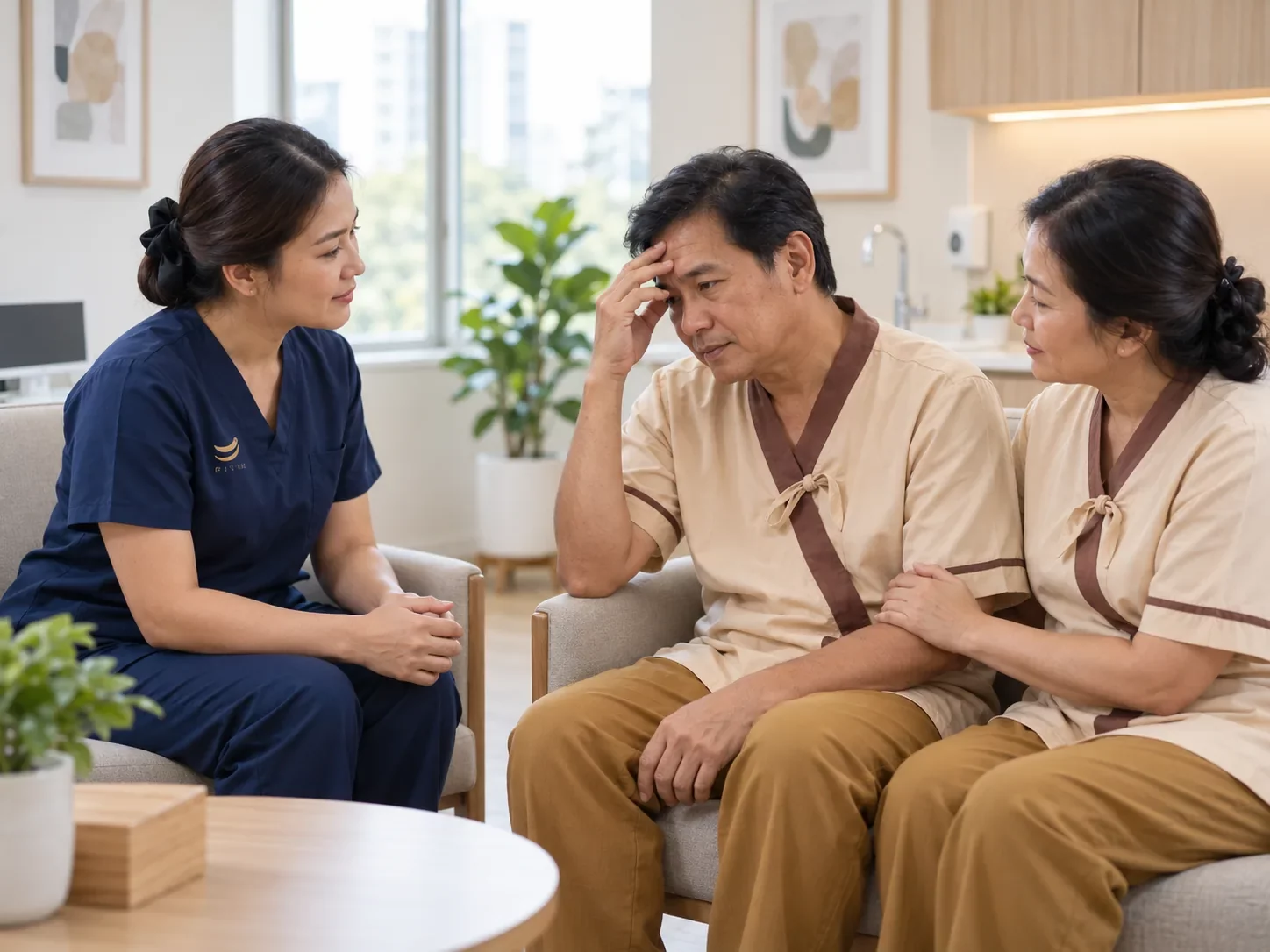
A new type of headache should be assessed by a physician.
2. When Does a Seizure Require Calling 1669 Immediately?
In short: Call 1669 for a first seizure, a seizure lasting more than 5 minutes, repeated seizures without fully regaining consciousness, or difficulty breathing after a seizure, in line with NHS first-aid guidance.
Call 1669 immediately
• A first seizure, even if it stops on its own
• A seizure lasting more than 5 minutes or longer than is usual for that person
• Repeated seizures without fully regaining consciousness
• A serious injury during the seizure or difficulty breathing afterward
Read more: Which Headache Symptoms Are Dangerous?
While waiting for the ambulance when someone is having a seizure (NHS) Do not put anything in the person’s mouth. Cushion the head, do not restrain the person, and record the time. When the seizure stops, turn the person onto their side. Do not offer food or drink yet.
3. What Problems Were Found Among Brain-Tumor Patients Admitted for Inpatient Rehabilitation?
In short: In a retrospective case series of 51 inpatient rehabilitation patients, common problems involved thinking and memory, limb weakness, visual perception, numbness, and bowel or bladder control. Many patients had several problems at once. These figures are not rates for all people with brain tumors or for all postoperative patients.
Treatment depends on the tumor’s type, location, and size, as assessed by the neurosurgeon and treating physicians (read How Many Days Does Recovery After Craniotomy Take?). A 2001 retrospective case series by Mukand et al. examined 51 brain-tumor patients admitted for inpatient rehabilitation and found:
| Problem | Prevalence | Example of a possible impact (not measured in this study) |
|---|---|---|
| Thinking and memory | 80% | Missing appointments or difficulty following steps |
| Limb weakness | 78% | Difficulty rising, standing, walking, or grasping objects |
| Visual perception | 53% | Misjudging distance or bumping into objects |
| Numbness | 38% | Poor awareness of foot position and a higher risk of falling |
| Bowel and bladder control | 37% | Need for bowel or bladder training and skin care |
Mukand JA 2001 · 74.5% had at least 3 problems · Less frequent findings: dysarthria, dysphagia, aphasia, and ataxia · Limitations: single-center retrospective data, not KIN data; the example impacts in the right-hand column were not measured in this study.
4. What Does Rehabilitation After Brain-Tumor Surgery Involve?
In short: Training is tailored to the problems identified by the team, such as balance, walking, limb strength, speech and swallowing, and thinking and memory. It begins when the attending physician says the patient is ready.
- Balance sitting balance, standing within parallel bars, position changes, and fall prevention (physical therapist)
- Walking rising from a chair, walking with an assistive device, and gradually increasing distance (physical therapist)
- Limb weakness strengthening, hand-use practice, dressing, and eating (physical therapist and occupational therapist)
- Speech and swallowing These functions are generally assessed and trained by a speech-language pathologist, using principles similar to Speech Training After Stroke (at KIN, swallowing therapy is available at Lat Phrao 71)
- Thinking and memory concentration training, daily-routine scheduling, and using a notebook or alarm as a reminder (occupational therapist)
- Stop training and alert the team if the headache worsens, vomiting occurs, drowsiness increases, or the wound appears abnormal.
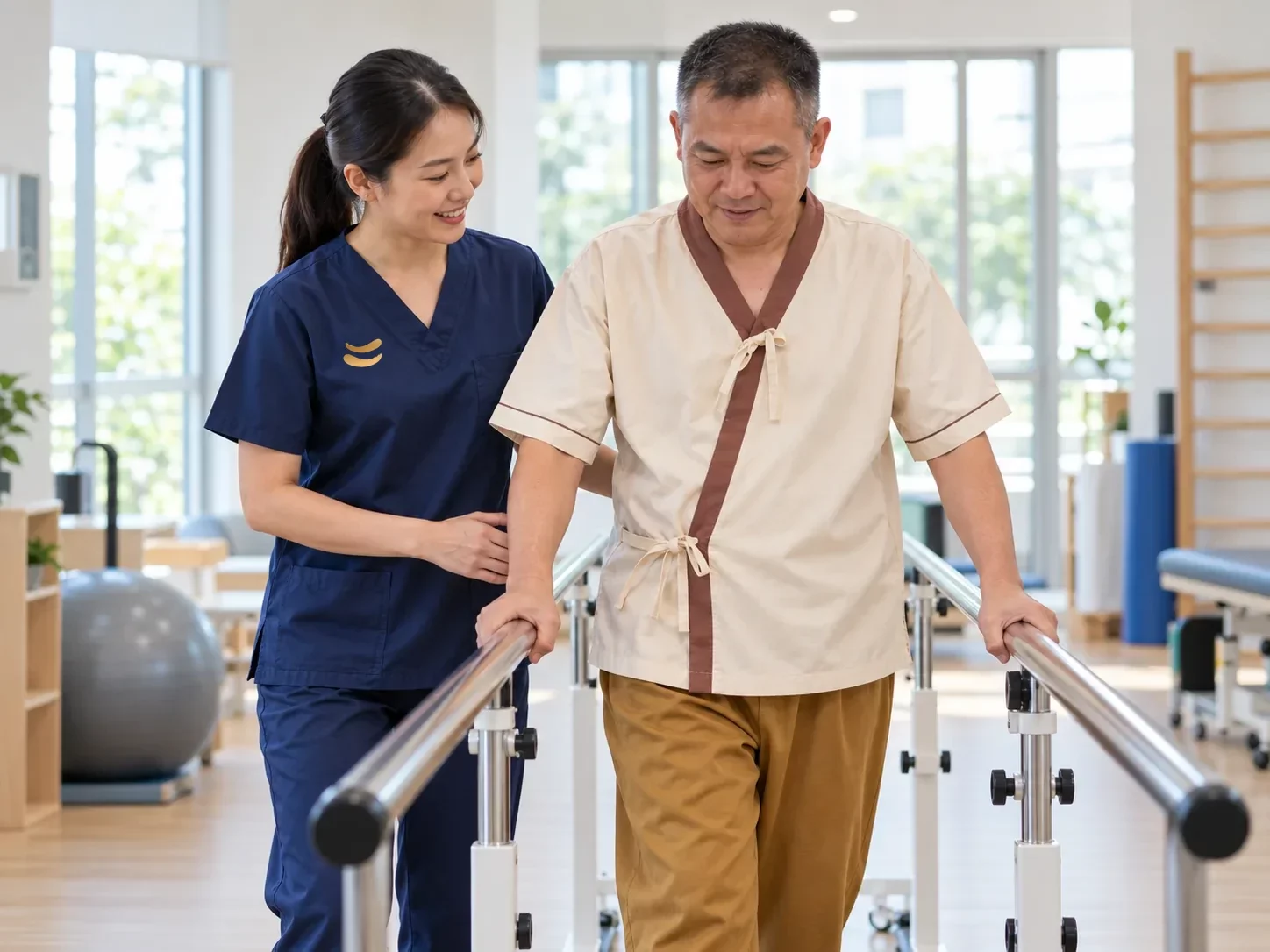
Step-by-step gait training
5. How Much Does Research Show Rehabilitation Helps After Brain-Tumor Treatment?
In short: Retrospective research found that Functional Independence Measure (FIM) scores improved by a similar amount to those of the stroke group in this cohort, but evidence from trials remains limited.
Greenberg et al. (2006) compared 168 patients after surgery for a primary brain tumor with 1,660 stroke patients at the same rehabilitation center and found thatFunctional Independence Measure (FIM) scores improved by a similar amount The brain-tumor group had a shorter rehabilitation stay. Among patients receiving inpatient rehabilitation at this center, 82.7–91.7% were discharged home, depending on tumor type (single-center retrospective data). A Cochrane review (Khan et al., 2015) of rehabilitation after treatment for primary brain tumors found one eligible study involving 106 people, a low-quality controlled clinical trial supporting more intensive multidisciplinary outpatient rehabilitation for reducing disability, butthere is still no evidence that it improves quality of life or participation, and the optimal amount of training remains unknown.
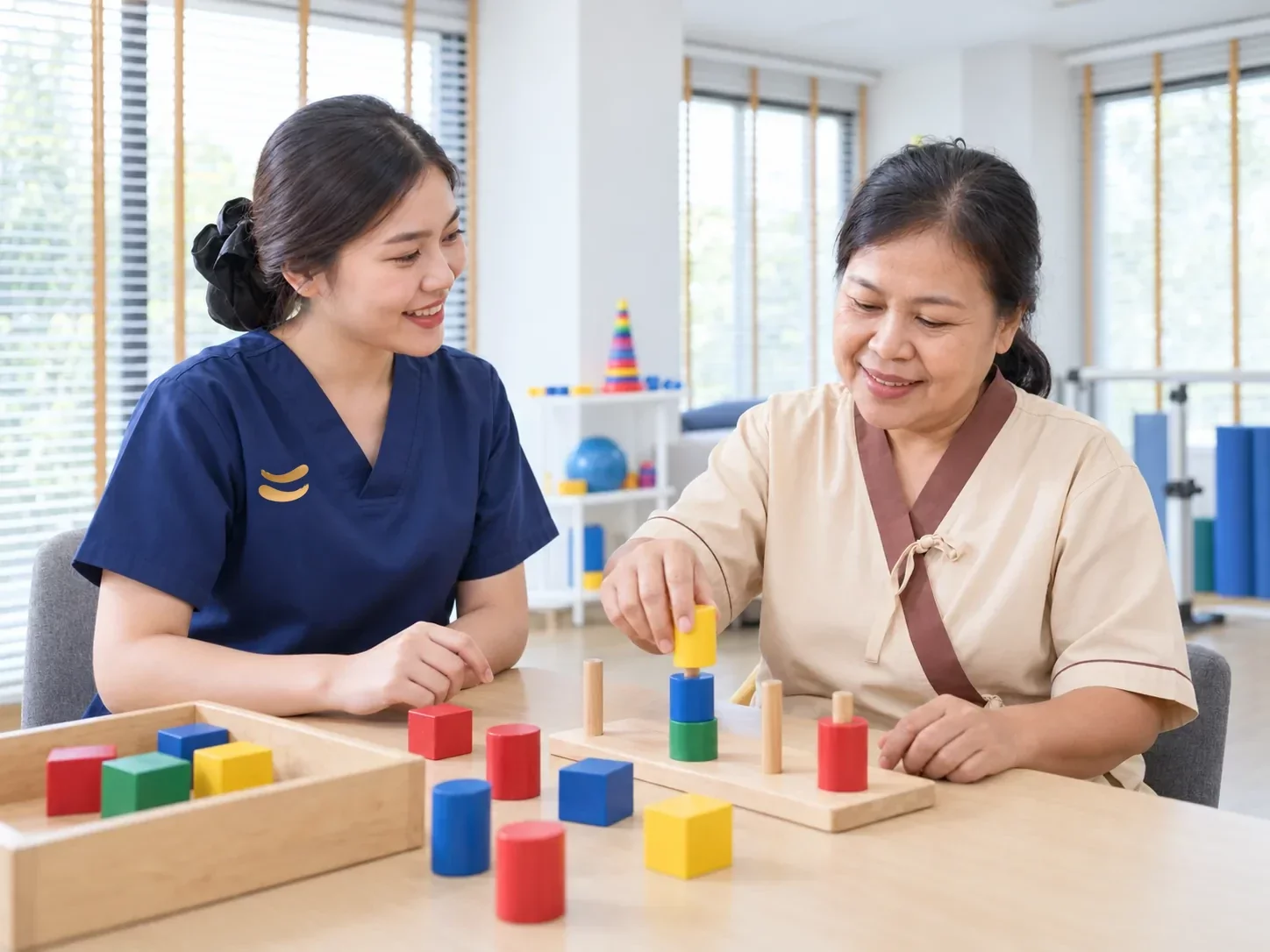
Concentration training
“The first goal after surgery is to help the patient safely do the activities that matter to them independently.”
6. What Should Family Members Do When the Patient Returns Home After Brain-Tumor Surgery?
In short: Make the home safer to prevent falls, give medication exactly as prescribed without stopping it independently, attend follow-up appointments, and watch for wound and neurological warning signs.
- Medication especially antiseizure medication and medication to reduce brain swelling, must not be stopped or adjusted without medical advice. · Ask the physician before driving.
- Fall prevention Keep walkways clear, provide a night-light and bathroom grab bars, and initially have someone nearby while the patient walks.
- Fatigue and mood Use short training sessions. Consult a physician about depression or anxiety.
- Contact the surgical team that day for fever, a red wound, or fluid leaking from the wound. Clear fluid leaking from the wound may be cerebrospinal fluid; also report a stiff neck, vomiting, an unrelieved headache, worsening blurred vision, or gradual deterioration.
- Call 1669 for a seizure emergency, including a first seizure, one lasting more than 5 minutes, repeated seizures without recovery, or difficulty breathing afterward. Sudden neurological symptoms require the specific emergency plan provided by the attending physician.
How KIN Helps Families After Brain-Tumor Surgery
KIN Hospital Sukhumvit 107 (Soi Bearing 10, near BTS Bearing) is registered as a physical rehabilitation hospital. It is not an emergency department and does not perform surgery or treat tumors. It is appropriate once the attending physician recommends continuing rehabilitation.
- Postoperative rehabilitation is available as residential, outpatient, or Day Care service focused on rehabilitation.
- On-site rehabilitation medicine physician and neurologist The rehabilitation medicine physician holds an outpatient clinic every Wednesday.
- A medical team covering 5 specialties together with 8 professional disciplines See the Team Directory
- Health-insurance reimbursement may be available subject to policy terms. · Free information and facility tours are available daily from 09:00–18:00 (medical examination and treatment not included).
Contact KIN Hospital Sukhumvit 107 | Free consultation and facility tour
Discuss a rehabilitation plan after brain-tumor surgery. · Please bring the hospital treatment summary.
Other KIN Rehabilitation Branches
KIN Salaya
Phutthamonthon · Opening December 15, 2026 · Advance reservations now available


Central hotline: 02-096-4996 | Home physical therapy 095-767-6307 | Care, nursing, and equipment rental 061-881-9399 | For emergencies, call 1669
Frequently Asked Questions, Answered by the KIN Medical and Multidisciplinary Team
Does having a headache every day mean I have a brain tumor?
Headaches are usually caused by something else. However, see a physician if the headache is unlike any you have had before, steadily worsens, or occurs with other symptoms.
What brain-tumor symptoms should I watch for?
Common symptoms include headache, seizures, nausea and vomiting, drowsiness, changes in memory or personality, one-sided weakness, and abnormal vision or speech. Symptoms depend on the tumor’s location.
Can a brain tumor be cured, and how long can a patient live?
There is no single answer. NCI states that this depends on the type and grade shown by pathology, location, whether it can be completely removed, and the patient’s health. Assessment commonly uses MRI or CT and biopsy. Ask the treating physician directly.
When should physical therapy begin after brain-tumor surgery?
When the attending physician determines that the patient is ready. One study found that patients entered rehabilitation an average of 13–34 days after surgery, but this was single-center data and is not a standard timetable.
Will I be able to walk again after brain-tumor surgery?
It depends on the tumor’s location, the symptoms, and concurrent treatment. The outcome cannot be predicted in advance; the team will set goals together with the family.
Can I receive rehabilitation after brain-tumor surgery at KIN Sukhumvit 107?
Yes. Residential, outpatient, and Day Care rehabilitation are available once the attending physician recommends continuing rehabilitation. Tumor treatment remains with the original physician.
- Brain tumours — NHS
- Adult CNS Tumors Treatment (PDQ) — NCI, January 2024
- What to do if someone has a seizure (fit) — NHS
- Discharge instructions after craniotomy — Pacific Brain Tumor Center
- Incidence of neurologic deficits and rehabilitation of patients with brain tumors — Mukand JA Am J Phys Med Rehabil 2544
- Rehabilitation outcomes in patients with brain tumors and acute stroke — Greenberg E Am J Phys Med Rehabil 2549
- Multidisciplinary rehabilitation after primary brain tumour treatment — Khan F Cochrane 2558
Medical accuracy reviewed by Dr. Thanchanok Chuthamsathit, MD, License No. 62998, Medical Director for Rehabilitation Medicine | Supervised by Dr. Thongchai Chokthanomsap, Chief Executive Officer | Last updated: October 2026 | General information only; not an individual diagnosis and not a prediction of tumor type or prognosis. Research figures are not outcomes of KIN patients.