

Forgetfulness and Slow Thinking After Stroke: Vascular Dementia, What to Watch For and How to Care
Explained by a neurology physician, based on the latest guidelines and research
have cognitive or perceptual problems (AHA/ASA 2026)
R4VaD study 2026
develop new dementia
have dementia
Short answer: Memory and thinking problems after stroke (post-stroke cognitive impairment) are more common than families expect. The AHA/ASA 2026 guideline states that about half of patients in the acute phase of stroke have cognitive or perceptual problems. Some improve in the first months; others develop vascular dementia, and at the start the two cannot be told apart by eye. What helps most is early screening and ruling out other treatable causes first, then planning training that suits that person, rather than just waiting and watching.
This article provides general information. Each person's diagnosis and treatment must be assessed by a physician.
In this article
1. How common is it?
- About 50% of patients in the acute phase of stroke have cognitive or perceptual problems (AHA/ASA 2026)
- A UK follow-up of 2,432 stroke and TIA patients (R4VaD, 2026), most with mild symptoms, found that in the first 6 weeks only 53.5% had normal cognition
- A pooled analysis by Pendlebury and Rothwell (Lancet Neurology, 2009) found that about 10% developed new dementia soon after a first stroke, and more than 1 in 3 had dementia after a recurrent stroke
Cognitive problems ≠ always dementia A doctor diagnoses "dementia" when the problem is severe enough that the person can no longer do daily tasks they used to do alone, such as managing money, taking their own medicines or travelling on their own. If they can still do them but more slowly or with some mistakes, it is called mild cognitive impairment, which has a better chance of improving.
This last figure matters most, because it shows that preventing a recurrent stroke also helps prevent dementia (read about recurrent stroke)
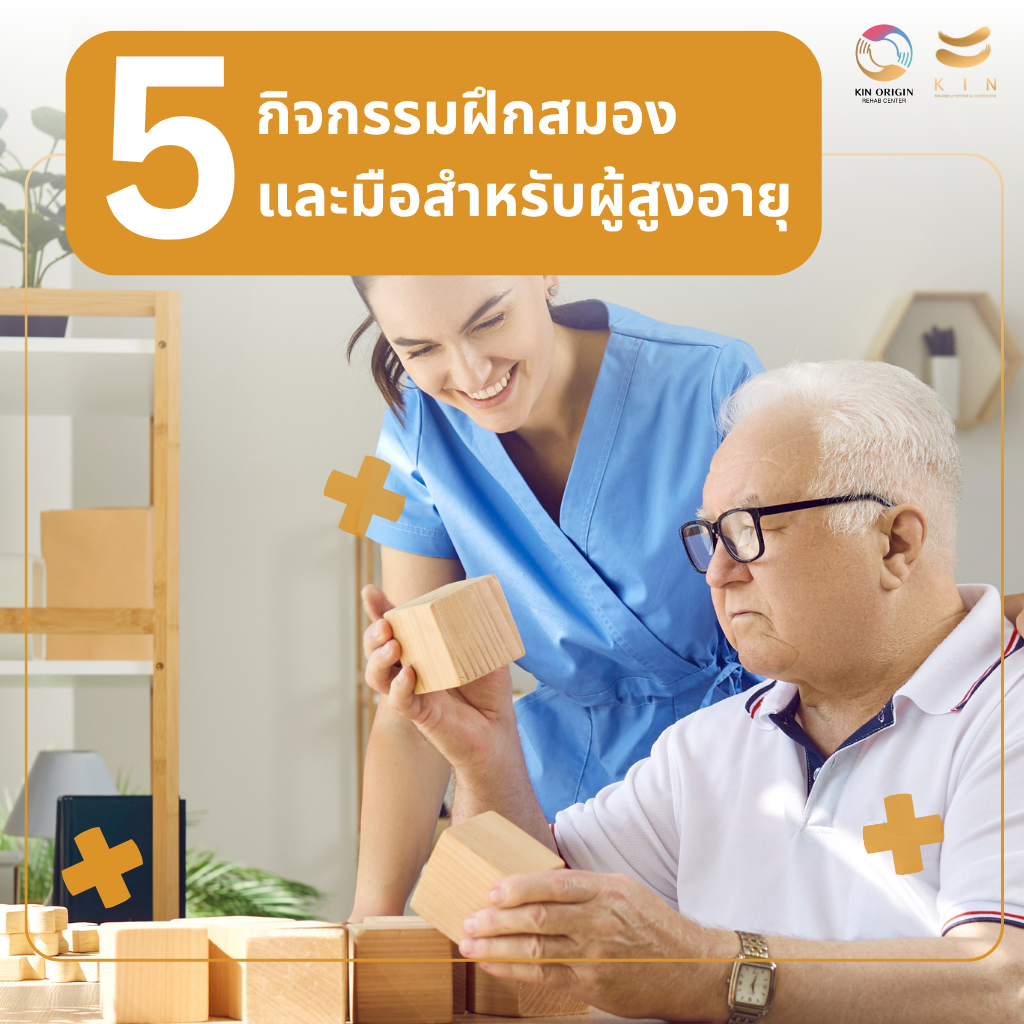
Cognitive training through real activities, adjusted to the person's ability
2. Symptoms families often notice
- Asks the same thing repeatedly; cannot remember appointments or recent conversations
- Thinks and answers slowly; can only do one thing at a time
- Cannot plan tasks they used to do alone, such as cooking, sorting medicines or paying bills
- Short attention span; cannot do physiotherapy for long
- Loses interest in surroundings; seems more passive than before
- Does not notice or attend to one side of the body or surroundings, such as eating only half the plate or bumping into things on the left (a brain perception problem, not blindness)
Problems after stroke are often unlike Alzheimer's. The main features tend to be slow thinking, poor planning and poor concentration rather than loss of old memories
3. Before concluding it is dementia, rule out these 5 things
Short answer: This is the part a neurologist must look at carefully, because many of these are treatable.
| Condition | Signs |
|---|---|
| Acute confusion (delirium) | Confusion that comes on quickly and comes and goes within the same day, often with a cause such as infection, dehydration or medicines |
| Depression | Apathy, not wanting to do anything, sleeping a lot. Depression can worsen concentration and memory, often occurs together with cognitive problems after stroke, and must be treated alongside them |
| Medicine effects | Sleeping pills, anti-anxiety medicines and some painkillers cause drowsiness and slow thinking · Do not stop medicines yourself; have the doctor review them |
| Not enough sleep / sleep apnea | Loud snoring, waking unrefreshed, daytime sleepiness |
| A new stroke, or non-convulsive seizures | Sudden worsening of symptoms; see a doctor immediately |

Cognitive screening with a short test covering several domains
4. What the doctor checks
Short answer: The AHA/ASA 2026 guideline recommends cognitive screening for every stroke patient using a short test covering several domains (memory, attention, planning, perception). If problems are found, a detailed assessment with standardized tests, together with observing real activities, is used to plan training.
The assessment usually includes
- History from the patient and from the person who is with them every day
- Cognitive tests such as the MoCA (the Thai version should be used) · If the patient has problems speaking or understanding, the score may be low because of communication, not memory, so an assessment method suited to that person is needed
- Reviewing all current medicines
- Looking at previous brain imaging in relation to the symptoms
- Further tests as needed, such as blood tests, sleep and mood
5. How to train, according to the latest guidelines
Short answer: AHA/ASA 2026 recommends
- cognitive training through computer or tablet programs that adjust difficulty to the person's ability, supervised, at moderate to high intensity (highest recommendation level · 1). The guideline states this is better than paper-and-pencil exercises alone.
- Combining cognitive training with exercise (2a)
- Training through real-life activities such as preparing simple meals, planning the day, or practicing sorting medicines with a caregiver double-checking every time (2a)
As for brain stimulation devices (TMS, tDCS) for memory, the guideline still classifies them as research and does not yet recommend them as a main treatment.

Combining cognitive training with exercise, following the AHA/ASA 2026 guideline
6. How families can help at home (even with just one caregiver)
- Keep the same routine every day — times for waking, meals, medicines and training
- Use memory aids — a large calendar, a daily pill organizer, a whiteboard for appointments
- Talk about one thing at a time — short sentences, and give time to answer
- Let them do as much as they can themselves — do not do everything for them, because doing it themselves is training
- Encourage walking or light exercise every day as advised by the physiotherapist
- Watch for sudden changes — if confusion suddenly gets worse, or new slurred speech or weakness appears, call 1669 or go to hospital immediately
At KIN • A neurology physician assesses cognition and looks for correctable causes
• Occupational therapists train thinking through real activities, together with the physiotherapy program
• Families receive guidance for continuing care at home
Read more: Activities to slow dementia in older adults · Medicines after stroke: can I stop them myself?
Consult a Physician | KIN Sukhumvit 107
Book a physician consultation in advance (not for emergencies) · Having stroke symptoms now? Call 1669


Other KIN Rehabilitation locations
Central Hotline: 02-096-4996 | Home physiotherapy 095-767-6307 | Care, nursing and equipment rental 061-881-9399 | Emergency: call 1669
Frequently Asked Questions – Answered by KIN's Medical and Multidisciplinary Team
Will memory come back after a stroke?
Many people improve in the first months, especially with training and good risk factor control, but the degree of recovery differs from person to person.
How is vascular dementia different from Alzheimer's?
Vascular dementia comes from patchy loss of blood supply to the brain and usually mainly affects thinking speed and planning, while Alzheimer's progresses slowly and mainly affects new memories. Some older people have both.
Do brain vitamins help?
No vitamin or supplement is recommended by treatment guidelines to restore memory after stroke, except when a real deficiency is found, such as vitamin B12. Consult a doctor before buying any.
Is there a medicine to restore memory after stroke?
No medicine is recommended by guidelines as standard to restore memory after stroke. Some medicines used in Alzheimer's may be considered case by case. The core of treatment is preventing another stroke and continuing to train.
Can it be kept from getting worse?
What helps most is preventing another stroke: controlling blood pressure, blood sugar and cholesterol, taking medicines regularly, exercising, and continuing cognitive training.
- Richards LG, et al. 2026 Guideline for Adult Stroke Rehabilitation and Recovery. Stroke. 2026;57(10):e514–e658
- Bath PM, et al. Rates, Risks, and Routes to Reduce Vascular Dementia (R4VaD) — baseline data. Cerebrovasc Dis Extra. 2026;16(1):221–239
- Pendlebury ST, Rothwell PM. Prevalence, incidence, and factors associated with pre-stroke and post-stroke dementia: a systematic review and meta-analysis. Lancet Neurol. 2009;8(11):1006–1018

Written and medically reviewed by Dr. Krichtha Phuengcharoen (License No. 40781), Neurology Physician | Supervised by Dr. Thongchai Chokthanomsap, Chairman of the Executive Board | Last updated: November 2026 | General health information, not individual medical advice. Main medicines and follow-up appointments remain with your own hospital physician.