

Current prices · Updated September 2026 (B.E. 2569)
Supporting technology, used alongside training, not instead of it
TMS (Transcranial Magnetic Stimulation) uses a magnetic field to stimulate the brain area specified by the doctor, without surgery or anesthesia, as a supplement to physiotherapy training. Brain Booster is an intravenous supplement given under a doctor's supervision. Both require a doctor's screening every time, and results vary between individuals.
TMS brain stimulation
3,500 THB
per session
TMS 5-session package
15,000 THB
Average 3,000 THB per session
Brain Booster
3,000 THB
General · Recovery 5,000 THB
TMS at KIN — steps
- ✓Doctor screening to check whether TMS is suitable (e.g. history of seizures, metal or implanted devices in the head)Before starting
- ✓Setting the target area and stimulation plan based on symptoms, such as one-sided weakness or reduced movement control
- ✓Physiotherapy training afterwards to make use of the stimulationEvery session
- ✓Periodic re-assessment and plan adjustment
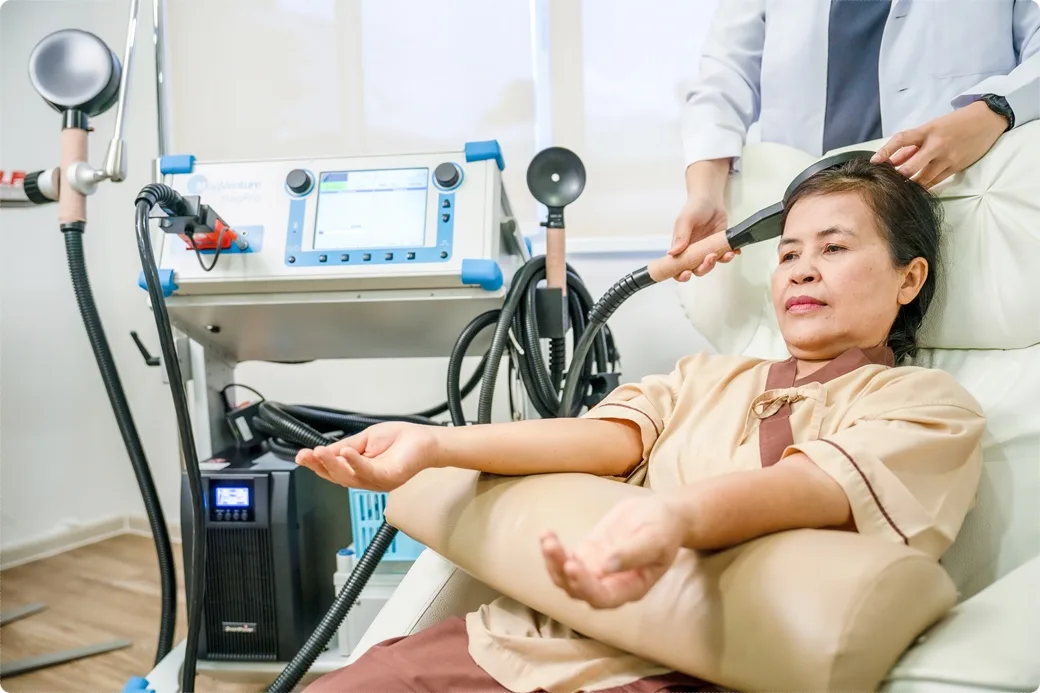
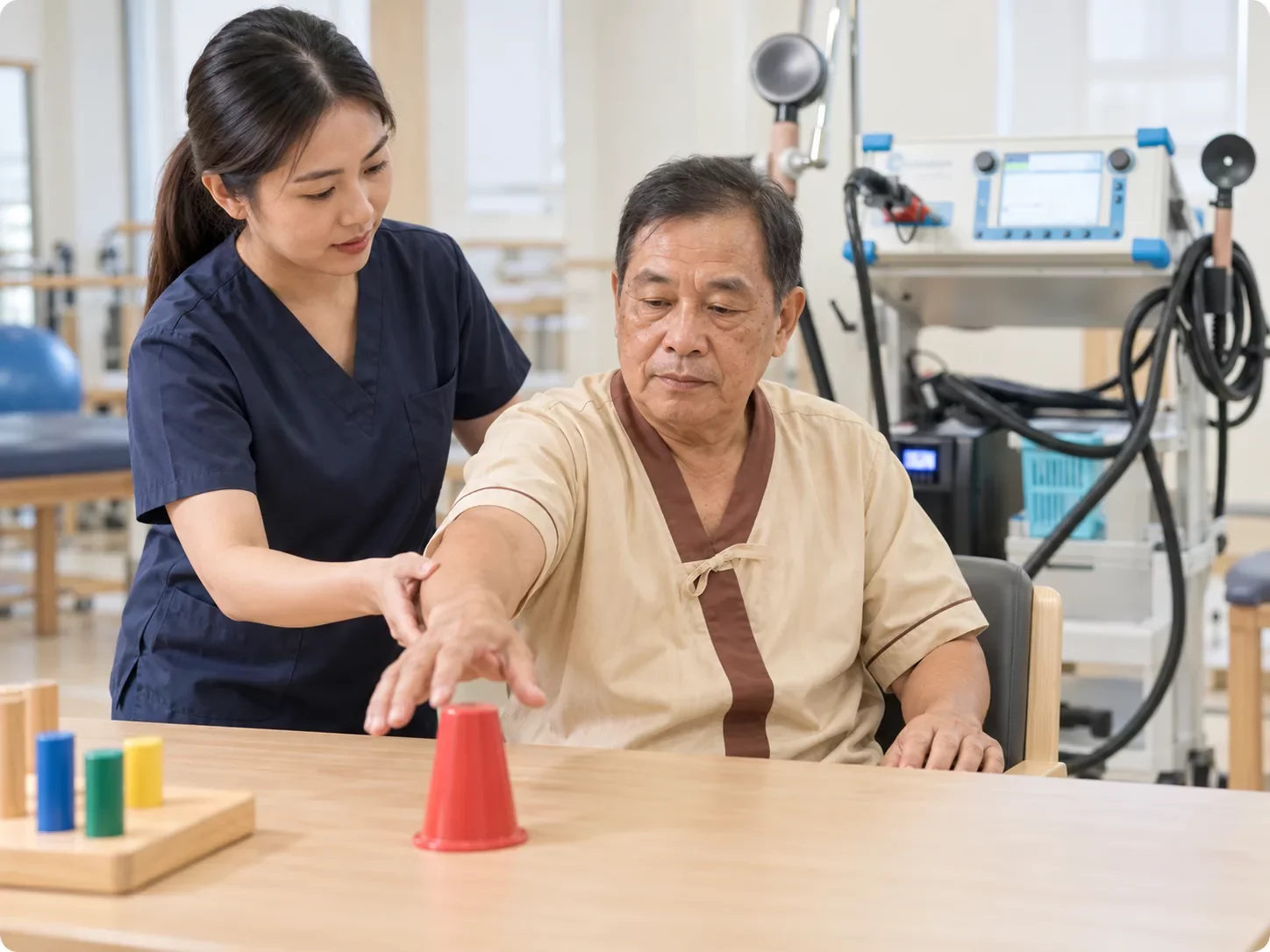
The first photo shows the actual device at KIN · The second is an illustrative photo
Frequently asked questions
Does TMS hurt? What are the side effects?
Most people feel a light tapping on the scalp. There may be a mild, temporary headache or scalp discomfort. Seizures are very rare, which is why the doctor screens beforehand and the team monitors you throughout.
Who should not have TMS?
People with metal or implanted devices in the head such as cochlear implants, people with pacemakers or other electrically powered implants, those with a history of seizures, or other conditions the doctor assesses as unsuitable. Please share your full medical history when booking.
Can I still buy the Stroke Recover 1–2 packages?
They are no longer sold. Current prices are as shown in this article.
See the outpatient stroke rehabilitation + TMS promotion
Appointments · Enquiries
Prices as of September 2026 (B.E. 2569) · TMS and Brain Booster require a doctor's assessment first · Please book in advance