

EP 2: Ular’s Rehabilitation Review
From Standing to Balance Control: An Important Step in Neurological Rehabilitation at KIN
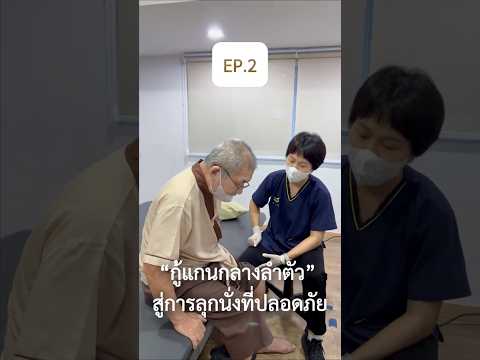
Neurological rehabilitation does not end with simply being able to “stand.”
The real goal is to stand steadily, control the body, and be safe enough to progress toward walking.
In EP 2, we follow Ular’s actual training after the initial standing phase, progressing to balance-control training—another important stage of neurological rehabilitation at KIN.
From “Being Able to Stand” to “Standing with Control”: An Important Difference
For most people, standing may seem like a single goal. From a physical therapist’s perspective, however, standing has several levels.
This is especially true for patients with neurological muscle weakness, such as Ular.
At the beginning of rehabilitation, the goal is to stand up safely.
Once Ular can stand for longer periods, the goal shifts to controlling balance while standing, an essential foundation before taking steps.
Standing without good control may increase the risk of falls and prevent the brain from learning correct movement patterns.
Ular’s Balance-Control Training at KIN
- Body Alignment While Standing
The physical therapist first adjusts the alignment of the trunk, hips, and knees so the body is positioned appropriately and compensatory use of the stronger side is reduced. - Trunk Control
The trunk is the center of balance. Training Ular to control his trunk while standing helps make weight shifting and movement more stable. - Controlled Weight Shifting
After EP 1 focused on weight bearing through the left leg, this episode adds more detailed training, such as:- Slow and fast weight shifting
- Holding weight in different positions
Why Balance Training Is Important in Neurological Rehabilitation
In neurorehabilitation, balance is not only about muscles. It is directly related to brain function, sensory input, and movement processing.
Every time Ular adjusts his body to avoid falling, the brain receives feedback and uses it to refine new motor-control pathways. This process strengthens neuroplasticity, which is central to neurological rehabilitation.
Appropriate balance training therefore improves the chance of walking safely again in the future.
Safety Is at the Heart of Training at KIN
Although the training becomes more challenging, every step of Ular’s program is closely supervised.
The physical therapist continuously assesses risks and provides only the level of assistance needed to prevent falls and injuries.
KIN’s key principle is:
“Allow patients to do as much as possible by themselves, while maintaining the highest level of safety.”
The Result Is More Than Physical Progress—It Is Confidence
As balance control improves, the psychological changes become clearly visible.
Ular begins to stand for longer periods, moves with greater courage, and feels more confident during training.
This confidence directly supports rehabilitation because when patients are less afraid of movement, the brain becomes more receptive to new learning.
EP 2 of the Rehabilitation Journey: An Important Step Before Walking
The balance-control training in this episode is the bridge between “being able to stand” and “beginning to take steps.”
Although it is not yet actual walking, it is an essential step in sustainable neurological rehabilitation.
KIN believes that good rehabilitation is not about rushing results, but about building the right foundation so every future step is stable and safe.
Follow the Next Episode
Ular’s rehabilitation journey continues.
In the next episode, we will look at preparation for stepping and more advanced training.
Rehabilitation is not easy, but with clear goals, an understanding professional team, and appropriate training, meaningful positive change can truly happen.
Consult a Specialist (Free of Charge)


Elderly Care and Patient Rehabilitation Promotions
Promotions for stroke patients, post-operative patients, and elderly care services both at the center and at home.
Read more...
Rehabilitation Medicine Clinic Promotions
Rehabilitation medicine, physical therapy, and occupational therapy to restore physical function in older adults and patients recovering from illness.
Read more....png)
Real Patient and Family Experiences
Interviews and reviews from patients and families who used our stroke rehabilitation, post-operative recovery, and elderly care services.
Read more...