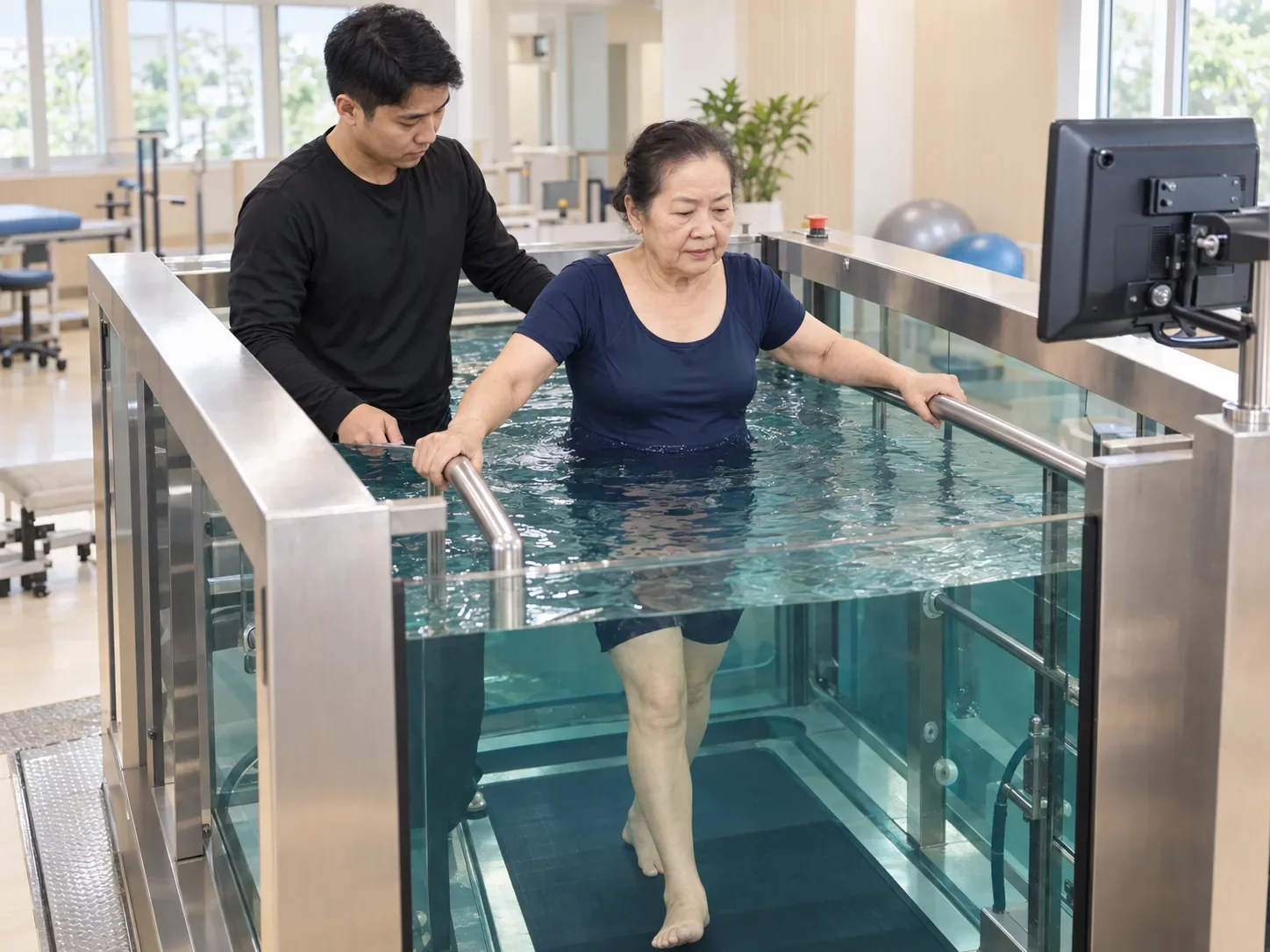
Underwater Exercise Treadmill
Service Fees
With an Assistant
Price 1,500 THB/1 session (first trial session)
Price 15,000 THB/10 sessions
Price 27,000 THB/20 sessions
Price 36,000 THB/30 sessions
Without an Assistant
Price 1,000 THB/1 session (first trial session)
Price 10,000 THB/10 sessions
Price 18,000 THB/20 sessions
Price 24,000 THB/30 sessions
Water buoyancy can reduce loading on the joints, while water resistance may help strengthen muscles and increase exercise intensity. Actual calorie expenditure varies by speed, water depth, body size, and fitness level.
**Water density and buoyancy: Because the human body is less dense than water, buoyancy supports movement and reduces loading on the joints. This can make aquatic exercise a lower-impact option than comparable land-based activity.
**Hydrostatic pressure: Water pressure may help support circulation and reduce swelling in the limbs in suitable individuals.
**Water resistance: Moving through water provides multidirectional resistance that may help improve muscle strength and endurance.
**Thermal properties: Water transfers heat efficiently. Warm-water therapy may promote relaxation, reduce muscle tightness, and ease some types of pain.
.jpg)

Aquatic Exercise
Aquatic exercise can be adapted for people of different ages and fitness levels. It may support weight management, muscle rehabilitation, balance, strength, and lower-impact movement. It can also be useful for people with a higher body weight or knee discomfort, following appropriate professional assessment.

Are There Any Disadvantages or Limitations to Aquatic Exercise?
Aquatic exercise is generally low impact, but it is not risk-free. Suitability depends on health status, water safety, skin condition, cardiovascular and respiratory health, and the need for supervision.

Benefits of Aquatic Exercise
Key potential benefits of aquatic exercise include:
3. May Help Reduce Pain and Joint Loading: Buoyancy supports part of the body’s weight and may reduce stress on painful joints during supervised exercise.
4. May Promote Relaxation and Well-Being: Warm water and rhythmic movement may help some people feel more relaxed. Pool hygiene and infection-control standards remain essential.
Underwater Treadmill Exercise Equipment
An underwater treadmill combines walking or running with buoyancy and water resistance. It may be suitable for selected people with knee osteoarthritis, joint discomfort, sports injuries, or rehabilitation needs after professional assessment.

How an Underwater Treadmill Works
The user walks or runs on a treadmill submerged in water. Water resistance increases muscular effort, while buoyancy reduces weight-bearing. Speed, water depth, temperature, and resistance should be adjusted to the individual.

Benefits of Underwater Treadmill Exercise
Potential health and rehabilitation benefits include:
- Reduced Impact on Joints and Muscles: Water supports the body and reduces loading, making supervised exercise potentially suitable for selected people with joint degeneration, arthritis, or injury rehabilitation needs.
- Improved Muscle Strength: Water resistance can train the legs, hips, and core while the treadmill supports controlled gait practice.
- Weight-Management Support : Underwater treadmill exercise may increase energy expenditure, but the amount varies and should not be described as guaranteed weight loss.
- Improved Endurance: Progressive aquatic exercise may support cardiovascular and muscular endurance when medically appropriate.
- Stress Relief: Exercising in water may promote relaxation and comfort for some individuals.

Precautions for Underwater Treadmill Exercise
Although underwater treadmill exercise has potential benefits, the following precautions should be considered:
- People with certain heart, lung, skin, infectious, or uncontrolled medical conditions should consult a physician before aquatic exercise.
- Begin at a low speed and for a short duration, then increase gradually according to tolerance and professional guidance.
- Drink adequate water before, during, and after exercise.
- Stop exercising immediately if you feel unwell, dizzy, short of breath, or experience chest pain.
Who Is an Underwater Treadmill Suitable For?
It may be considered for selected individuals recovering from injury, managing knee osteoarthritis or joint discomfort, seeking lower-impact exercise, improving strength, or building endurance.
Potential Benefits of the PowerCube Underwater Treadmill
The PowerCube underwater treadmill may be used in supervised programs for older adults, people recovering from stroke, individuals with knee osteoarthritis, or those with selected spinal and mobility conditions. Suitability must be assessed individually.
- Buoyancy can reduce loading on the hips, knees, and ankles, allowing gait practice with less discomfort and less body-weight support required.
- Water resistance increases muscular effort during movement and may help improve strength when training is progressed appropriately.
- Controlled water movement can challenge balance and activate postural muscles during supervised gait training.
- The four-direction Power Jet system can provide adjustable water support and resistance during balance and gait practice. Settings should be selected by a trained professional.
- Buoyancy may make standing and walking practice easier and may help reduce fall risk within the supervised aquatic environment.
- Self-initiated treadmill walking allows active gait practice. Progress depends on the person’s neurological status, strength, balance, and treatment plan.
- Water depth can be adjusted to the individual’s height and rehabilitation goals.
- Warm water may promote relaxation, improve comfort, and help reduce muscle tightness and pain in some individuals.
- The chamber design may reduce the need to climb in and out of a conventional pool, which can improve access and safety for selected users.
- Water helps regulate body temperature during exercise, although sweating and dehydration can still occur.
- Exercise may support mood and stress management through normal physiological responses, including endorphin release.

Precautions When Using the PowerCube Underwater Treadmill
- Patients should use the PowerCube under the supervision of a qualified healthcare or exercise professional.
- Wear appropriate swimwear and footwear designed for aquatic walking.
- Warm up before beginning the session.
- Maintain adequate hydration during the program.
- Stop immediately and inform staff if you feel unwell.
The PowerCube may support exercise and rehabilitation for selected older adults, people recovering from stroke, those with knee osteoarthritis, or individuals with selected spinal conditions. A professional assessment is required before use.
Aquatic Exercise for Postoperative and Stroke Rehabilitation
Aquatic exercise or hydrotherapy may be incorporated into rehabilitation for selected people recovering from stroke, knee injury, or surgery. The program should be timed appropriately and supervised according to medical status and mobility level.
Buoyancy can reduce weight-bearing and allow movement with less joint stress, while water resistance provides a controlled training stimulus. These properties may help patients practice movement with less discomfort or fatigue.
In postoperative rehabilitation, water temperature, wound status, infection risk, entry and exit safety, and the type of surgery must be assessed before aquatic exercise. Open or incompletely healed wounds generally require medical clearance.
Aquatic exercise can support physical confidence, breathing control, balance, mobility, and relaxation. It should complement—not replace—evidence-based rehabilitation and medical care.
A private, accessible, and supervised aquatic environment can help selected postoperative and stroke patients exercise more confidently with appropriate equipment and professional guidance.
Aquatic exercise can be a valuable rehabilitation option when prescribed appropriately. Outcomes vary, and activities should be tailored to the individual’s diagnosis, goals, and safety needs.
Hydrotherapy and Physical Therapy: A Supportive Option for Chronic Pain
Physical therapy hydrotherapy uses water-based movement and controlled aquatic techniques to help reduce pain, muscle tension, and movement limitations. It may be combined with land-based physical therapy as part of an individualized rehabilitation plan.
Hydrotherapy may be considered for selected people with conditions such as:
1. Office Syndrome
2. Chronic Muscle and Soft-Tissue Pain
3. Osteoarthritis
4. Older Adults
5. Shoulder Pain or Frozen Shoulder
6. Chronic Low Back Pain
7. Sports Injury Rehabilitation
8. Postoperative Rehabilitation
9. Scoliosis
10. Parkinson’s Disease
11. Myasthenia Gravis, with medical clearance
12. Persistent Stress and Muscle Tension
Potential Benefits of Hydrotherapy Physical Therapy
Potential benefits may include:
• Reduced pain and muscle tension
• Support for blood and lymphatic circulation
• Reduced swelling and inflammation in suitable cases
• Muscle relaxation and improved well-being
• Improved muscle and joint flexibility
• Improved joint mobility
• Support for recovery after injury or surgery
• Reduced stress and anxiety for some individuals
How Physical Therapy Hydrotherapy Is Provided
Hydrotherapy is provided by a qualified physical therapist using exercises, water resistance, buoyancy, and other aquatic techniques. Session length and methods depend on the individual plan; high-pressure jets are not appropriate for every condition.
Possible Side Effects of Physical Therapy Hydrotherapy
Hydrotherapy is generally well tolerated, but possible effects include:
• Temporary discomfort or mild soreness during or after exercise
• Dizziness, fatigue, or nausea
• Skin redness or irritation
Precautions for Physical Therapy HydrotherapyPhysical Therapy
Hydrotherapy may not be suitable, or may require medical clearance, for people with:
• Severe cardiovascular disease
• Severe respiratory disease
• Severe kidney failure
• Uncontrolled diabetes
• Severe skin disease or open wounds
• Active or serious infection
• Pregnancy, depending on medical status and water temperature
Consult a physician before hydrotherapy if any of the above applies to you.
Hydrotherapy may be a useful option for selected people with chronic pain or mobility limitations. Anyone interested in pool-based exercise or an underwater treadmill should contact the team for an assessment and individualized recommendations.
Elderly Care Promotion Stroke Rehabilitation Postoperative Rehabilitation
Promotions for stroke rehabilitation, postoperative rehabilitation, and elderly care, available both at the center and at home....
Rehabilitation Medicine and Physical Therapy Clinic Promotion
Comprehensive rehabilitation medicine, physical therapy, and occupational therapy services to support physical recovery...
Anti-Aging Medicine Clinic Promotion: Rejuvenation
Anti-aging medicine promotion featuring skin and beauty care together with vitamin drip services designed to support vitality and overall balance.