

กายภาพบำบัดกล้ามเนื้ออ่อนแรง
8 ท่าฝึกกล้ามเนื้อแขนขาอ่อนแรงที่บ้าน พร้อมข้อห้าม
สำหรับคนที่แรงลดลงหลังป่วยหรือนอนนาน ทำบนเก้าอี้ได้
คำแนะนำ NHS
ท่าละ 5–15 ครั้ง
ไม่ใช่เวลาฝึก
ออกจากโรงพยาบาลแล้วแขนขาไม่มีแรง จะฝึกอะไรที่บ้านได้ คำตอบคือเริ่มจากท่าบนเก้าอี้ ทำช้า ๆ ให้ครบ แล้วเพิ่มทีละน้อย
บทความนี้เน้นท่าฝึก สาเหตุอ่านที่ กล้ามเนื้ออ่อนแรงเกิดจากอะไร
เนื้อหาในบทความนี้
1. กายภาพบำบัดกล้ามเนื้ออ่อนแรงที่บ้าน เริ่มอย่างไรให้ปลอดภัย
คำตอบสั้น: ให้นักกายภาพบำบัดประเมินก่อน แล้วฝึกท่าบนเก้าอี้อย่างน้อยสัปดาห์ละ 2 วันตาม NHS ส่วนองค์การอนามัยโลก (2563) ย้ำว่าขยับบ้างดีกว่าไม่ขยับ
- เก้าอี้มั่นคง ไม่มีล้อ เท้าราบพื้น เข่าตั้งฉาก · ท่ายืนมีคนอยู่ใกล้ถ้าเคยล้ม
- มีโรคประจำตัว ปรึกษาแพทย์ก่อน
- ตึงได้ เจ็บไม่ได้ เจ็บแปลบหรือชามากขึ้นให้หยุดท่านั้น
2. แขนขาอ่อนแรงทันที ไม่ใช่เวลาฝึก โทร 1669 ก่อน
คำตอบสั้น: อ่อนแรงทันที โดยเฉพาะข้างเดียว คู่กับหน้าเบี้ยว พูดไม่ชัด หรือเดินเซ เป็นสัญญาณเตือนโรคหลอดเลือดสมอง ถือเป็นเหตุฉุกเฉิน โทร 1669 ทันที ห้ามลองฝึกเอง ส่วนอ่อนแรงใหม่ที่ไม่รู้สาเหตุ ต้องพบแพทย์ก่อนฝึก
| อาการ | ทำอะไร |
|---|---|
| อ่อนแรงทันที · หน้าเบี้ยวหรือแขนอ่อนแรงข้างเดียว · พูด หายใจ กลืนลำบาก · หลังบาดเจ็บศีรษะ คอ หลัง | โทร 1669 ทันที จดเวลา |
| อ่อนแรงลามเร็วหลังป่วยติดเชื้อ ยกแขนไม่ขึ้น | โทร 1669 |
| ขาอ่อนแรงสองข้างมากขึ้น ชารอบก้น กลั้นปัสสาวะหรืออุจจาระไม่ได้ | ห้องฉุกเฉิน หรือโทร 1669 |
| อ่อนแรงใหม่หรือมากขึ้นโดยไม่รู้สาเหตุ ข้างเดียวหรือสองข้าง | พบแพทย์ก่อนฝึก |
| แรงลดลงหลังป่วยหรือนอนนาน แพทย์ตรวจแล้ว | ประเมินแล้วเริ่มฝึก |
ที่มา: NHS · MedlinePlus · อ่านต่อ BE FAST สัญญาณเตือน · แขนขาอ่อนแรงแบบไหนต้องรีบไปโรงพยาบาล · ผู้ที่แพทย์ให้เริ่มฟื้นฟูแล้ว ดู โปรแกรมฟื้นฟูของ KIN
3. 4 ท่าบริหารแขนอ่อนแรงและออกกำลังกายมือ
คำตอบสั้น: กำ-แบมือ บีบลูกบอลนุ่ม งอศอกยกขวดน้ำ และดันกำแพง จำนวนครั้งเริ่มต้นตามเอกสาร NHS ทำช้า ๆ ไม่ฝืนจนเจ็บ
ท่าที่ 1 กำมือ-แบมือ
- ท่าเริ่ม นั่ง วางแขนบนโต๊ะ
- วิธีทำ กำให้แน่น แล้วแบนิ้วให้สุด ต่อด้วยกระดกข้อมือขึ้นลง
- จำนวน อย่างละ 10–15 ครั้ง
- ถูกต้อง นิ้วขยับเต็มช่วง
- ผิดบ่อย กำครึ่ง ๆ หรือยกไหล่ตาม
- หยุดเมื่อ ปวดมือหรือข้อมือมากขึ้น
ท่าที่ 2 บีบลูกบอลนุ่ม
- ท่าเริ่ม ถือลูกบอลนุ่มหรือถุงเท้าม้วน
- วิธีทำ บีบแน่นเท่าที่ไม่เจ็บ แล้วคลาย
- จำนวน ค้าง 5 วินาที ทำ 10 ครั้ง
- ถูกต้อง ฝ่ามือและแขนท่อนล่างทำงาน
- ผิดบ่อย กลั้นหายใจ
- หยุดเมื่อ ปวดมากขึ้นหรือนิ้วชา

บีบเท่าที่ไม่เจ็บ
ท่าที่ 3 งอศอกยกขวดน้ำ (นั่งทำได้)
- ท่าเริ่ม แขนแนบลำตัว ถือขวดน้ำเล็ก
- วิธีทำ งอศอกช้า ๆ ยกขวดมาหาไหล่ แล้วลดลงช้า ๆ
- จำนวน 5 ครั้งต่อข้าง ทำ 3 เซต
- ถูกต้อง ต้นแขนด้านหน้าทำงาน
- ผิดบ่อย เหวี่ยงตัวช่วย
- หยุดเมื่อ ปวดศอกหรือไหล่
ท่าที่ 4 ดันกำแพง
- ท่าเริ่ม ยืนห่างกำแพงหนึ่งช่วงแขน มือระดับอก
- วิธีทำ หลังตรง งอศอกให้ตัวเข้าหากำแพง แล้วดันกลับ
- จำนวน 5–10 ครั้ง ทำ 3 เซต
- ถูกต้อง อก ไหล่ ต้นแขนทำงาน
- ผิดบ่อย แอ่นหลัง
- หยุดเมื่อ ปวดข้อมือ ไหล่ หรือเวียนหัว
ไหล่ข้างที่อ่อนแรงมาก ไหล่ห้อยหรือปวดไหล่ อย่าดึงหรือเหวี่ยงแขนข้างนั้น ให้นักกายภาพบำบัดสอนวิธีขยับก่อน
4. 4 ท่ากายภาพกล้ามเนื้อขาอ่อนแรง ให้ลุกยืนมั่นคงขึ้น
คำตอบสั้น: เหยียดเข่ากระดกข้อเท้า ยกเข่าสลับ ลุกนั่งจากเก้าอี้ และเขย่งปลายเท้า ท่ายืนต้องมีที่เกาะทุกครั้ง
อ่อนแรงครึ่งซีก หรือทรงตัวไม่ดี ท่า 7 และ 8 ทำเมื่อมีผู้ประคองใกล้ชิดเท่านั้น ยืนไม่มั่นคงให้ฝึกท่านั่ง 5 และ 6 ก่อน
ท่าที่ 5 เหยียดเข่า กระดกข้อเท้า (นั่ง)
- ท่าเริ่ม นั่งตรง มือจับขอบเก้าอี้
- วิธีทำ เหยียดเข่าให้เท้าลอย ชี้ปลายเท้าออกแล้วกระดกกลับ
- จำนวน 5 ครั้งต่อข้าง ทำ 2 เซต
- ถูกต้อง ต้นขาด้านหน้าและน่องทำงาน
- ผิดบ่อย เอนพิงพนักแล้วเหวี่ยงขา
- หยุดเมื่อ ปวดเข่าหรือเป็นตะคริว
ท่าที่ 6 ยกเข่าสลับขณะนั่ง
- ท่าเริ่ม นั่งตรงไม่พิงพนัก มือจับข้างเก้าอี้
- วิธีทำ ยกเข่าขึ้นโดยงอเข่าไว้ วางลงช้า ๆ แล้วสลับข้าง
- จำนวน 5 ครั้งต่อข้าง
- ถูกต้อง สะโพกและต้นขาทำงาน
- ผิดบ่อย เอนตัวไปหลัง
- หยุดเมื่อ ปวดสะโพกหรือหลัง
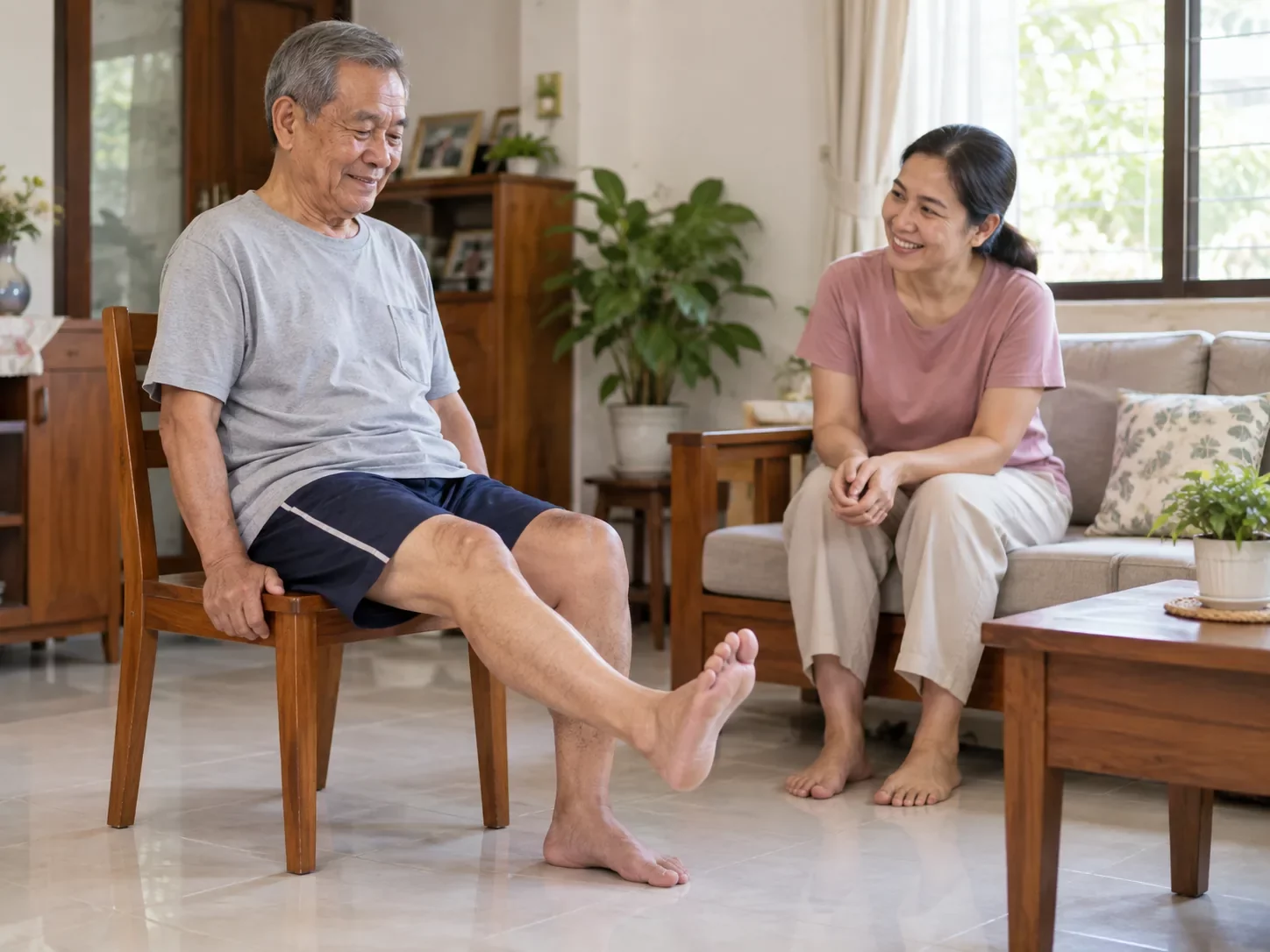
ฝึกต้นขาโดยไม่ต้องยืน
ท่าที่ 7 ลุกนั่งจากเก้าอี้
- ท่าเริ่ม นั่งค่อนขอบเก้าอี้ โน้มตัวเล็กน้อย
- วิธีทำ ลุกช้า ๆ ด้วยแรงขา มองตรง ยืนตรงแล้วค่อย ๆ นั่ง
- จำนวน 5 ครั้ง ยิ่งช้ายิ่งดี
- ถูกต้อง ต้นขาและก้นทำงาน
- ผิดบ่อย ทิ้งตัวนั่งแรง
- หยุดเมื่อ เวียนหัว ปวดเข่า หรือทรงตัวไม่อยู่
ท่าที่ 8 เขย่งปลายเท้า จับพนักเก้าอี้
- ท่าเริ่ม ยืนหลังเก้าอี้ มือจับพนัก
- วิธีทำ ยกส้นเท้าขึ้นช้า ๆ แล้วลดลง
- จำนวน 5 ครั้ง
- ถูกต้อง น่องทำงาน ตัวไม่โยก
- ผิดบ่อย รีบปล่อยมือ
- หยุดเมื่อ ตะคริวน่อง หรือรู้สึกจะล้ม
5. ตารางสรุป 8 ท่า และเมื่อไรควรให้นักกายภาพบำบัดปรับโปรแกรม
คำตอบสั้น: ทำครบ 8 ท่าอย่างน้อยสัปดาห์ละ 2 วัน ถ้าลุกต้องใช้มือดันทุกครั้ง หรือทำได้เท่าเดิมหลายสัปดาห์ ให้นักกายภาพบำบัดปรับโปรแกรม
| ท่า | ช่วยส่วนไหน | ครั้ง / เวลา |
|---|---|---|
| 1. กำ-แบมือ | นิ้ว มือ ข้อมือ | 10–15 ครั้ง |
| 2. บีบลูกบอลนุ่ม | แรงบีบมือ | ค้าง 5 วินาที × 10 |
| 3. งอศอกยกขวดน้ำ | ต้นแขนด้านหน้า | 5 ครั้ง/ข้าง × 3 เซต |
| 4. ดันกำแพง | อก ไหล่ ต้นแขน | 5–10 ครั้ง × 3 เซต |
| 5. เหยียดเข่า กระดกข้อเท้า | ต้นขา น่อง | 5 ครั้ง/ข้าง × 2 เซต |
| 6. ยกเข่าสลับ | สะโพก ต้นขา | 5 ครั้ง/ข้าง |
| 7. ลุกนั่งจากเก้าอี้ | ต้นขา ก้น | 5 ครั้ง ช้า ๆ |
| 8. เขย่งปลายเท้า | น่อง ข้อเท้า | 5 ครั้ง จับพนัก |
ที่มา: NHS · MTW NHS Trust · เพิ่มจำนวนตามที่นักกายภาพบำบัดกำหนด
เรื่องอาหารคู่กับการฝึก อ่านที่ ขาอ่อนแรงในผู้สูงอายุ กินอะไรดี

“กล้ามเนื้อที่อ่อนแรงต้องการความสม่ำเสมอมากกว่าความหนัก ทำช้า ๆ ไม่เจ็บค่ะ”
6. หยุดทันทีเมื่อไร และเมื่อไรควรพบแพทย์
คำตอบสั้น: เจ็บหรือแน่นหน้าอก หรือหายใจลำบาก ให้หยุดและโทร 1669 ส่วนเวียนหัว ใจสั่น คลื่นไส้ หรือปวดผิดปกติ ให้หยุดพัก ไม่ดีขึ้นให้พบแพทย์ และพบแพทย์เมื่ออ่อนแรงไม่หายโดยไม่รู้สาเหตุ
หยุดฝึกทันที เมื่อ…
• เจ็บหรือแน่นหน้าอก หายใจลำบาก — โทร 1669
• แขนขาอ่อนแรงทันที หน้าเบี้ยว พูดไม่ชัด — โทร 1669
• เวียนหัว ใจสั่นเร็ว คลื่นไส้ — หยุดพัก ไม่ดีขึ้นให้พบแพทย์
• ปวดผิดปกติ ปวดหัวไม่หาย ชามากขึ้น ปวดร้าวลงแขนขา ปวดกลางคืน หรือมีไข้ — พบแพทย์
• อ่อนแรงไม่หายโดยไม่รู้สาเหตุ — พบแพทย์
ที่มา: สคร.9 กรมควบคุมโรค · CHFT NHS · MedlinePlus · WHO
ผู้ที่ยังลุกนั่งเองไม่ได้ เริ่มจากท่าบนเตียงก่อน อ่านที่ ท่าออกกำลังกายบนเตียง ตอนที่ 1 และ ตอนที่ 2
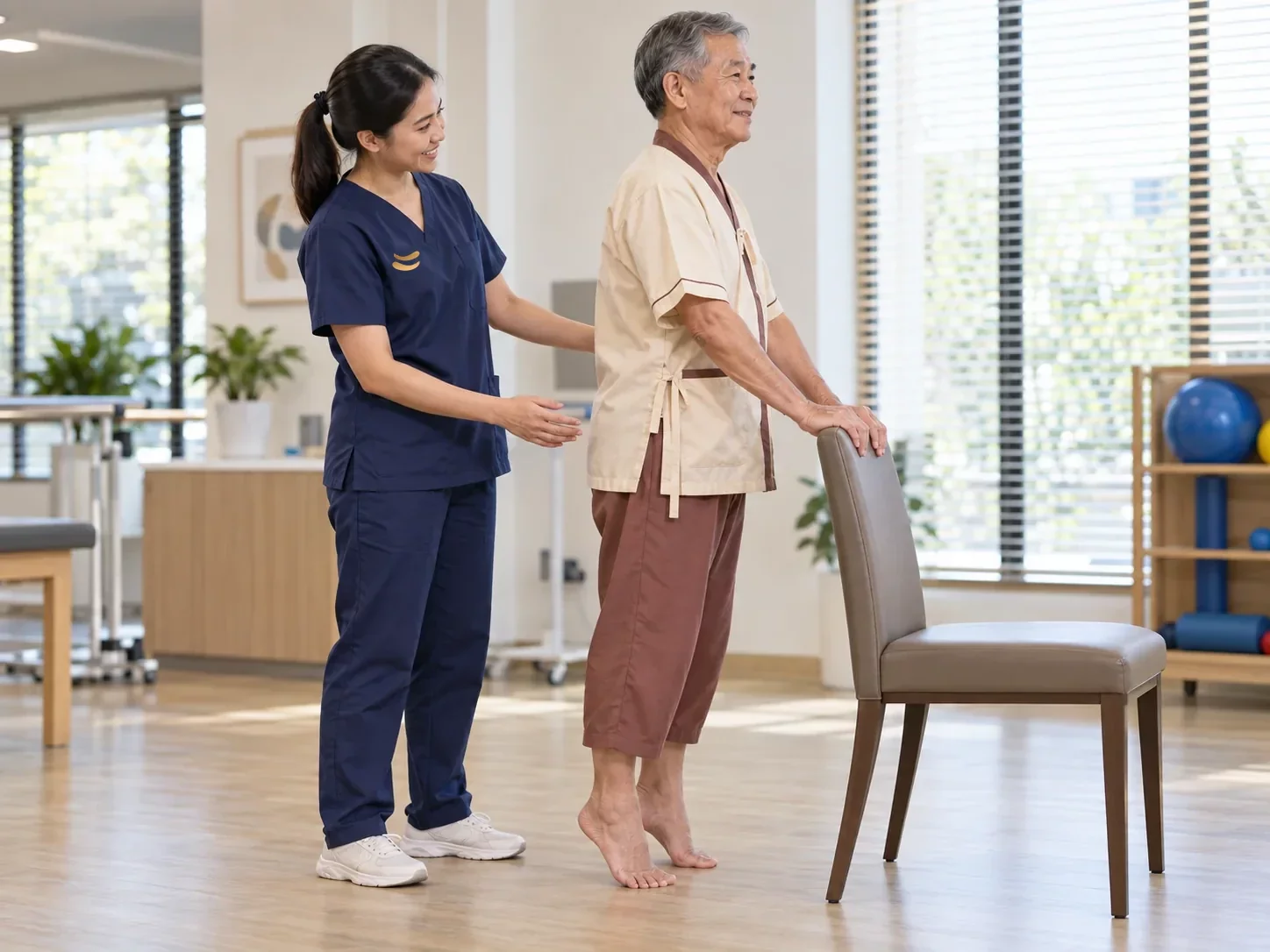
ท่ายืนต้องมีที่เกาะ
ที่ KIN สุขุมวิท 107 ช่วยฟื้นฟูกล้ามเนื้ออ่อนแรงอย่างไร
โรงพยาบาลคิน สุขุมวิท 107 จดทะเบียนเป็นโรงพยาบาลกายภาพบำบัด นักกายภาพบำบัดประเมินก่อน ข้อจำกัดของแต่ละคน แล้วสอนวิธีฝึกและออกแบบโปรแกรมเฉพาะคน
- กายภาพบำบัดแบบไปกลับ ดูบริการกายภาพบำบัด
- สระธาราบำบัดน้ำอุ่น มีนักกายภาพบำบัดดูแลทุกครั้ง ดูธาราบำบัด
- กายภาพบำบัดที่บ้าน โทร 095-767-6307 ดูKIN Homecare
- ทีมแพทย์ 5 ท่าน ครอบคลุม 5 สาขา · 8 สาขาวิชาชีพ · ประสบการณ์ 9 ปี · เบิกประกันได้ตามรายละเอียดกรมธรรม์ ควรตรวจสอบสิทธิกับบริษัทประกันก่อน
ปรึกษานักกายภาพบำบัด KIN | โรงพยาบาลคิน สุขุมวิท 107
ประเมินกล้ามเนื้อแขนขาอ่อนแรงและวางโปรแกรมฝึก


สาขาอื่นของ KIN Rehabilitation
สายด่วนกลาง: 02-096-4996 | กายภาพบำบัดที่บ้าน 095-767-6307 | ดูแล พยาบาล และเช่าอุปกรณ์ 061-881-9399 | กรณีฉุกเฉินโทร 1669
คำถามที่พบบ่อย ตอบโดยทีมแพทย์และสหวิชาชีพ KIN
กายภาพบำบัดผู้ป่วยกล้ามเนื้ออ่อนแรง ทำเองที่บ้านได้ไหม
ได้ค่ะ เริ่มจากท่าบนเก้าอี้สัปดาห์ละ 2 วันขึ้นไป หลังนักกายภาพบำบัดประเมินแล้วค่ะ
กายภาพกล้ามเนื้อขาอ่อนแรง มีท่าไหนบ้าง
เหยียดเข่ากระดกข้อเท้า ยกเข่าสลับ ลุกนั่งจากเก้าอี้ และเขย่งปลายเท้าจับพนักเก้าอี้ค่ะ
ท่าบริหารแขนอ่อนแรง ทำอย่างไร
กำ-แบมือ บีบลูกบอลนุ่ม งอศอกยกขวดน้ำ และดันกำแพง ไหล่ห้อยอย่าดึงแขนข้างนั้นค่ะ
ผู้ป่วยหลังโรคหลอดเลือดสมองที่อ่อนแรงครึ่งซีก ใช้ท่าเหล่านี้ได้ไหม
ใช้เสริมได้เมื่อทีมรักษาอนุญาตค่ะ แผนหลักให้ทีมฟื้นฟูกำหนด ท่ายืนต้องมีผู้ประคองใกล้ชิด และห้ามดึงแขนข้างที่อ่อนแรงค่ะ
แขนขาอ่อนแรงทันที ต้องทำอย่างไร
โทร 1669 ทันทีค่ะ โดยเฉพาะอ่อนแรงข้างเดียว หน้าเบี้ยว พูดไม่ชัด กลืนหรือหายใจลำบาก หรือหลังบาดเจ็บศีรษะ คอ หลัง ห้ามรอดูอาการค่ะ
ฝึกกล้ามเนื้ออ่อนแรงสัปดาห์ละกี่วัน
NHS แนะนำอย่างน้อยสัปดาห์ละ 2 วัน เพิ่มจำนวนเมื่อทำครบได้โดยไม่เจ็บค่ะ
ตรวจสอบความถูกต้องทางการแพทย์โดย พญ.กมลฉัตร โชคถนอมทรัพย์ ว.40854 | กำกับดูแลโดย ดร.ธงชัย โชคถนอมทรัพย์ ประธานกรรมการบริหาร | อัปเดตล่าสุด: ต.ค. พ.ศ. 2569 | ข้อมูลเบื้องต้น ไม่ใช่คำแนะนำเฉพาะราย จำนวนครั้งให้นักกายภาพบำบัดปรับตามแต่ละคน