

MMM Magazine On Air on Royal Thai Army Television Channel 5 HD interviews Thongchai Chokthanomsap about the future of Thailand’s aging population
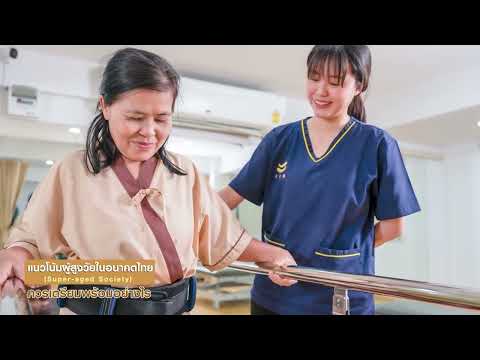
MMM Magazine On Air interviews Thongchai Chokthanomsap, Chairman of KIN - Rehabilitation & Homecare, about the future of Thailand’s aging population. Broadcast on January 22, 2023
1:35–2:00 p.m. on Royal Thai Army Television Channel 5 HD
Ask about rehabilitation services
and schedule a facility visit


How should Thailand prepare for the future trend toward a super-aged society?
1. How is Thailand’s older population expected to increase?
There are currently around one billion older adults worldwide, representing 10% of the global population. Thailand became a complete aged society in 2022, with 12,116,199 older adults, or 18.3% of the total population. The number is expected to continue rising, potentially moving Thailand toward a super-aged society similar to Japan.
2. What are the effects of a growing older population?
A higher proportion of older adults places greater work and caregiving responsibilities on the working-age population. Some older adults may lack warmth and companionship, feel lonely, lose their sense of self-worth, or feel that they are a burden on their children, which may lead to depression. They therefore need greater care and attention. Health problems and medical expenses also tend to increase with age. Without financial planning, people should begin saving or investing early so that they have sufficient income and reserves for later life.
3. How should we prepare for an aging society?
Plan post-retirement medical expenses: As retirement approaches, healthcare costs are likely to arise. Begin by reviewing post-retirement health benefits to determine what coverage will remain. If coverage is insufficient, establish a Long-Term Health Plan, such as health insurance that extends through the expected lifespan, and invest enough to support future premiums. Grow savings faster than inflation: Inflation reduces the future value of money, so investments should aim to outpace it. More retirement investment options are now available, especially those offering tax benefits. Extend the retirement age: Many countries use this policy to expand the working-age population and ease pressure on
the economy. Singapore has raised the retirement age from 65 to 67, South Korea plans to raise it from 55 to 60, and Japan encourages older adults to work until age 65 instead of 62 by 2025. Thailand is considering raising the retirement age for workers in establishments from 55 to 60. Improve skills and match jobs to workers: This increases earning potential and long-term workforce productivity through formal and non-formal lifelong education, often with cooperation from public and private sectors. Thailand also provides training programs for older workers to broaden employment opportunities and social protection that supports self-reliance.
Improve quality of life: Planning can begin early, and the government has an important role in developing
infrastructure suitable for older adults and balancing income and expenses, particularly post-retirement income through provident funds.
Beyond public- and private-sector preparation, individuals can also start early
by saving, investing to create long-term or passive income, obtaining health insurance for future illness-related expenses, and planning alternative care arrangements for later life when no caregiver is available or family members have other responsibilities. Elderly care centers are now opening across the country to support the aging society.
4. How well prepared is the KIN Elderly Care Center to care for older adults?
Our center provides comprehensive elderly care, including nutrition and appropriate meals tailored to each person’s underlying conditions. Basic physical therapy is provided daily to encourage exercise, strengthen muscles and prevent joint stiffness. Recreational activities stimulate fine motor skills and cognitive function. Caregivers and registered nurses provide 24-hour support to reduce the risk of accidents among older adults. A physician is also available during operating hours for initial examinations and assessments. The service is suitable for families without a caregiver at home, bedridden patients, or people who need substantial assistance, helping prevent accidents and reduce the risk of their condition worsening.
5. What contact channels are available for interested people?
Contact us through our Facebook page or website by searching for KIN Rehab, or call 091-803-3071.
6. Advice for viewers on preparing for the growing older population each year
As people enter older age, the final stage of life, they should prepare to accept and adapt to changing circumstances, society and the environment with confidence and happiness by following the “4 Smart” principles for healthy aging:
1) Smart Walk: exercise regularly
2) Smart Brain: maintain and train cognitive skills to help prevent dementia
3) Smart Sleep & Emotional: get adequate sleep and care for emotional well-being
4) Smart Eat: eat a nutritionally balanced diet from all five food groups while reducing sugar, fat and salt
Good preparation helps older adults build greater self-confidence and live happily with their families
and communities.
For more information or to schedule a facility visit
KIN - Rehabilitation & Homecare
KIN - Rehabilitation & Homecare
 Tel: 091-803-3071, 095-884-2233, 02-020-1171
 LINE inquiries: @kinrehab (include the @ symbol) or click: http://bit.ly/2M5f3Id
 FaceBook : https://www.facebook.com/KIN.Rehabilitation
 Blockdit : https://www.blockdit.com/kinrehab
 Instagram : https://www.instagram.com/kin.rehabilitation
 Youtube Channel : https://cutt.ly/TyTh3bd
 Twitter : https://twitter.com/KinRehab
 Pinterest : https://www.pinterest.com/kinrehabilitation
 KIN map: http://bit.ly/2VvPDq6