

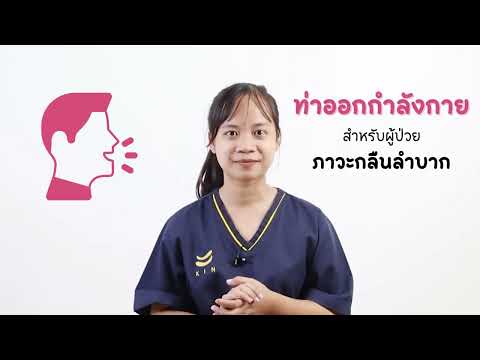
Exercises for People with Dysphagia
Presented by Worachat Nuipan, Occupational Therapist
Dysphagia is difficulty or discomfort when swallowing food, drinks, or saliva. Possible signs include coughing, choking, a wet or gurgly voice, food remaining in the mouth, or breathing difficulty during or after swallowing. Material may enter the airway and lungs, which can lead to aspiration pneumonia and may be life-threatening.
What Are the Possible Signs of Dysphagia?
Coughing, choking, breathlessness, or unusual fatigue during or after eating and drinking
A sensation that food or drink is stuck in the throat
Food, drink, or saliva remaining in the mouth or throat after swallowing
What Can Cause Dysphagia?
Age-related changes may affect chewing and swallowing, but dysphagia should not be considered a normal or harmless part of ageing.
Some older adults eat less because of changes in taste, dental problems, reduced chewing ability, pain, dry mouth, or swallowing difficulty. These symptoms should be assessed rather than managed by exercise alone.
Swallowing requires coordinated activity of the brain, nerves, breathing, and many muscles. Neurological conditions such as stroke, Parkinson’s disease, dementia, or other disorders may affect this coordination and increase the risk of aspiration.
Selected exercises may help improve strength, range, coordination, or control
of the lips, tongue, jaw, cheeks, and other swallowing-related structures, but the correct exercise depends on the individual swallowing problem. Exercises that are helpful for one person may be unsafe or ineffective for another.
Exercise timing should follow the plan provided by the swallowing specialist. Do not practise with food or drink, or exercise immediately before a meal, unless specifically advised. Fatigue can make swallowing less safe in some people.
The exercise program may include two areas:
1. Facial and external oral-motor exercises
2. Intra-oral exercises for the lips, tongue, cheeks, or jaw
Enquiries and Facility Visit Appointments


For more information or to arrange a facility visit, contact
KIN - Rehabilitation & Homecare
KIN - Rehabilitation & Homecare
 Tel: 091-803-3071, 095-884-2233, 02-020-1171
 LINE for enquiries: @kinrehab (including the @ symbol), or click: http://bit.ly/2M5f3Id
 FaceBook : https://www.facebook.com/KIN.Rehabilitation
 Blockdit : https://www.blockdit.com/kinrehab
 Instagram : https://www.instagram.com/kin.rehabilitation
 Youtube Channel : https://cutt.ly/TyTh3bd
 Twitter : https://twitter.com/KinRehab
 Pinterest : https://www.pinterest.com/kinrehabilitation
 Map to KIN: http://bit.ly/2VvPDq6