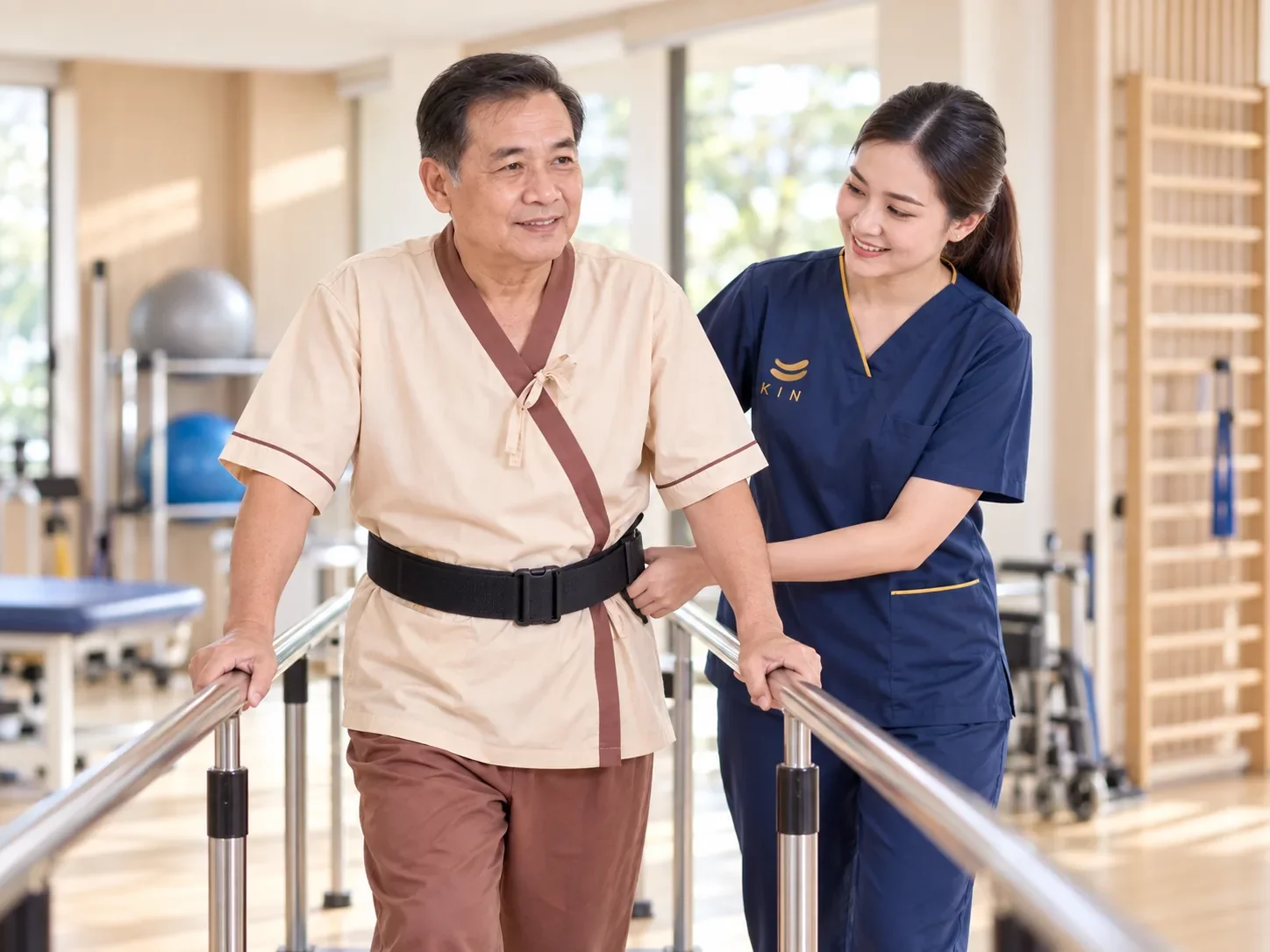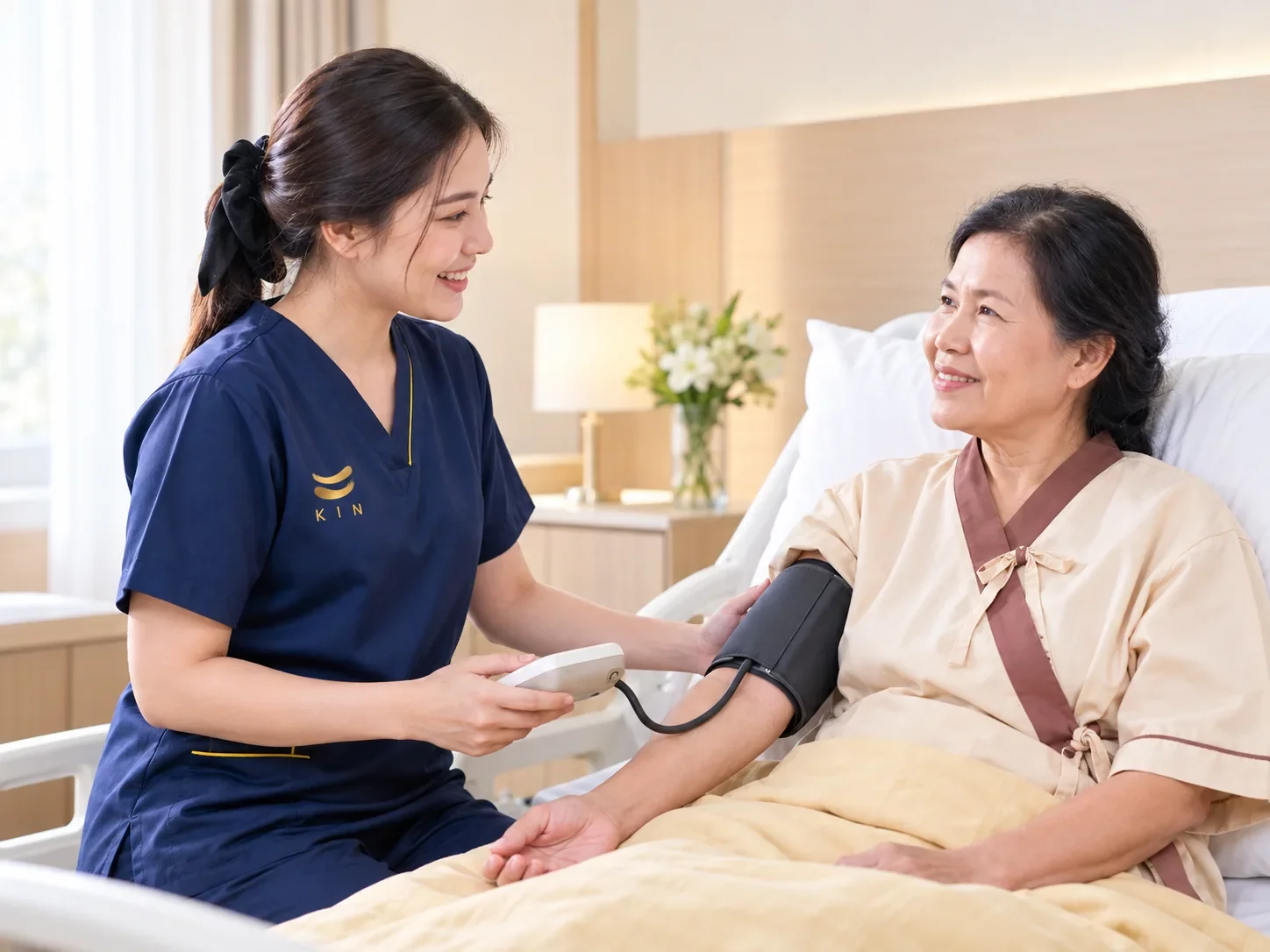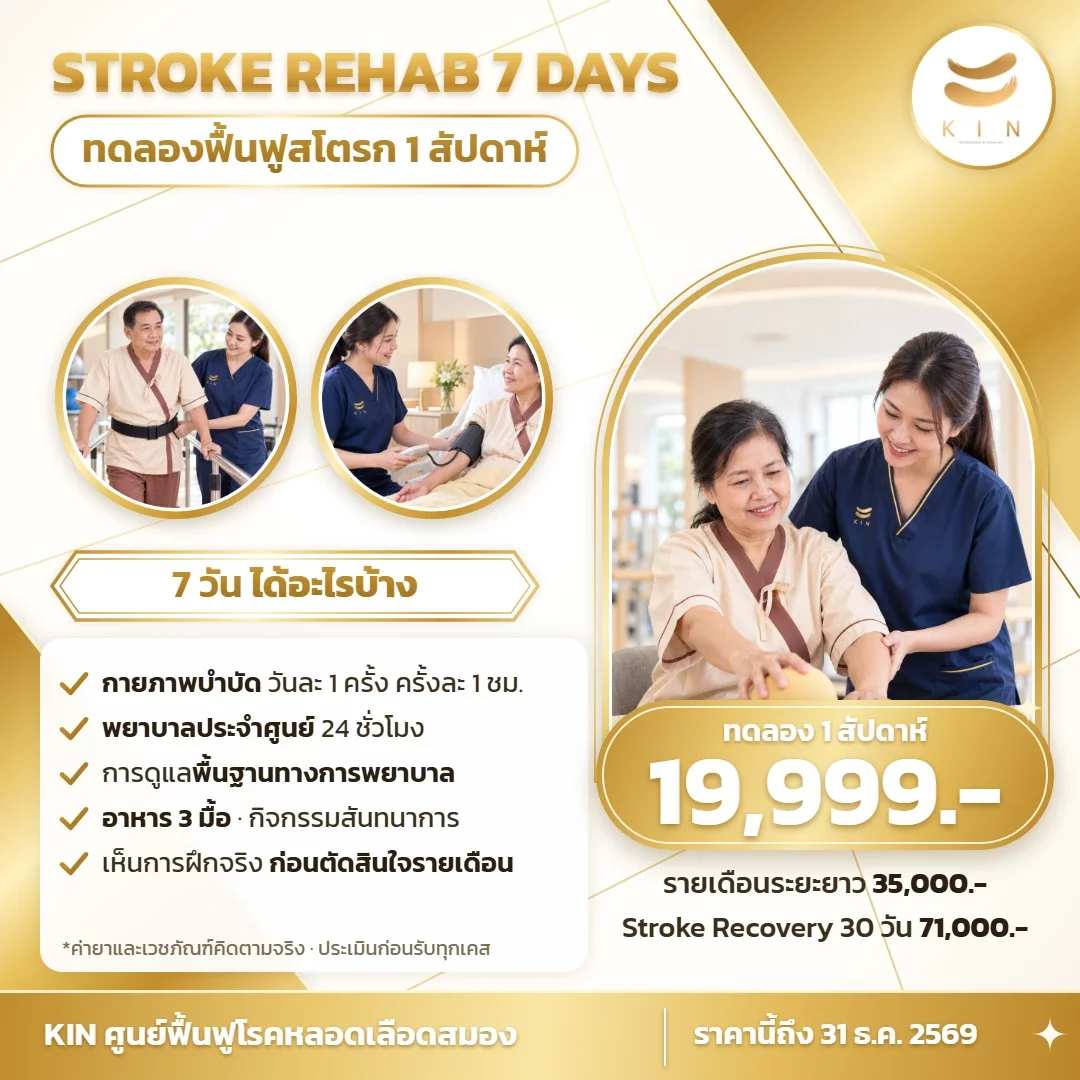
Weekly Stroke Rehabilitation Program: Special promotion at only 19,999 THB.

Weekly Stroke Rehabilitation Program: Special promotion at only 19,999 THB.
 
Stroke Rehabilitation Program
Weekly package only 19,999 THB

 
Package Includes
• Basic nursing care
• Two rehabilitation sessions per day
• Three meals per day
• Recreational activities
• On-site nursing support 24 hours a day

Rehabilitation provided by professional staff and physical therapy assistants

Available from today until December 31, 2026
 

KIN Stroke Center


Our Branches

Free Consultation with a Specialist

Lat Phrao 71 Branch

Sukhumvit 107 Branch

Pattaya Branch

Ratchaphruek Branch


    Services at KIN Stroke Rehabilitation Center


Elderly Care Promotion Stroke Rehabilitation Postoperative Rehabilitation

Promotions for stroke rehabilitation, postoperative rehabilitation, and elderly care, available at the center and at home....

Read more...

Rehabilitation Medicine and Physical Therapy Promotion

Promotions for medical rehabilitation, stroke rehabilitation, postoperative rehabilitation, physical therapy, occupational therapy, and hydrotherapy....


Read more...

Customer Experiences (Testimonials)

Interviews and reviews from patients and family members, sharing their experiences, encouragement, and impressions of the service.


Read more...

Awards and Recognition

Awards and recognition received by KIN for rehabilitation service standards and trust from partner institutions. 


Read more...


       Stroke occurs when blood flow to part of the brain is blocked or a blood vessel in the brain ruptures, which may cause weakness or paralysis. When symptoms appear,urgent medical treatment is essential. Rehabilitation should begin as soon as the patient is medically stable, with the first 3–6 months often being an important period for recovery. Care may involve specialists including neurologists rehabilitation medicine physicians traditional Chinese medicine practitioners, physical therapists, occupational therapists, psychologists, sports scientists, registered nurses, dietitians, and nursing assistants. The aim is to help each person regain the greatest possible independence and quality of life.

How Long Does Stroke Rehabilitation Take?


    The duration of stroke rehabilitation differs for each person according to the type and severity of the stroke, the treatment received, weakness or paralysis caused by ischemic or hemorrhagic stroke, and the area of the brain affected. The first 3–6 months are often an important recovery period, but meaningful improvement may continue beyond 6 months with consistent, appropriate rehabilitation.


    A multidisciplinary rehabilitation plan involving neurology and rehabilitation physicians, physical and occupational therapists, psychologists, sports scientists, nurses, dietitians, and care assistants can support recovery and help the patient work toward individualized goals.


 What Are the Warning Signs of Stroke?

 
  •  Sudden numbness or weakness on one side of the body
  •  Sudden facial weakness or drooping, sometimes with arm or leg weakness
  •  Sudden dizziness or loss of balance
  •  Difficulty swallowing
  •  Difficulty speaking, slurred speech, or difficulty understanding speech
  •  Sudden blurred vision, double vision, loss of vision, or a curtain-like visual disturbance
  •  A sudden severe headache
  •  Sudden confusion, dizziness, or loss of coordination, which may occur with other symptoms
 
 Goals of Stroke Care and Rehabilitation
  1.  Help the patient return to daily life and perform everyday activities as independently as possible
  2.  Support cognitive function, learning, and memory
  3.  Help the patient reach their best possible level of participation in meaningful activities
  4.  Reduce the risk of complications associated with prolonged bed rest
  5.  Reduce avoidable secondary disability and support safe long-term recovery


Planning Stroke Care and Rehabilitation

    Both physical and emotional readiness should be considered when planning rehabilitation. Rehabilitation after hemorrhagic stroke or other types of strokedepends on clinical assessment and goal setting by the medical, nursing, and rehabilitation team. Plans should be reviewed regularly rather than limited to a fixed 3–6 month period.


Physical Health

      People recovering from stroke should receive adequate rest and an individualized exercise and rehabilitation program. Training may include sitting, standing, walking, hand and arm function, communication, and swallowing, together with medical management of recurrent-stroke risk factors.


Emotional Well-Being

    Emotional health is an important part of stroke recovery. Some people may experience low mood, loss of interest, crying, reduced appetite, low confidence, poor concentration, or irritability. Symptoms differ between individuals. Encouragement from caregivers and family members is valuable, and persistent emotional or behavioral changes should be assessed by a healthcare professional. 


Stroke Treatment and Secondary Prevention

   People who have had a stroke may be at increased risk of another stroke. Risk reduction may include the following measures, according to medical advice:

  1. Exercise regularly according to the physician’s and rehabilitation team’s recommendations
  2. Follow an appropriate eating plan and limit foods high in saturated fat and processed meat
  3. Maintain adequate fluid intake unless a clinician has advised fluid restriction
  4. Monitor and manage blood pressure and other vascular risk factors

 Acute stroke is a medical emergency. Seek emergency medical care immediately when warning signs appear. Hospital teams use urgent brain imaging, such as CT or MRI, to identify the stroke type. Eligible patients with ischemic stroke may receive time-sensitive treatments such as intravenous thrombolysis or mechanical thrombectomy. Treatment and outcomes vary, and rehabilitation usually begins once the patient is medically stable.

 Transcranial Magnetic Stimulation (TMS) may be considered as an adjunct to standard rehabilitation for selected stroke patients after medical assessment. It uses magnetic pulses to influence activity in targeted brain areas. TMS does not replace physical, occupational, speech, or other established rehabilitation therapies, and results vary between individuals. 

   Stroke rehabilitation may include physical therapy, occupational therapy, speech and swallowing therapy, psychological support, and nursing care. Training can address walking, balance, movement, hand and arm use, speech, communication, listening, cognition, and swallowing according to the patient’s needs.


Tags: ฟื้นฟูผู้ป่วย ฟื้นฟูผู้ป่วยโรคหลอดเลือดสมอง อัมพฤกษ์ อัมพฤกษ์ โรคหลอดเลือดสมอง kinrehab kinorigin