

Ular Review EP.3 |
A Step-by-Step Approach to Stroke Rehabilitation
Faster recovery starts with making sure the body is ready first.
Many families often ask:
“How soon should physical therapy begin?”
The medical answer is:
It can begin early—but only when the body is ready.
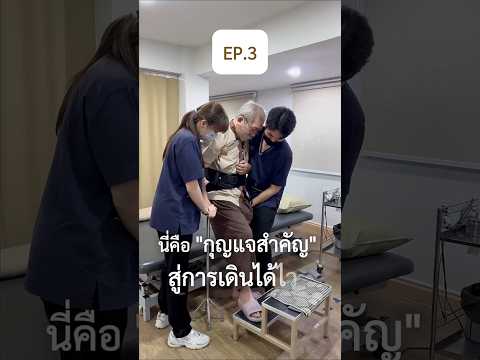
Ular’s case is an important example of stroke rehabilitation that does not rush at the wrong time. Instead, it begins with “physical readiness” before progressing to intensive training.
Why Must the Body Be Ready Before Physical Therapy Begins?
During stroke rehabilitation, the body may still face problems such as:
- - Fatigue
- - Unstable blood pressure
- - Difficulty swallowing
- - Risk of pressure injuries
- - Other complications
This may result in:
- - Inability to train at full potential
- - Easy fatigue and slower progress
- - Repeated interruptions to the rehabilitation plan
- - Losing valuable time during the brain’s “Golden Period”
Therefore, KIN Rehab’s multidisciplinary team follows a clear principle:
The body must first be stable → then the brain can learn → and rehabilitation can produce meaningful results.
3 Key Factors That Prepare the Body for Rehabilitation
1. Daily Medical Assessment Before Training (Medical Assessment by Physician Team)
Before each day’s rehabilitation program begins,
the medical team carefully assesses Ular, looking beyond visible symptoms and evaluating:
- - Overall neurological condition
- - Level of consciousness
- - Communication
- - Swallowing ability
- - Stability of vital signs
The goals are to:
- - Reduce risks during training
- - Prevent complications
- - Maximize the benefits of physical therapy
Good rehabilitation is not about training as hard as possible; it is about training “safely and consistently.”
24-Hour Care by Nurses and Caregivers (24-Hour Nursing & Caregiver Support)
Rehabilitation does not occur only during therapy sessions; it continues throughout all 24 hours of care. Registered nurses and caregivers:
- - Measure blood pressure
- - Monitor pulse
- - Check body temperature
- - Observe abnormal symptoms in real time
This continuous care helps ensure that:
- - The brain is not adversely affected by complications
- - The body does not accumulate excessive fatigue
- - The patient remains consistently ready to train each day
When the body no longer has to focus on “survival,” it has the energy to learn again.
Pressure Injury Prevention
Pressure injuries are one of the main reasons stroke rehabilitation plans are interrupted. KIN Rehab’s nursing assistant team therefore places great importance on:
- - Skin care
- - Proper positioning in bed and while sitting
- - Appropriate repositioning
If a pressure injury occurs, it can cause:
- - Pain
- - Risk of infection
- - Suspension of physical therapy
- - Lost opportunities for brain recovery
No pressure injuries = rehabilitation can continue without interruption.
When the Body Is Ready, Rehabilitation Can Be Intensified Appropriately
Once Ular has:
- - Stable baseline health
- - No complications
- - Stable vital signs
- - No additional illness
KIN Rehab’s physical therapy team can then:
- - Increase training intensity
- - Create a proactive rehabilitation plan
- - Focus on the goal of “walking again”
Stroke Rehabilitation FAQ
Q: When should a stroke patient begin physical therapy?
A: Physical therapy should begin after a physician confirms that the body is ready and safe. There is no need to rush immediately. If the body is still unstable, forcing training may slow recovery.
Q: Why must stroke rehabilitation begin with physical readiness?
A: Because the brain learns best when the body is not exhausted, complications are controlled, and vital signs are stable. If the body is not ready, rehabilitation may be interrupted and inconsistent.
Q: Can physical therapy be forced if the body is not yet ready?
A: No. Forcing therapy may cause fatigue, unstable blood pressure, increased risk of complications, and interruption of the rehabilitation plan.
Q: How do pressure injuries affect stroke rehabilitation?
A: Pressure injuries cause pain, increase infection risk, and may require physical therapy to stop, significantly slowing brain recovery and the return to walking.
Q: How long does stroke rehabilitation take?
A: Recovery time varies from person to person, depending on stroke severity, physical readiness, and continuity of care. A properly sequenced plan can make rehabilitation more effective.
Consult a Specialist (Free of Charge)
