

“Even saying a single word…became difficult.”
When a Man in His Thirties Had to Begin Recovering from a Stroke
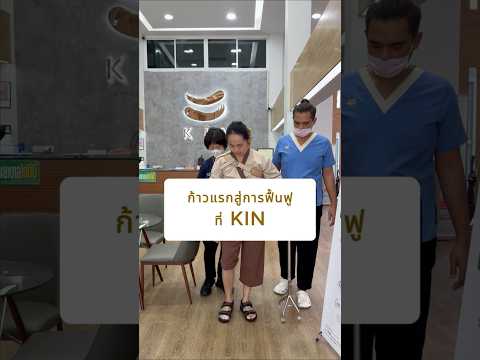
Phonlawat’s Recovery Journey EP.1
The Beginning of a Life-changing Journey…
“I remember feeling extremely dizzy. My right arm started to go numb, and I could not speak,” Phonlawat recalled, his expression still. He was rushed to the hospital and diagnosed with an ischemic stroke caused by a blockage in a blood vessel on the left side of the brain. This resulted in right-sided weakness and impaired communication, known as aphasia.
For some people, rehabilitation may appear to mean simply “doing physical therapy.” In reality, losing the ability to speak and use the body as before is a profound change that can seriously affect a person’s sense of identity.
Stroke…does not choose an age or a time. It can happen even in your thirties. He collapsed on an ordinary day without warning. His smile faded when his muscles stopped responding, but he never stopped trying. Every day involved practice, effort, and determination to regain the smile he once had.
This experience reminds us that health never “waits” for anyone. Do not take it for granted—have regular checkups, exercise, and care for yourself…before it is too late.
The Turning Point at KIN: When Rehabilitation Is About More Than Muscles
After passing through the critical phase at the hospital, Phonlawat’s family began searching for a place that could provide long-term rehabilitation for both his physical and emotional needs. They chose to begin a rehabilitation program at KIN Rehabilitation & Homecare and KIN Origin so that he could do more than simply “survive”—he could regain a meaningful quality of life.
At KIN, the multidisciplinary team began with a detailed assessment covering movement, muscle strength, balance, communication, swallowing, and emotional well-being. For a working-age patient, returning to work, caring for family, and becoming “as close as possible to the person he was before” are goals just as important as walking or lifting an arm.
Based on the assessment, rehabilitation physicians, physical therapists, occupational therapists, speech therapists, and nurses developed an individualized plan for Phonlawat. It included both “short-term goals,” such as sitting, rising, standing, and walking safely, and “long-term goals,” such as communicating more effectively, returning confidently to daily life, and reducing the risk of another stroke.
Small Steps That Are Difficult…but Extremely Important
At the beginning of rehabilitation, getting out of bed, maintaining balance, taking only a few steps, or trying to say a short word may seem minor. For a stroke patient such as Phonlawat, however, each is a “major step in life” requiring both physical strength and emotional determination.
- The physical therapy team trained movement in his weakened right arm and leg, helping the nervous system begin to relearn and form new connections.
- Occupational therapists designed activities that allowed him to practise using his hand, arm, and body in tasks resembling real daily life.
- Speech therapists helped him practise sounds one syllable and one word at a time, gradually improving communication even though progress required patience.
- Nurses and caregivers monitored safety, prevented falls, and encouraged both him and his family every day.
The goal at this stage was not to make him “recover as quickly as possible,” but to establish a stable, safe foundation suited to his brain and body, allowing later rehabilitation to be as effective as possible.
The Strength of Family & the Care Team
At every moment when Phonlawat tried to rise, practise, or speak, his family remained beside him. They adapted their communication, created a safer environment, and learned the correct ways to care for a stroke patient together with the KIN team.
For the KIN Rehabilitation & Homecare and KIN Origin teams, every small improvement—standing longer, moving the arm more effectively, or speaking more clearly—was a “shared victory” for both the care team and the family.
Phonlawat’s journey does not end here… EP.1 is only the beginning of recovery, reminding us that “A stroke during the working years may be devastating, but recovery remains possible when rehabilitation begins correctly, continues consistently, and the patient does not give up.”
Follow the next episode as the training becomes clearer, the goals become more visible, and Phonlawat begins to become a version of himself he can once again be proud of.
Book a Stroke Rehabilitation Assessment (Free of Charge)
Choose the branch nearest your home: Lat Phrao 71 • Sukhumvit 107 (Bang Na–Bearing–Lasalle) • Pattaya • Ratchaphruek (Nonthaburi)
Lat Phrao 71
(Liap Duan/Bang Kapi)
Sukhumvit 107
(Bang Na–Bearing–Lasalle)
Pattaya
(Chonburi)
Ratchaphruek
(Nonthaburi)