

ท่าบริหารป้องกันการปวดเมื่อยเมื่อใช้คอมพิวเตอร์เป็นเวลานาน
6 ท่า ทำได้ที่โต๊ะทำงาน
ตึงคอ บ่า หลัง ข้อมือจากหน้าจอ ลองท่าง่าย ๆ ที่ไม่ต้องลุกจากโต๊ะ
ซ้ำ 5–10 ครั้ง วันละ 2–3 รอบ
ถึงอย่างช้าทุก 1–2 ชั่วโมง
ตามองลงเล็กน้อย
เช้าไม่ปวด แต่บ่ายเริ่มตึงต้นคอ บ่าแข็ง ข้อมือล้า ท่าบริหารป้องกันการปวดเมื่อยเมื่อใช้คอมพิวเตอร์เป็นเวลานาน ได้ผลดีเมื่อทำคู่กับการจัดโต๊ะและลุกพักเป็นระยะ
บทความนี้เน้นการป้องกันระหว่างวันทำงาน ถ้าปวดคออยู่แล้วอ่าน ปวดคอจากนั่งทำงาน ถ้าปวดสะบักอ่าน ปวดสะบักหลังซ้าย-ขวา
เนื้อหาในบทความนี้
1. ท่าบริหารป้องกันการปวดเมื่อยเมื่อใช้คอมพิวเตอร์เป็นเวลานาน ช่วยเรื่องอะไร
คำตอบสั้น: ช่วยคลายมัดที่ตึงจากการก้มหน้าห่อไหล่ และเสริมแรงมัดที่อ่อนลง คณะกายภาพบำบัด ม.มหิดล ระบุว่าคนทำงานสำนักงานมีปัญหาที่คอมากที่สุด รองลงมาคือหลังส่วนบนและล่าง
รามา แชนแนล อธิบายว่าเกิดจากใช้กล้ามเนื้อมัดเดิมซ้ำ ๆ นานต่อเนื่อง ทำงานท่าเดิมตั้งแต่ 6 ชั่วโมงต่อวันเป็นกลุ่มเสี่ยง คอบ่ากับหน้าอกจะตึง คอมัดลึกและรอบสะบักอ่อนแรง จึงต้องมีทั้งท่ายืดและท่าเสริมแรง ถ้าเป็นออฟฟิศซินโดรมแล้วอยากให้นักกายภาพดูแล อ่าน คอร์สออฟฟิศซินโดรม
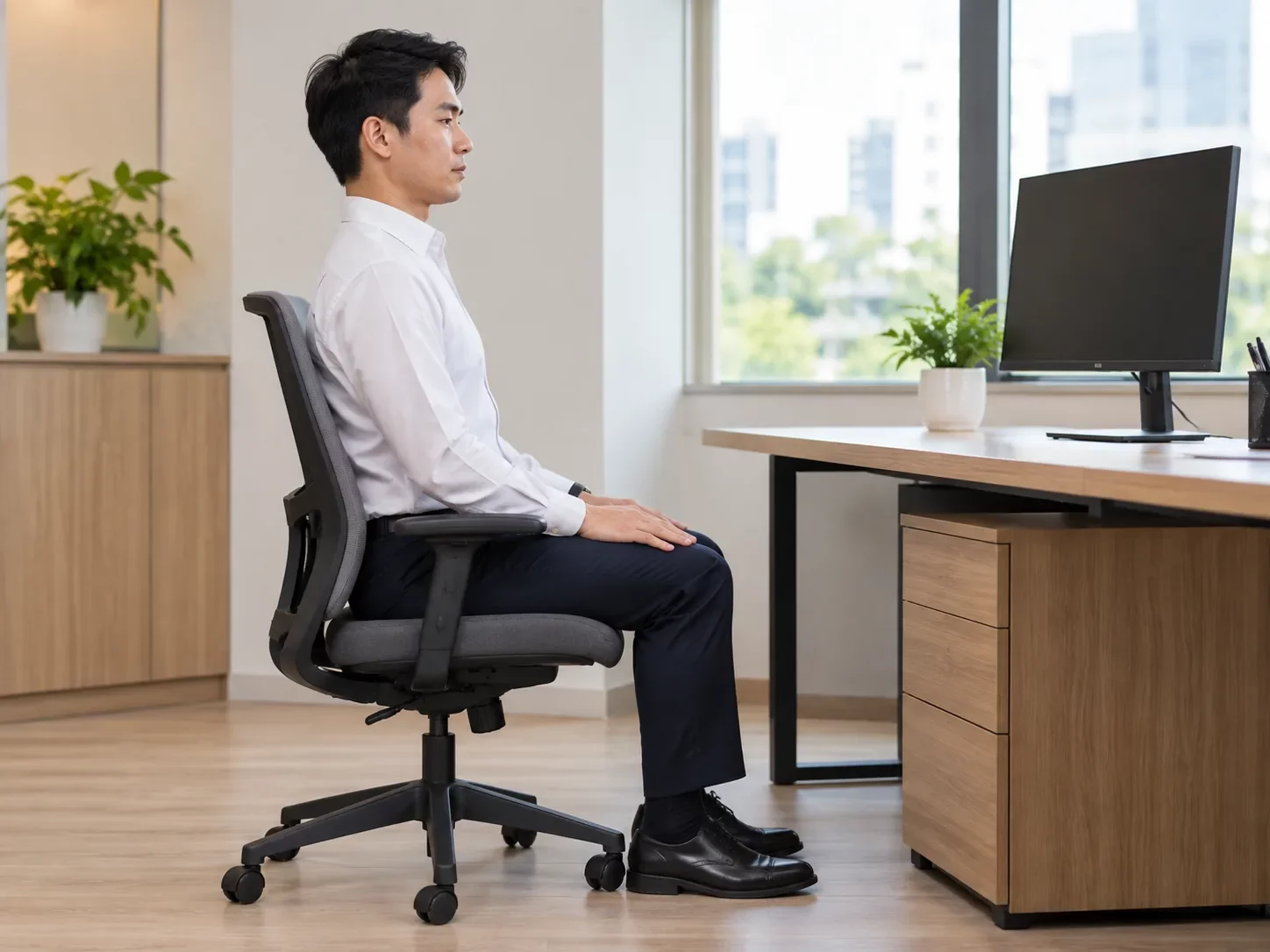
ท่าเก็บคาง ฝึกคอมัดลึกที่อ่อนแรงจากการยื่นหน้าเข้าหาจอ
2. จัดโต๊ะคอมพิวเตอร์ให้เข้าที่ก่อนเริ่มบริหาร
คำตอบสั้น: จออยู่ราวระดับสายตาให้มองลงเล็กน้อย ห่างประมาณหนึ่งช่วงแขน นั่งพิงพนัก ไหล่ไม่ยก ถ้าโต๊ะยังบังคับให้ก้มหรือยื่นคอ ท่าบริหารจะช่วยได้แค่ชั่วคราว
- จอ ราวระดับสายตา ไม่ก้มไม่เงย (รามา แชนแนล) ห่างราว 25 นิ้ว ตามองลงเล็กน้อย (AAO)
- หลัง ไหล่ แขน พิงพนัก ไหล่ไม่ยก เมาส์และแป้นพิมพ์ใกล้ตัว ไม่ต้องเอื้อม · เท้าราบพื้น
- ใช้โน้ตบุ๊กนาน ยกจอขึ้นให้ไม่ต้องก้ม แล้วใช้แป้นพิมพ์และเมาส์แยก
- พักสายตา มองของไกลเป็นระยะ ตามคำแนะนำของ AAO
3. 6 ท่าบริหารที่โต๊ะทำงาน ทำทีละขั้นตอน
คำตอบสั้น: ท่ายืดค้าง 10–15 วินาที ท่าเสริมแรงค้าง 5–10 วินาที ซ้ำ 5–10 ครั้ง วันละ 2–3 รอบ ตามแนวของคณะกายภาพบำบัด ม.มหิดล ทำช้า ๆ หายใจปกติ ตึงได้แต่ห้ามเจ็บ
ท่าที่ 1 เก็บคาง (เสริมแรงคอมัดลึก)
- ท่าเริ่ม นั่งหลังตรง เท้าราบพื้น มองตรง
- วิธีทำ ถอยคางและศีรษะไปด้านหลังตรง ๆ คล้ายทำคางสองชั้น ไม่ก้มหน้า
- ค้าง/จำนวน 5–10 วินาที 5–10 ครั้ง
- ถูกเมื่อ เกร็งที่ท้ายทอย ไม่ใช่หน้าคอ · ผิดบ่อย: ก้มหน้าแทน หรือยกไหล่
ท่าที่ 2 ยืดคอบ่าด้านข้าง
- ท่าเริ่ม นั่งตรง มือซ้ายจับขอบเก้าอี้ด้านล่าง ให้ไหล่ซ้ายลง
- วิธีทำ เอียงศีรษะไปขวาช้า ๆ มือขวาวางบนศีรษะช่วยยืดเบา ๆ
- ค้าง/จำนวน 10–15 วินาที 5–10 ครั้ง แล้วสลับข้าง
- ถูกเมื่อ ตึงข้างคอถึงบ่า · ผิดบ่อย: หมุนหน้าตาม หรือสะบัดคอให้มีเสียง
ท่าที่ 3 ยืดหน้าอก แก้ไหล่ห่อ
- ท่าเริ่ม นั่งค่อนมาหน้าเบาะ ประสานมือไว้ด้านหลังแถวเอว
- วิธีทำ บีบสะบักสองข้างเข้าหากัน อกเปิด ศีรษะตรง ไม่แหงน
- ค้าง/จำนวน 10–15 วินาที 5–10 ครั้ง
- ถูกเมื่อ ตึงที่อกและหน้าไหล่ · ผิดบ่อย: แอ่นเอวมาก หรือยักไหล่
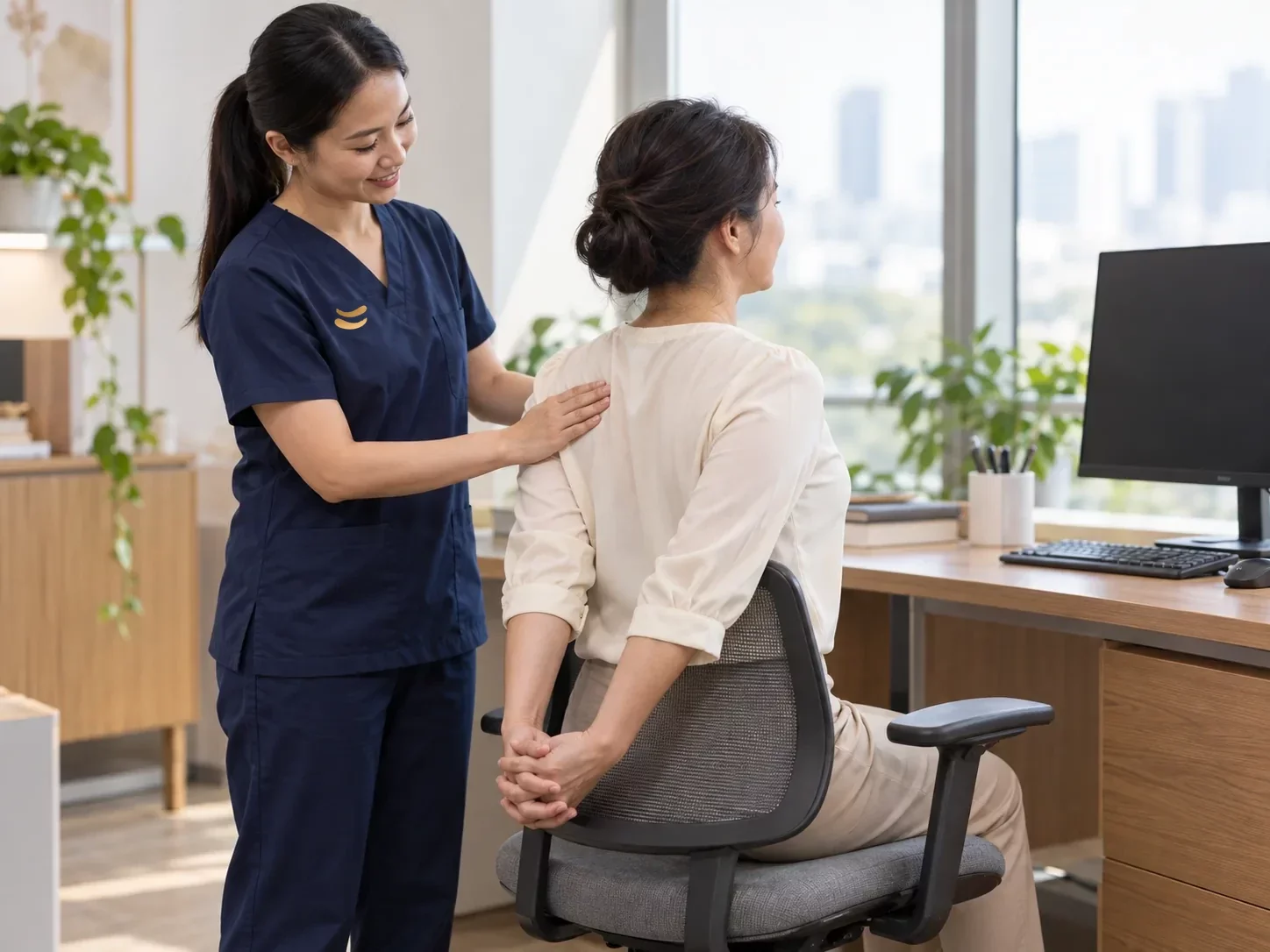
ท่ายืดหน้าอก คลายกล้ามเนื้อที่ตึงจากการห่อไหล่หน้าจอ
ท่าที่ 4 ยืดลำตัวด้านข้างบนเก้าอี้
- ท่าเริ่ม นั่งเต็มก้น เท้าราบพื้น ยกแขนขวาเหนือศีรษะ
- วิธีทำ เอียงตัวไปซ้ายช้า ๆ ก้นสองข้างติดเบาะ ไม่บิดตัว
- ค้าง/จำนวน 10–15 วินาที 5–10 ครั้ง แล้วสลับข้าง
- ถูกเมื่อ ตึงสีข้างถึงใต้รักแร้ · ผิดบ่อย: ก้นยกลอย หรือโน้มไปข้างหน้า
ท่าที่ 5 ยืดข้อมือ (คนใช้เมาส์และพิมพ์นาน)
- ท่าเริ่ม เหยียดแขนขวาไปข้างหน้าระดับไหล่ หงายฝ่ามือ ศอกตรงไม่ล็อก
- วิธีทำ มือซ้ายจับนิ้วมือขวา ดึงปลายนิ้วลงหาพื้นเบา ๆ
- ค้าง/จำนวน 10–15 วินาที 3–5 ครั้ง แล้วสลับข้าง
- ถูกเมื่อ ตึงใต้ข้อมือถึงแขนด้านใน · หยุดถ้าชาปลายนิ้ว
ท่าที่ 6 บีบสะบักมือเปล่า (เสริมแรงรอบสะบัก)
- ท่าเริ่ม นั่งตรง แขนวางข้างลำตัว ศอกงอสบาย ๆ ไหล่ผ่อน
- วิธีทำ ดึงสะบักสองข้างเข้าหากันและลงล่างเล็กน้อย ศอกเลื่อนไปด้านหลังตาม ไม่ต้องถืออะไร
- ค้าง/จำนวน 5–10 วินาที 5–10 ครั้ง
- ถูกเมื่อ เกร็งกลางหลังระหว่างสะบัก · ผิดบ่อย: ยักไหล่ขึ้น หรือแอ่นเอว
| ท่า | ช่วยส่วนไหน | ค้าง / ครั้ง |
|---|---|---|
| 1. เก็บคาง | คอมัดลึก | 5–10 วิ · 5–10 |
| 2. ยืดคอบ่าด้านข้าง | ข้างคอ บ่า | 10–15 วิ · 5–10/ข้าง |
| 3. ยืดหน้าอก | อก หน้าไหล่ | 10–15 วิ · 5–10 |
| 4. ยืดลำตัวด้านข้าง | สีข้าง หลัง | 10–15 วิ · 5–10/ข้าง |
| 5. ยืดข้อมือ | ข้อมือ แขน | 10–15 วิ · 3–5/ข้าง |
| 6. บีบสะบัก | รอบสะบัก หลังบน | 5–10 วิ · 5–10 |
ท่า 1–4 และ 6 ดัดแปลงจากคณะกายภาพบำบัด ม.มหิดล · ท่า 5 เป็นท่าเสริมของนักกายภาพ KIN · แบ่งทำทีละ 1–2 ท่าได้
4. ควรลุกพักบ่อยแค่ไหน ระหว่างนั่งทำงานหน้าจอ
คำตอบสั้น: คณะกายภาพบำบัด ม.มหิดล แนะนำให้เปลี่ยนอิริยาบถทุก 1–2 ชั่วโมง โดยช่วง 40–45 นาทีเหมาะสมก่อนเนื้อเยื่อล้า รามา แชนแนลให้พักทุก 2–3 ชั่วโมงหรือเร็วกว่านั้น
- ตั้งเตือนทุก 40–45 นาที ลุกเดินไปเติมน้ำ แล้วทำ 1–2 ท่า
- ครบ 6 ท่าวันละ 2–3 รอบ เช่น สาย บ่าย ก่อนเลิกงาน
- องค์การอนามัยโลกแนะนำให้ทุกวัยลดเวลานั่งนิ่ง ขยับเท่าไรก็ดีกว่าไม่ขยับ
5. ทำนานแค่ไหนถึงเห็นผล งานวิจัยในพนักงานออฟฟิศไทยบอกอะไร
คำตอบสั้น: งานวิจัยแบบสุ่มของแพทย์เวชศาสตร์ฟื้นฟู รพ.สรรพสิทธิประสงค์ อุบลราชธานี ร่วมกับคณะแพทยศาสตร์ศิริราชพยาบาล (วารสาร Clinical Rehabilitation ปี 2559) ให้พนักงานออฟฟิศที่ปวดคอบ่ายืดกล้ามเนื้อ วันละ 2 ครั้ง สัปดาห์ละ 5 วัน นาน 4 สัปดาห์ พบว่าปวดลดลงและใช้คอได้ดีขึ้นกว่ากลุ่มที่ได้แค่คำแนะนำ
ผลและข้อจำกัด ผู้เข้าร่วม 96 คน ปวดคอหรือบ่านานอย่างน้อย 3 เดือน กลุ่มที่ยืดมีคะแนนปวดลดลงมากกว่ากลุ่มเทียบราว 1.4 คะแนนจาก 10 แต่ติดตามแค่ 4 สัปดาห์ในคนที่ปวดอยู่แล้ว จึงไม่ได้พิสูจน์ผลการป้องกัน และไม่ใช่ผลของผู้รับบริการ KIN

“ท่าที่ดีคือท่าที่ทำได้ทุกวัน ลุกขยับทุก 40–45 นาที ทำทีละ 1–2 ท่าค่ะ”
6. อาการแบบไหนต้องหยุดทำท่าบริหาร แล้วพบนักกายภาพหรือแพทย์
คำตอบสั้น: เดินเซ มือซุ่มซ่ามทันที หรือกลั้นปัสสาวะไม่ได้ ให้โทร 1669 · แขนขาอ่อนแรงหรือชาร่วมกับปวดคอ ให้พบแพทย์ภายในวันนั้น · ปวดไม่ดีขึ้นในไม่กี่สัปดาห์ ให้นักกายภาพหรือแพทย์ตรวจ
โทร 1669 ทันที เมื่อมีอาการใดอาการหนึ่ง (NHS)
• เดินลำบากหรือเดินเซที่เพิ่งเกิด · มือซุ่มซ่ามทันที เช่น ติดกระดุมไม่ได้
• กลั้นปัสสาวะหรืออุจจาระไม่ได้
• หน้าเบี้ยว ยกแขนสองข้างค้างไว้ไม่ได้ พูดไม่ชัด หรือเจ็บแน่นหน้าอก
• ปวดคอหลังอุบัติเหตุร่วมกับชาหรืออ่อนแรง ห้ามขยับคอทำท่าเอง
หยุดบริหาร และพบแพทย์ภายในวันนั้นเมื่อ (NHS)
• ปวดคอรุนแรงขึ้นทันที หรือปวดเพิ่มเร็ว
• แขนหรือขาหนักหรืออ่อนแรง
• ชาเหมือนเข็มทิ่มที่แขนร่วมกับปวดคอหรือแขน · ปวดระหว่างสะบัก
• มีไข้ หรือปวดมากตอนกลางคืน
ปวดไม่หายในไม่กี่สัปดาห์ ปวดร้าวขึ้นศีรษะ หรือทำท่าแล้วเจ็บแปลบ ให้หยุดท่านั้นแล้วนัดนักกายภาพหรือแพทย์ · เคยผ่าตัดคอหรือไหล่ หรือมีหมอนรองกระดูกคอกดทับเส้นประสาท ถามแพทย์ก่อนทำท่า 1–2
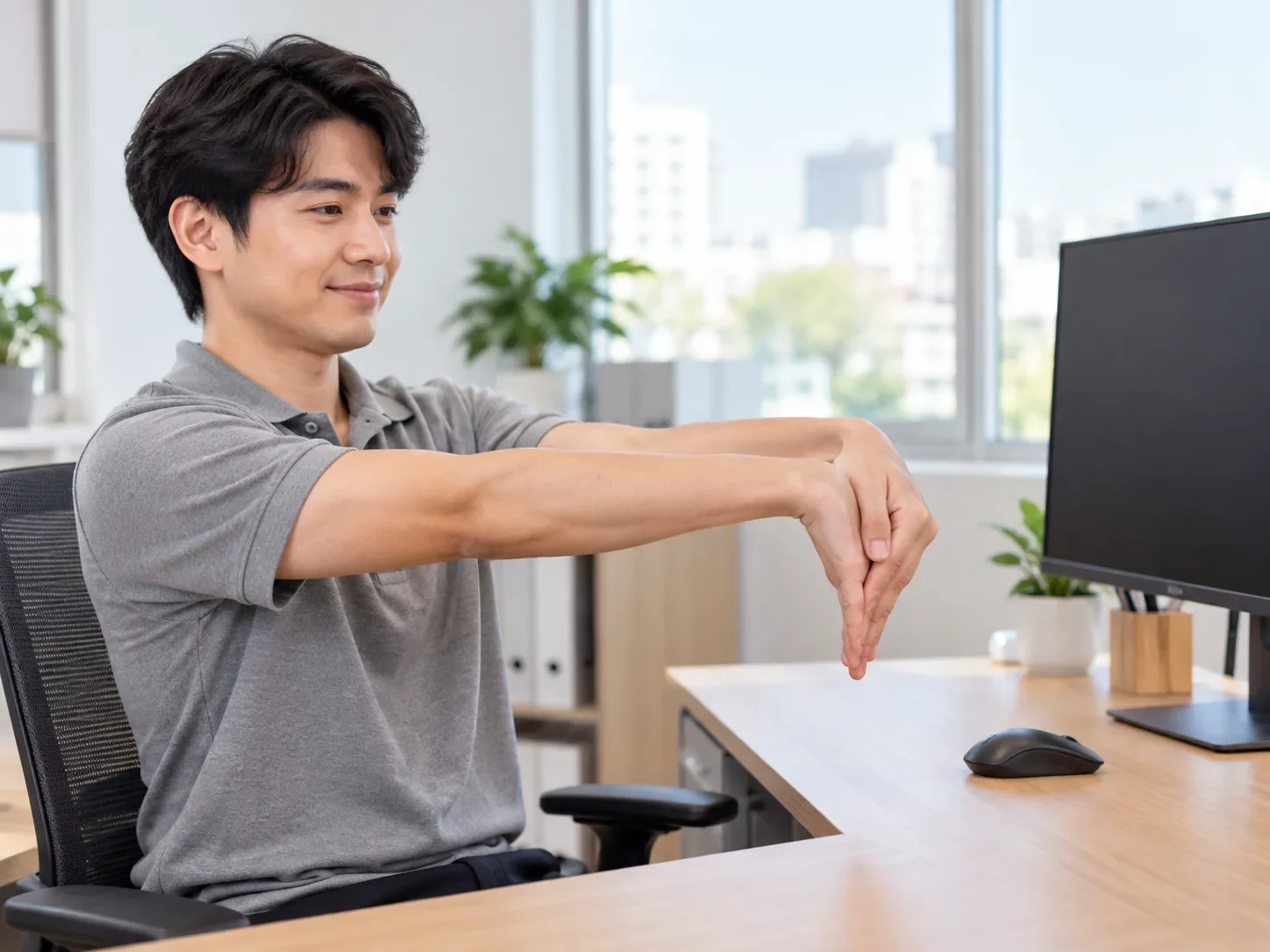
ท่ายืดข้อมือ สำหรับคนที่ใช้เมาส์และพิมพ์งานทั้งวัน
ที่ KIN ลาดพร้าว 71 ช่วยคนทำงานหน้าจอที่ปวดเมื่อยอย่างไร
บริหารสม่ำเสมอแล้วยังปวด ให้นักกายภาพบำบัดประเมินว่ามัดไหนตึง มัดไหนอ่อน ผู้รับบริการแบบไปกลับใช้บริการที่ KIN สหคลินิกเวชกรรมกายภาพบำบัด ซอยนาคนิวาส 20 เดินถึงกันกับ KIN ลาดพร้าว 71 ซอย 18
- นักกายภาพบำบัดประเมิน และวางแผนตามปัญหาของแต่ละคน ผลลัพธ์แต่ละคนแตกต่างกัน ดูคลินิกกายภาพบำบัด ลาดพร้าว 71
- นัดที่คลินิกนาคนิวาส 20 โทร 084-993-6988 · ออกใบเสร็จสำหรับยื่นเบิกประกันกลุ่มได้ ตามเงื่อนไขกรมธรรม์
- ไม่สะดวกเดินทาง มีนักกายภาพบำบัดไปที่บ้าน โทร 095-767-6307
- ทีม KIN Rehabilitation มีแพทย์ 5 ท่าน ครอบคลุม 5 สาขา ทำงานร่วมกับ 8 สาขาวิชาชีพ ประสบการณ์ 9 ปี
ปรึกษานักกายภาพบำบัด KIN | ลาดพร้าว 71
นั่งทำงานหน้าจอแล้วปวดคอ บ่า หลัง ข้อมือ ให้นักกายภาพบำบัดช่วยวางท่าบริหารที่เหมาะกับคุณ


สาขาอื่นของ KIN Rehabilitation
สายด่วนกลาง: 02-096-4996 | กายภาพบำบัดที่บ้าน 095-767-6307 | ดูแล พยาบาล และเช่าอุปกรณ์ 061-881-9399 | กรณีฉุกเฉินโทร 1669
คำถามที่พบบ่อย ตอบโดยทีมแพทย์และสหวิชาชีพ KIN
ท่าบริหารป้องกันการปวดเมื่อยเมื่อใช้คอมพิวเตอร์เป็นเวลานาน มีท่าอะไรบ้าง
6 ท่า คือ เก็บคาง ยืดคอบ่าด้านข้าง ยืดหน้าอก ยืดลำตัวด้านข้าง ยืดข้อมือ และบีบสะบัก ทำวันละ 2–3 รอบค่ะ
ควรนั่งทำงานอย่างไรเพื่อลดอาการปวดเมื่อย
จอราวระดับสายตา ห่างประมาณหนึ่งช่วงแขน นั่งพิงพนัก ไหล่ไม่ยก เท้าราบพื้น และลุกเปลี่ยนท่าทุก 40–45 นาทีค่ะ
นั่งทำงานกี่ชั่วโมงควรลุกยืดเหยียด
คณะกายภาพบำบัด ม.มหิดล แนะนำให้เปลี่ยนอิริยาบถทุก 1–2 ชั่วโมง โดยช่วง 40–45 นาทีเหมาะสมค่ะ
ยืดเหยียดที่โต๊ะทำงานกี่วันถึงเห็นผล
งานวิจัยแบบสุ่มในพนักงานออฟฟิศไทยให้ยืดวันละ 2 ครั้ง สัปดาห์ละ 5 วัน นาน 4 สัปดาห์ พบว่าปวดลดลงกว่ากลุ่มเทียบ ควรทำต่อเนื่องหลายสัปดาห์ค่ะ
ยืดคอแล้วมีเสียงกร็อบ อันตรายไหม
ไม่ควรสะบัดหรือหมุนคอเร็ว ๆ ให้มีเสียง ให้ยืดช้า ๆ ค้างไว้ ถ้าชาหรือปวดร้าวให้หยุดค่ะ
ปวดเมื่อยจากคอมพิวเตอร์แบบไหนต้องพบแพทย์
ปวดไม่หายในไม่กี่สัปดาห์ให้พบนักกายภาพหรือแพทย์ แขนอ่อนแรงหรือชาร่วมกับปวดคอให้พบแพทย์ภายในวันนั้น เดินเซ มือซุ่มซ่ามทันที หรือกลั้นปัสสาวะไม่ได้ ให้โทร 1669 ค่ะ
- The effectiveness of a neck and shoulder stretching exercise program among office workers with neck pain: a randomized controlled trial — Tunwattanapong P และคณะ Clinical Rehabilitation พ.ศ. 2559
- การออกกำลังกายป้องกันออฟฟิศซินโดรม — คณะกายภาพบำบัด มหาวิทยาลัยมหิดล
- ออฟฟิศซินโดรม โรคน่ากลัวของคนวัยทำงาน — รามา แชนแนล โรงพยาบาลรามาธิบดี
- Computers, Digital Devices and Eye Strain — American Academy of Ophthalmology
- Neck pain and stiff neck — NHS
- Cervical spondylosis — NHS
- Physical activity fact sheet — องค์การอนามัยโลก
ตรวจสอบความถูกต้องทางการแพทย์โดย พญ.กมลฉัตร โชคถนอมทรัพย์ ว.40854 | กำกับดูแลโดย ดร.ธงชัย โชคถนอมทรัพย์ ประธานกรรมการบริหาร | อัปเดตล่าสุด: ต.ค. พ.ศ. 2569 | บทความนี้ให้ข้อมูลเบื้องต้น ไม่ใช่คำแนะนำทางการแพทย์เฉพาะราย ผู้ที่เคยผ่าตัดคอหรือไหล่ หรือมีชาและอ่อนแรง ควรปรึกษาแพทย์หรือนักกายภาพก่อน ตัวเลขงานวิจัยไม่ใช่ผลของผู้รับบริการ KIN