

Physical Therapy Course · Plantar Fasciitis
Heel pain with the first step after waking may be plantar fasciitis
Plantar fasciitis is irritation of the fascia on the sole of the foot where it attaches to the heel. It is often most painful with the first steps in the morning or after sitting for a long time (heel pain can have many causes, so the physical therapist assesses first). Common factors include prolonged standing or walking, shoes without arch support, tight calves and Achilles tendon, foot shape, and body weight. Many people may improve with lifestyle adjustments combined with physical therapy. Results vary between individuals.
Plantar fasciitis course, 5 sessions
6,000 THB
Use within 3 months
What the plantar fasciitis course includes
- ✓Assessment of tender points, calf and fascia tightness, walking pattern and footwearFirst visit
- ✓Physical therapy equipment Laser or Shockwave as a supplement, used when the physical therapist assesses it as suitable
- ✓Stretching / Manual technique for the calf, Achilles tendon and plantar fascia
- ✓Home exercises and footwear adviceEvery session
What you can do at home while waiting for your appointment
- Stretch your calves and soles before getting out of bed in the morning
- Avoid walking barefoot on hard floors; wear shoes with arch and heel support
- Temporarily reduce activities that put impact on the heel
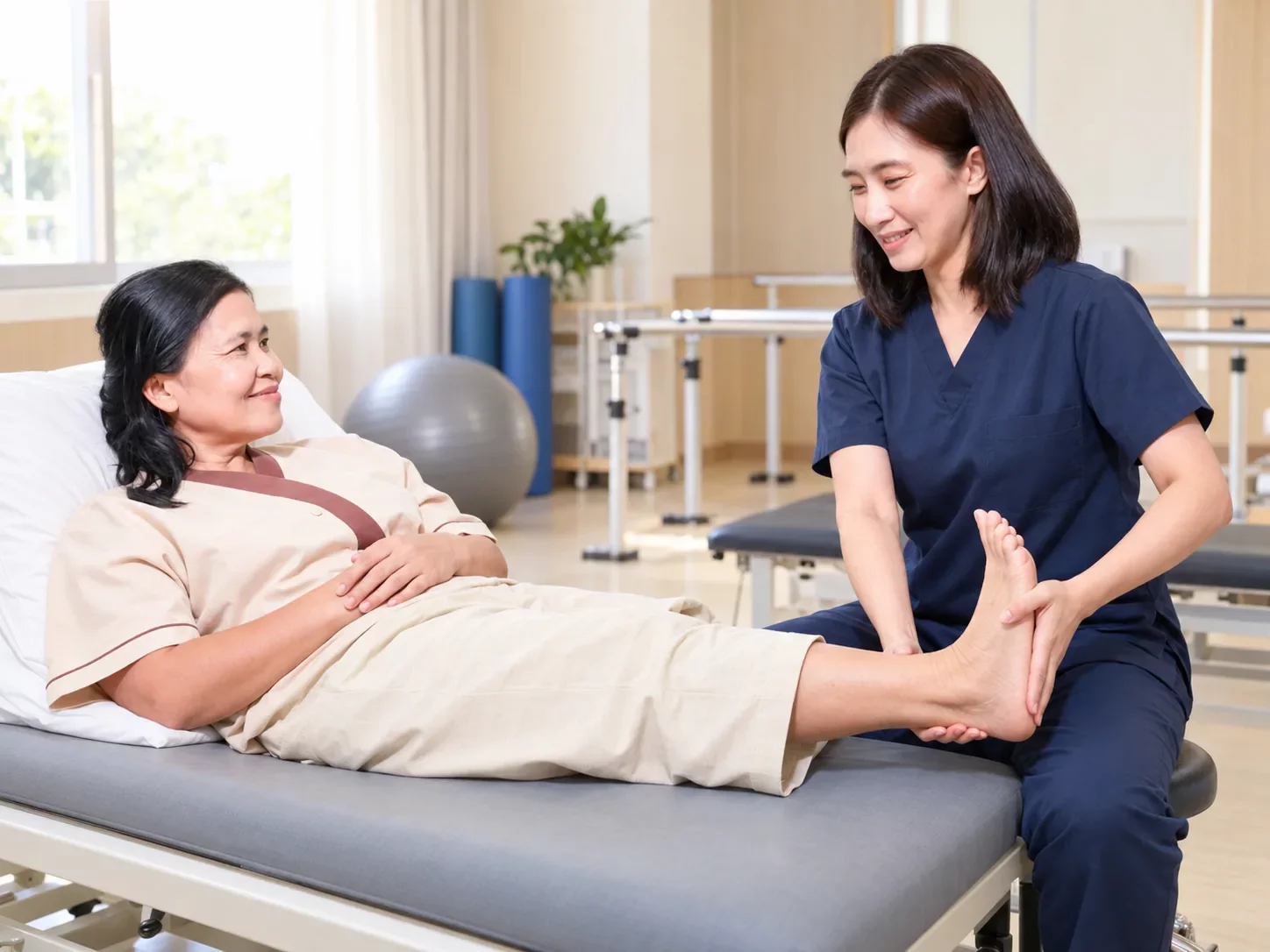
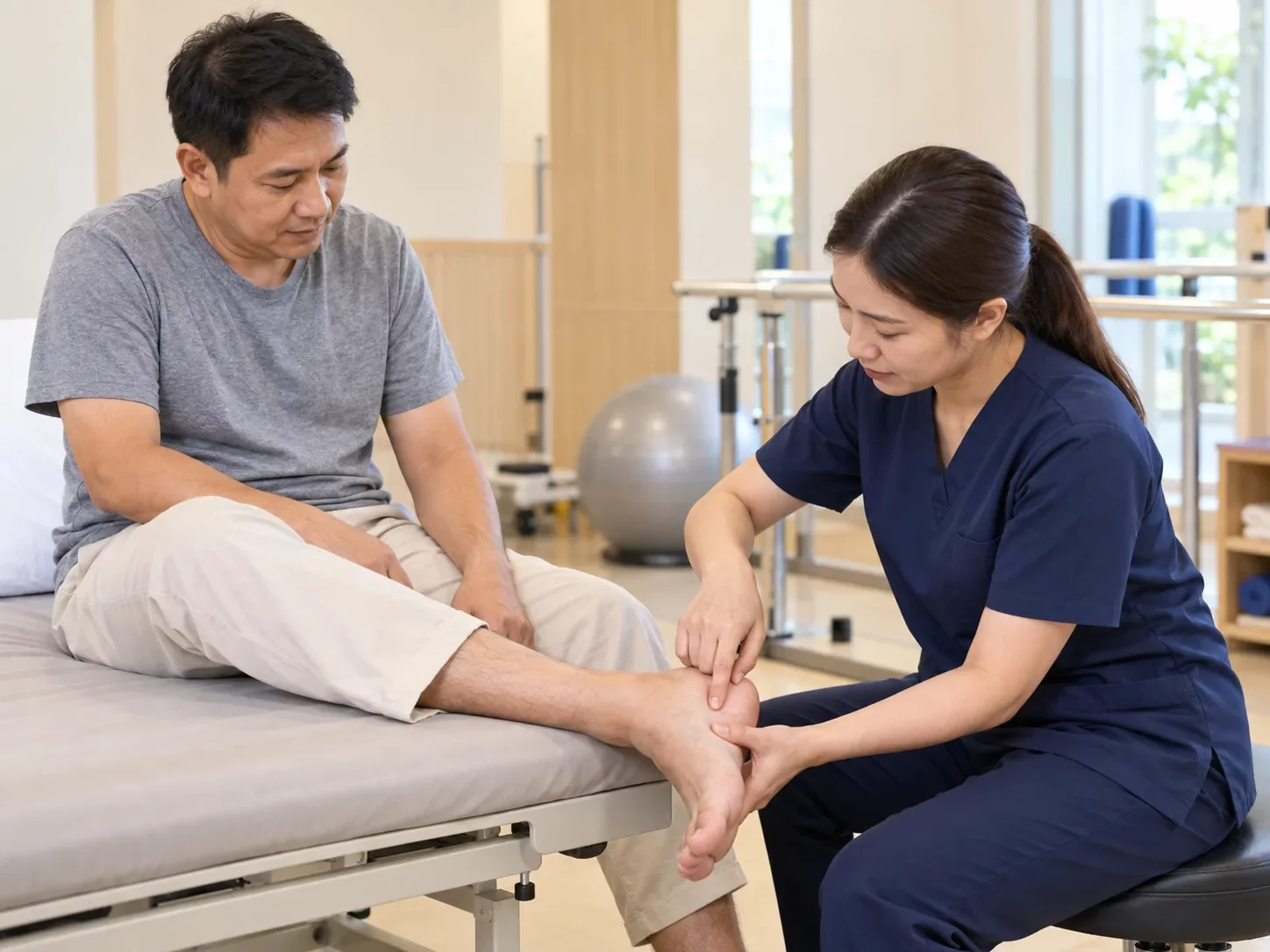
Illustrative photos
Frequently asked questions
Can plantar fasciitis go away on its own?
Some people improve on their own with rest and better footwear. However, if the pain is chronic or keeps coming back, assessment and training with a physical therapist can help identify contributing factors, such as tight calves or walking pattern.
Is Shockwave necessary?
Not for everyone. Stretching and footwear adjustment are the core. Shockwave is used for some people depending on assessment. You may feel pain in the treated area during the procedure, and it is not performed on people who are pregnant, have a wound or infection in that area, or have a bleeding tendency.
See all physical therapy courses
Appointments · Enquiries
Courses are valid for 3 months from the first session · Please book in advance