

ท่ายืดหลัง 5 ท่า
แก้ปวดหลังก่อนนอน ใช้ 10 นาที ทำเองที่บ้าน
ไม่ต้องใช้อุปกรณ์ สำหรับปวดเมื่อยหลังจากนั่งหรือยืนนาน พร้อมข้อห้าม
5 ท่า ไม่ต้องใช้อุปกรณ์
แมว-วัวใช้นับครั้งแทน
ทุกคืนได้ถ้าไม่ปวดเพิ่ม
แล้วพบแพทย์
หลายคนบอกนักกายภาพว่า กลางวันพอทน แต่พอจะนอนหลังตึงจนพลิกตัวลำบาก ท่ายืดเบา ๆ ก่อนนอนให้หลังและสะโพกที่ค้างท่าเดิมทั้งวันได้ขยับ อาจช่วยคลายตึงได้ในบางคน
ไม่ใช่ชุดสำหรับปวดรุนแรงเฉียบพลัน · ภาพรวมการดูแลปวดหลังโดยไม่ใช้ยาอ่านที่ แก้ปวดหลังไม่กินยา
เนื้อหาในบทความนี้
1. ท่ายืดหลังก่อนนอน 5 ท่า มีอะไรบ้าง
คำตอบสั้น: ท่ายืดหลัง 5 ท่าคือ แมว-วัว ท่าเด็ก กอดเข่าเข้าอก บิดตัวนอนหงาย และยืดสะโพกเลขสี่ เริ่มจาก 2 ท่าคุกเข่าบนเสื่อ แล้วต่อ 3 ท่านอนหงาย รวมราว 10 นาที
| ท่า | ยืดส่วนไหน | ครั้ง / เวลา |
|---|---|---|
| 1. แมว-วัว (คุกเข่า) | หลังทั้งแนว | สลับช้า ๆ 8–10 ครั้ง |
| 2. ท่าเด็ก (คุกเข่า) | หลังส่วนล่างถึงสะบัก | 20–30 วิ 2–3 รอบ |
| 3. กอดเข่าเข้าอก (นอน) | หลังส่วนล่าง ก้น | 20–30 วิ ข้างละ 2–3 รอบ |
| 4. บิดตัวนอนหงาย | ข้างเอว สะโพก | 20–30 วิ ข้างละ 2–3 รอบ |
| 5. ยืดสะโพกเลขสี่ (นอน) | ก้น สะโพกด้านหลัง | 20–30 วิ ข้างละ 2–3 รอบ |
ACSM พ.ศ. 2554: ผู้ใหญ่ทั่วไปยืดกล้ามเนื้อกลุ่มหลักรวมราว 60 วินาทีต่อท่า อย่างน้อย 2 วันต่อสัปดาห์ (ไม่ใช่ขนาดรักษาปวดหลัง)
2. ท่าที่ 1–2 แมว-วัว และท่าเด็ก (คุกเข่าบนเสื่อ)
คำตอบสั้น: แมว-วัวคือคุกเข่ามือยันพื้น สลับโก่งหลังกับแอ่นหลังช้า ๆ 8–10 ครั้ง ท่าเด็กคือนั่งทับส้นเท้าแล้วก้มตัวยื่นแขน ค้าง 20–30 วินาที 2–3 รอบ
ท่าที่ 1 แมว-วัว (Cat-Cow)
- ท่าเริ่ม คุกเข่า มือใต้ไหล่ เข่าใต้สะโพก หลังตรง เจ็บเข่ารองผ้าขนหนู
- วิธีทำ หายใจออกโก่งหลังขึ้น ก้มคาง แล้วหายใจเข้าแอ่นหลังลงเล็กน้อย เงยหน้า
- จำนวน ค้างฝั่งละ 2–3 วินาที สลับ 8–10 ครั้ง
- ถูก / ผิด ถูกคือตึงเบา ๆ ตลอดแนวหลัง · ผิดบ่อยคือแอ่นเอวสุดแรง เหวี่ยงเร็ว กลั้นหายใจ
- หยุดเมื่อ ปวดมากขึ้นหรือร้าวลงขา · กระดูกพรุนโก่งหลังแค่เล็กน้อย
ท่าที่ 2 ท่าเด็ก (Child's Pose)
- ท่าเริ่ม คุกเข่าบนเสื่อ เข่ากางเท่าสะโพก นั่งบนส้นเท้า
- วิธีทำ หายใจออกก้มตัว ยื่นแขนไปข้างหน้า หน้าผากวางบนเสื่อหรือหมอน
- จำนวน ค้าง 20–30 วินาที หายใจช้า ๆ 2–3 รอบ
- ถูก / ผิด ถูกคือตึงหลังส่วนล่างถึงสะบัก · ผิดบ่อยคือฝืนก้นลงส้นเท้า ให้หนุนหมอนแทน
- หยุดเมื่อ ปวดเข่าหรือก้มแล้วร้าวลงขา · กระดูกพรุนข้ามท่านี้ · หมอนรองทับเส้นที่ยังร้าวลงขา งดจนกว่าจะประเมิน
3. ท่าที่ 3–5 กอดเข่า บิดตัว และยืดสะโพกเลขสี่ (นอนหงาย)
คำตอบสั้น: กอดเข่าคือดึงเข่าเข้าหาอก บิดตัวคือล้มเข่าไปข้างหนึ่งโดยไหล่แนบพื้น เลขสี่คือพาดข้อเท้าบนเข่าแล้วดึงเข้าหาอก ค้างท่าละ 20–30 วินาที ทำบนที่นอนที่แน่นได้
ท่าที่ 3 กอดเข่าเข้าอก (Knee to Chest)
- ท่าเริ่ม นอนหงาย งอเข่า เท้าราบ
- วิธีทำ จับหลังต้นขาใต้เข่าขวา ดึงเข้าหาอกเบา ๆ ขาซ้ายวางไว้ สบายดีค่อยทำสองข้างพร้อมกัน
- จำนวน ค้าง 20–30 วินาที สลับข้าง ข้างละ 2–3 รอบ
- ถูก / ผิด ถูกคือตึงหลังส่วนล่างและก้น · ผิดบ่อยคือดึงที่หน้าแข้ง ยกศีรษะ เกร็งคอ
- หยุดเมื่อ ร้าวหรือชาลงขา · เพิ่งผ่าตัดหลังหรือสะโพก ถามแพทย์ก่อน
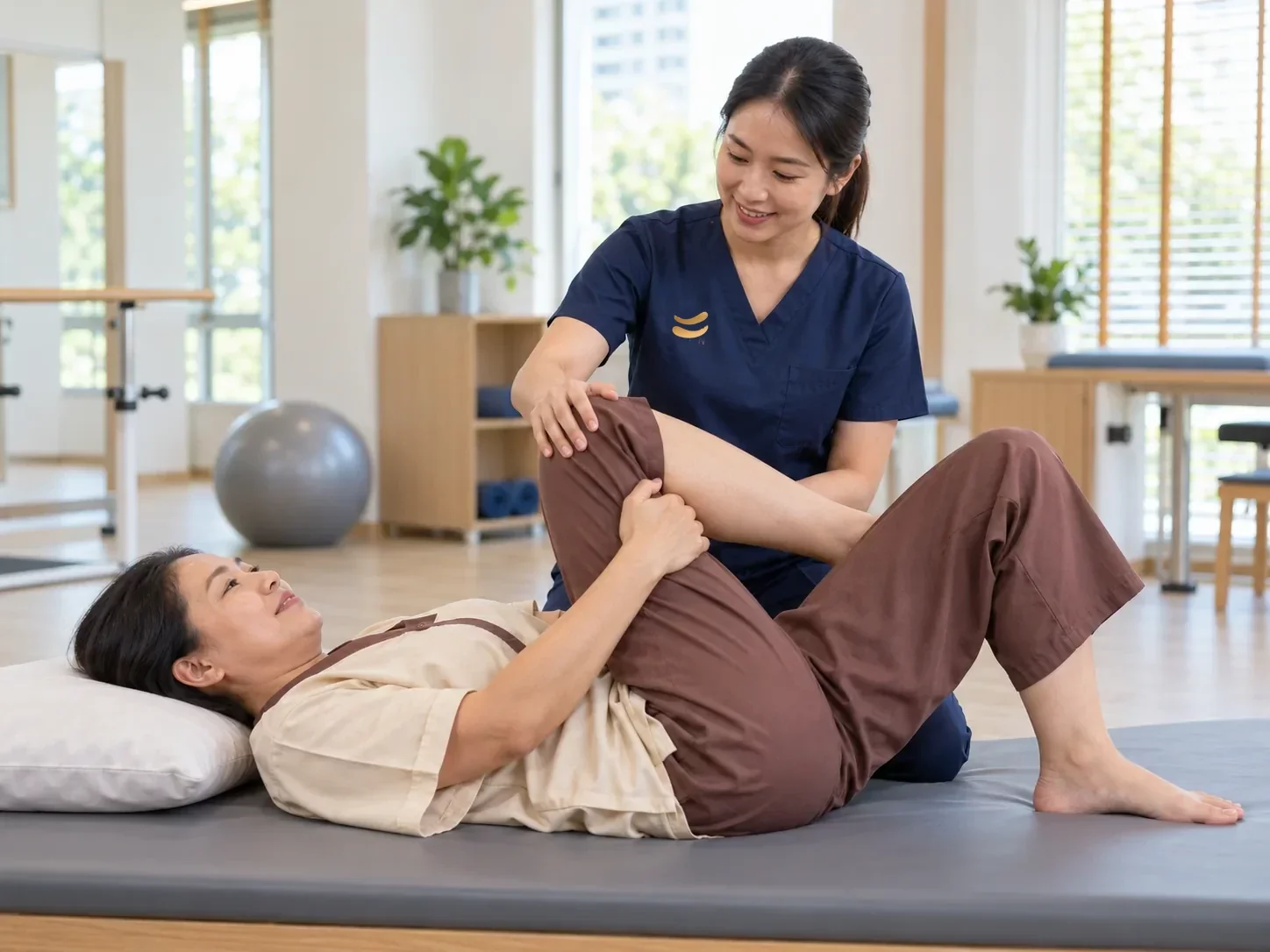
จับหลังต้นขาใต้เข่า ไม่ดึงที่หน้าแข้ง
ท่าที่ 4 บิดตัวนอนหงาย (Lower Back Rotation)
- ท่าเริ่ม นอนหงาย งอเข่า เท้าชิดกัน กางแขนระดับไหล่
- วิธีทำ ล้มเข่าทั้งสองไปทางขวาเท่าที่สบาย ไหล่แนบพื้น หันหน้าไปทางซ้ายได้
- จำนวน ค้าง 20–30 วินาที กลับกลาง สลับข้าง ข้างละ 2–3 รอบ
- ถูก / ผิด ถูกคือตึงข้างเอวและสะโพก · ผิดบ่อยคือล้มเข่าแรง ใช้มือกดเข่า ไหล่ลอย
- หยุดเมื่อ เจ็บแปลบหรือร้าวลงขา · กระดูกพรุนบิดช่วงแคบ · หมอนรองทับเส้นที่ยังร้าวลงขา งดจนกว่าจะประเมิน
ท่าที่ 5 ยืดสะโพกเลขสี่ (Figure-4)
- ท่าเริ่ม นอนหงาย งอเข่าทั้งสองข้าง
- วิธีทำ พาดข้อเท้าขวาบนเข่าซ้าย ยกเท้าซ้ายขึ้น จับหลังต้นขาซ้ายดึงเข้าหาอก
- จำนวน ค้าง 20–30 วินาที สลับข้าง ข้างละ 2–3 รอบ
- ถูก / ผิด ถูกคือตึงที่ก้นขาที่พาด · ผิดบ่อยคือดึงแรงจนเข่าเจ็บ จับไม่ถึงให้วางเท้าซ้ายบนพื้นไว้
- หยุดเมื่อ เจ็บข้อสะโพก · ผ่าตัดเปลี่ยนข้อสะโพกห้ามทำจนแพทย์อนุญาต
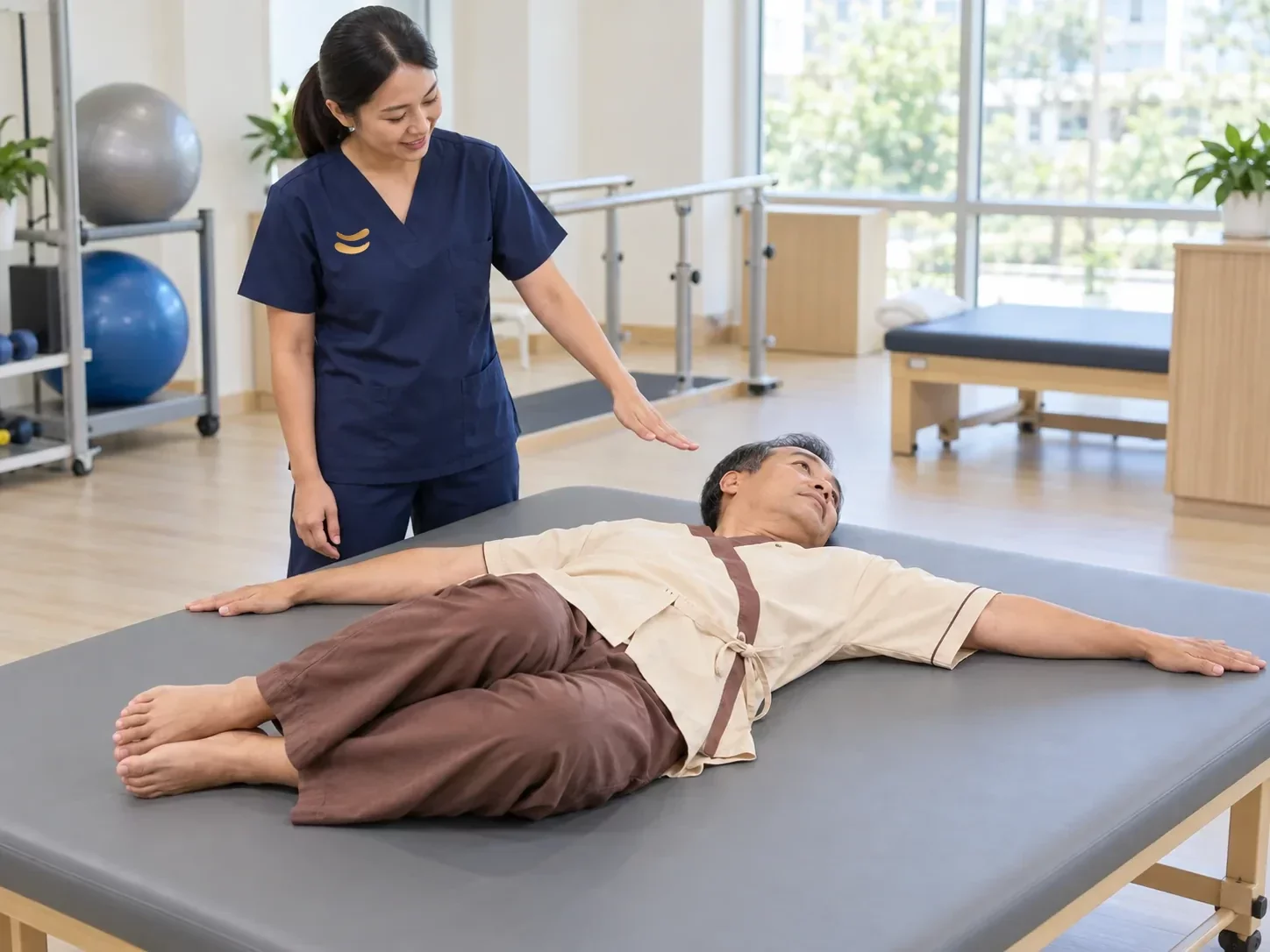
บิดตัวนอนหงาย ไหล่ทั้งสองข้างแนบพื้น
4. ยืดหลังก่อนนอนอย่างไรให้ได้ผลและปลอดภัย
คำตอบสั้น: ทำบนพื้นผิวแน่น ยืดช้า ๆ ตึงได้แต่ไม่เจ็บ หายใจตลอด และทำสม่ำเสมอ
- พื้นแน่น ท่า 1–2 ทำบนเสื่อ ท่า 3–5 ทำบนที่นอนได้ถ้าไม่ยวบ
- ตึงได้ เจ็บไม่ได้ ห้ามเด้ง เจ็บแปลบให้ลดช่วงหรือข้ามท่า
- ตอนเช้า ทำท่า 3 และ 4 บนที่นอนก่อนลุก แล้วตะแคงตัวลุก
- ท่านอน นอนตะแคงหนีบหมอนระหว่างเข่า นอนหงายหนุนหมอนใต้เข่า
งานวิจัย Cochrane พ.ศ. 2564 รวม 249 การทดลอง พบหลักฐานระดับปานกลางว่าการออกกำลังกายลดปวดหลังเรื้อรังได้มากกว่าไม่รักษา ข้อจำกัด: รวมโปรแกรมหลายแบบ ไม่ได้ทดสอบ 5 ท่านี้หรือการยืดก่อนนอน และผลต่อการใช้ชีวิตประจำวันยังน้อย
ปวดหลังจากนั่งหน้าจอนาน อ่านท่าที่โต๊ะทำงานที่ ท่าบริหารป้องกันการปวดเมื่อยเมื่อใช้คอมพิวเตอร์เป็นเวลานาน
5. ใครต้องปรับท่าหรือถามนักกายภาพก่อน
คำตอบสั้น: ผู้ที่ปวดรุนแรงเฉียบพลัน กระดูกพรุน ร้าวลงขา เพิ่งผ่าตัด หรือคุกเข่าไม่ได้ ควรปรับท่าหรือให้ประเมินก่อน
- ปวดเฉียบพลันรุนแรง หลังอุบัติเหตุ หรือมีอาการในหัวข้อ 6 ยังไม่ต้องยืดชุดนี้ ให้แพทย์ตรวจก่อน
- กระดูกพรุน เลี่ยงก้มหลังมาก ข้ามท่าเด็ก บิดตัวช่วงแคบ (UK consensus วารสาร BJSM พ.ศ. 2565)
- ร้าวลงขา ชาน่องหรือเท้า หยุดยืดเองแล้วให้ประเมินก่อน อาจเป็นหมอนรองกระดูกทับเส้นประสาท (ศิริราช) งดท่าก้มสุดและบิดตัว
- เพิ่งผ่าตัดหลังหรือสะโพก ทำตามโปรแกรมของทีมรักษา
- คุกเข่าไม่ได้ หรือลุกจากพื้นยาก ข้ามท่า 1–2 ใช้ท่า 3–5 บนที่นอนแน่น
- หลังส่วนล่างตึงจนยืดได้น้อย เริ่มจากท่า Pelvic Tiltก่อน
6. หยุดยืดทันทีและพบแพทย์เมื่อไร
คำตอบสั้น: หยุดเมื่อร้าวลงขา ชา หรืออ่อนแรง ไปห้องฉุกเฉินทันทีถ้าขาอ่อนแรงแย่ลงเร็ว ชารอบก้น หรือการขับถ่ายเปลี่ยน
พบข้อใดข้อหนึ่ง ไปห้องฉุกเฉินทันที หรือโทร 1669
• ปวดร้าว ชา หรืออ่อนแรงที่ขาทั้งสองข้าง หรือขาอ่อนแรงแย่ลงอย่างรวดเร็ว เดินไม่ได้
• ชาใหม่บริเวณก้น รอบทวาร หรืออวัยวะเพศ
• การควบคุมปัสสาวะหรืออุจจาระเปลี่ยนไป เช่น กลั้นไม่ได้ หรือปัสสาวะไม่ออก
• เจ็บหน้าอกร่วมด้วย หรือปวดหลังภายหลังอุบัติเหตุรุนแรง
นัดพบแพทย์เมื่อ: ร้าวลงขาข้างเดียว · หลายสัปดาห์ไม่ดีขึ้น · ปวดมากตอนกลางคืน มีไข้ หรือน้ำหนักลด (NHS · CUH) · ปวดขาร่วมด้วยอ่าน ปวดขา

ยืดแล้วร้าวลงขาหรือชา ให้หยุดและพบแพทย์

“ตึงแปลว่ากำลังยืด เจ็บแปลว่าต้องหยุด ทำช้า ๆ แต่ทำทุกวันค่ะ”
ที่โรงพยาบาลคิน สุขุมวิท 107 ช่วยเมื่อยืดเองแล้วยังปวดอย่างไร
โรงพยาบาลคิน สุขุมวิท 107 (ซอยแบริ่ง 10) เป็นโรงพยาบาลกายภาพบำบัด นักกายภาพจะตรวจประเมินหาที่มาของอาการ แล้วออกแบบโปรแกรมเฉพาะคน
- กายภาพปวดหลังส่วนล่างแบบไปกลับ ประเมิน ยืดและใช้เทคนิคด้วยมือ สอนท่าออกกำลังกายกลับไปทำที่บ้าน ส่วนเครื่องมืออย่าง Shockwave หรือ Laser ใช้เฉพาะเมื่อนักกายภาพประเมินว่าเหมาะเป็นรายคน
- สระธาราบำบัดน้ำอุ่น มีนักกายภาพดูแลทุกครั้ง
- ออกใบเสร็จยื่นเบิกประกันกลุ่มได้ ตามเงื่อนไขกรมธรรม์
- กายภาพบำบัดที่บ้าน โทร 095-767-6307 · ดูกายภาพบำบัด KIN
ปรึกษานักกายภาพบำบัด KIN | โรงพยาบาลคิน สุขุมวิท 107
ยืดเองแล้วยังปวดหลัง ทักไลน์หรือโทรหาสาขาได้


สาขาอื่นของ KIN Rehabilitation
สายด่วนกลาง: 02-096-4996 | กายภาพบำบัดที่บ้าน 095-767-6307 | ดูแล พยาบาล และเช่าอุปกรณ์ 061-881-9399 | กรณีฉุกเฉินโทร 1669
คำถามที่พบบ่อย ตอบโดยทีมแพทย์และสหวิชาชีพ KIN
ท่ายืดหลังก่อนนอน ทำบนเตียงได้ไหม
ได้ 3 ท่าค่ะ ท่านอนหงาย (กอดเข่า บิดตัว เลขสี่) ทำบนที่นอนที่แน่นได้ ส่วนแมว-วัวกับท่าเด็กควรทำบนเสื่อก่อน เพราะที่นอนนุ่มทำให้หลังจมค่ะ
ท่าแก้ปวดหลังก่อนนอน ค้างกี่วินาที ทำกี่รอบ
ท่ายืดค้างท่าละ 20–30 วินาที 2–3 รอบ ส่วนแมว-วัวสลับ 8–10 ครั้ง ทั้งชุดราว 10 นาที อย่างน้อย 2 วันต่อสัปดาห์ค่ะ
ท่ายืดหลังบน ทำท่าไหน
ท่าเด็กและแมว-วัวยืดถึงหลังส่วนบนและสะบักค่ะ ในท่าเด็กเลื่อนมือไปซ้ายขวาเพื่อยืดข้างลำตัวเพิ่มค่ะ
ท่ายืดหลังขา ทำอย่างไร
นอนหงาย ใช้ผ้าขนหนูคล้องฝ่าเท้าแล้วยกขาขึ้นโดยเข่าเกือบตรงจนตึงหลังต้นขา ค้าง 20–30 วินาที ข้างละ 2–3 รอบ ร้าวหรือชาลงขาให้หยุดค่ะ
เพิ่งปวดหลังวันนี้ ทำท่ายืดหลังชุดนี้ได้ไหม
ถ้าปวดไม่มาก ไม่มีอาการเตือน ลองขยับเบา ๆ เฉพาะท่าที่ไม่เพิ่มปวดได้ค่ะ แต่ถ้าปวดรุนแรง ปวดหลังอุบัติเหตุ หรือมีชา อ่อนแรง ขับถ่ายผิดปกติ ให้พบแพทย์ก่อนค่ะ
ยืดหลังแล้วปวดร้าวลงขา ยืดต่อได้ไหม
ควรหยุดก่อนค่ะ แม้ยังไม่ชา อาการร้าวลงขาอาจเป็นหมอนรองกระดูกทับเส้นประสาท ให้นักกายภาพหรือแพทย์ประเมินแล้วเลือกท่าให้ ถ้าชาที่ก้น ขาอ่อนแรงแย่ลง หรือขับถ่ายผิดปกติ ไปห้องฉุกเฉินทันทีค่ะ
- ACSM Position Stand (Garber และคณะ) — Med Sci Sports Exerc พ.ศ. 2554
- Exercise therapy for chronic low back pain — Cochrane Database Syst Rev พ.ศ. 2564
- Strong, steady and straight (กระดูกพรุน) — Br J Sports Med พ.ศ. 2565
- Back pain — NHS สหราชอาณาจักร
- Back pain (cauda equina) — Cambridge University Hospitals NHS
- ปวดหลัง แต่ทำไมร้าวลงขา — คณะแพทยศาสตร์ศิริราชพยาบาล
ตรวจสอบความถูกต้องทางการแพทย์โดย พญ.กมลฉัตร โชคถนอมทรัพย์ ว.40854 | กำกับดูแลโดย ดร.ธงชัย โชคถนอมทรัพย์ ประธานกรรมการบริหาร | อัปเดตล่าสุด: ต.ค. พ.ศ. 2569 | ข้อมูลเบื้องต้น ไม่ใช่คำแนะนำเฉพาะราย ผู้มีโรคประจำตัว เพิ่งผ่าตัด หรือร้าวลงขา ควรให้นักกายภาพประเมินก่อน ตัวเลขงานวิจัยไม่ใช่ผลของผู้ป่วย KIN